Feast: An UpStairs Trip to Wonderland
Dining at UpStairs on the Square is a little bit like being in Alice in Wonderland– the walls are brightly painted, the furniture is mismatched, there are weird, whimsical fixtures hanging from the ceilings, and nothing is quite what it seems.
This is a new opinion for me – I used to regard UpStairs as one of Harvard Square’s finer dining establishments, set apart from the pub food of Grendel’s and the budget Thai of 9 Tastes. Last summer I had a fantastic dinner on the UpStairs patio, and last winter I had an excellent meal in their Soiree Room, during which I was introduced to one of my favorite wines, a 2006 Achával Ferrer Malbec. Based on these experiences, I chose UpStairs as the scene for a recent birthday dinner. But rather than being able to relax and enjoy, I felt as though I was Alice, falling down the rabbit hole.

a very merry unbirthday, to you!
“Drink Me”
One of the reasons to go to UpStairs on the Square is the wine list, which arrives as a fat binder, not just a few afterthought pages. UpStairs holds wine tastings and wine dinners, they employ a Wine Director, they were given a Wine Spectator Award in 2010 – all signs point to this restaurant taking their wine seriously. So when we ordered a pricey bottle from the list, we just assumed it would be available.
It was not.
Ok, that’s fine. Understandable, even- sometimes a discrepancy occurs. So we ordered a different bottle of wine. Our waiter came back with a Cheshire Cat grin – our second choice was unavailable as well. Tricky Sommelier, is your wine list really a riddle? Do I need to ask for it in a certain way? Must I slay the Jabberwocky before I can get a drink?
We ordered a third bottle, and it came. Frazzled, we admittedly didn’t check the bottle before it was poured. Once we tasted it, however, we realized we were drinking a Cabernet, not the Pinot Noir we’d requested. Spent, we drank it anyway, and polite, we didn’t make a fuss (though we did alert the waiter to the mistake). But when you’re spending good money on a bottle of wine, shouldn’t you at least get the bottle you order (on your third try)? And if you don’t, shouldn’t you at least get an abject apology, or a complimentary dessert? (We got neither.) Every establishment has an off night, but this wasn’t just off, it was never on.
“Eat Me”
Despite the wine debacle, the food was, as always, lovely. UpStairs has two dining rooms, the more casual “Monday Club Bar” and the fancier, more expensive Soiree Room. I’ve eaten from both menus, and both have been good. On our infamous Third Bottle evening, I enjoyed the Tuna Sashimi – very fresh, excellent marinade – and the Day Boat Scallops – nicely seared. My companions had the Sockeye Salmon and the Mushroom Risotto, recommended by our waiter/the Cheshire Cat. The risotto was the gold-star winner of the evening, with a depth of flavor and perfect consistency.
Wanting to give UpStairs a chance to redeem themselves from their previous service issues, we went back for brunch last weekend. They have a varied brunch menu served in the Monday Club Bar, with a three course special offered from 10-11am. The prices, $7- $20, are reasonable for the quality and portion, and the food, starting with an excellent basket of assorted sweet breads, is good. Unfortunately, trying to get served at brunch was a bit like trying to corral the Mad Hatter at tea time.
We arrived at 10:00am to an almost empty dining room, and the host asked if we had a reservation. We did not, and this is presumably why we were seated behind a partition next to the fireplace, at the end of the bar. It’s nice to have a quiet corner for breakfast, but only if your server remembers you’re there. After waiting 20 minutes for any acknowledgement, I poked my head into the rest of the room and joked “just want to make sure you didn’t forget about us!” The staff didn’t laugh, but at least we got coffee and some bread. After fifteen more minutes, we even got to order. Eventually, we were able to actually eat our food, and the Omelette and Monte Cristo were lovely.
Here’s the thing: no matter how good the food is, the service plays a role in how everything tastes. I want to relax during my meal, I don’t want to feel like I have to manage my server or my food and wine- that’s why I paid money to go out. And even though everything we ate – at both Third Bottle night and brunch – was good, when I look back on both of these events, annoyance creeps into my memory. I wouldn’t discourage anyone from going to UpStairs, but I won’t make it a point to go back for a while. I’d rather go to Kelly’s Diner -where I expect surly service with my blueberry pancakes- than take another trip to Wonderland.
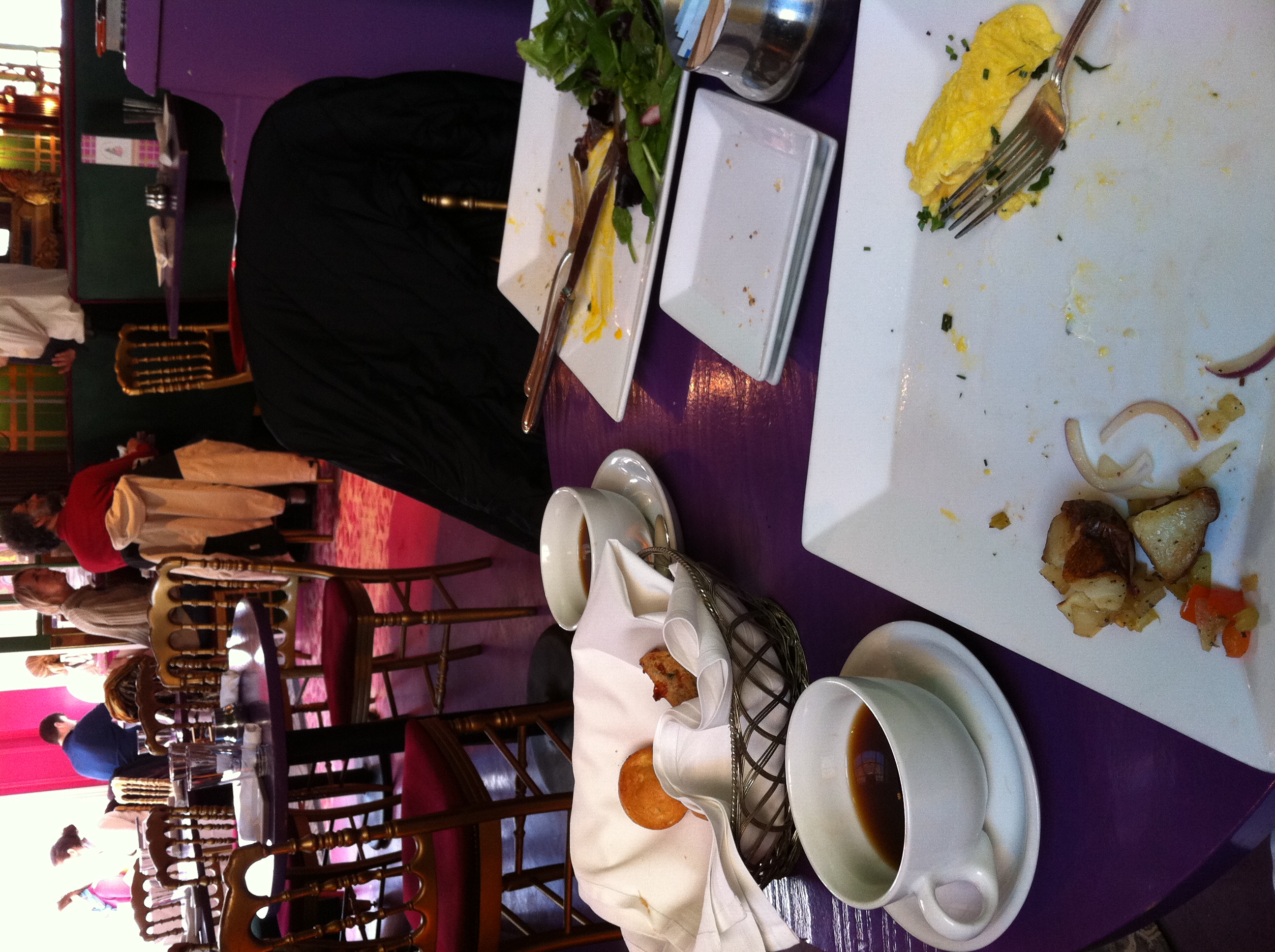
brunch remnants
Food: Veal Scallopine

I’m not very good at cooking thick pieces of meat. Chops, big steaks, thick pieces of chicken- I haven’t mastered that sixth sense of “done-ness” yet, meaning all of my meat has a tell-tale surgery mark down the middle where I’ve cheated and cut through to check its color. That’s why I like cutlets – chicken, pork, and veal alike. (Ok, the word “cutlet” makes me cringe, but for a meat novice like myself, they really are useful.)
One dish that makes good use of cutlets is Veal Scallopine – it’s not the prettiest dish, but it is pretty foolproof and only requires a few ingredients. Veal cutlets are so thin it’s virtually impossible to undercook them, but overcooking them is quite easy. Remember that the veal will continue to cook once you take it out of the pan and rest it, so err on the side of pink.
Veal Scallopine
6 slices veal cutlet
1 cup flour
1 tbsp salt
pepper
olive oil
1 tbsp red wine vinegar
4 tbsp butter
2 tbsp capers
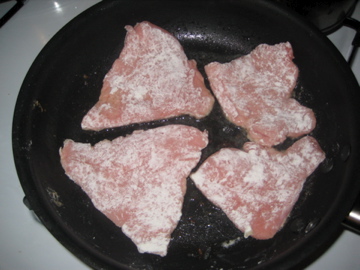
Mix flour with salt and pepper. Pat veal dry, dredge in flour mixture. Heat a few tbsp olive oil in a pan over medium high heat. Cook veal in batches, 1-2 minutes per side. (Even though cutlets make it easy, it’s never a bad idea to have one sacrificial piece of veal to start with, to gauge the correct cooking time for the rest of your meat. Or maybe I’m just really, really Type A…) Place cooked veal on a plate to rest.
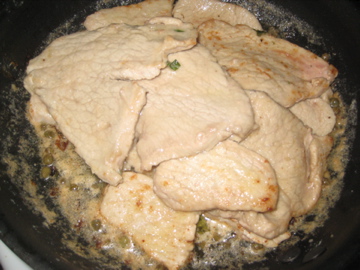
Once all of the veal is cooked, add butter, vinegar, and capers to pan, cook over low-medium heat for 3-4 minutes. Do not overheat or your butter will burn. Add veal back to pan just to heat through and coat with sauce. Voila.
Feast: The Fireplace

The Fireplace in Brookline is the kind of place that lists “Grilled Steak with Blue Cheese Butter” under its “Lighter Fare” options. And even though that’s a gross misuse of the term “light,” I think it’s ok. The truth is, there is no such thing as light fare- or even lighter fare- at The Fireplace. It’s pretty much Thanksgiving dinner, every night of the week. If, along with rich food, your Thanksgiving usually includes a pleasantly staffed, warmly spirited restaurant with twinkle lights, an open kitchen, and a brief but well thought out wine list.
The menu starts with a long list of appetizers (twin lobster rolls, anyone?), includes a salad section (you can add an assortment of meat to any, but most – like the Baby Arugula with Crispy Duck- already include protein), and ends with an extensive entrée list -try the lobster mac and cheese, pork chops, short ribs, burgers, or just some risotto. Carrot and Fresh Thyme Carnaroli Risotto with Honey and Cider Braised Red Cabbage, Toasted Almonds, and Rhode Island Feta, to be precise.
Or, you can always opt for the specials. Last night we tried the Lobster Bisque – a rich, stock-y execution drizzled with oil. It was smooth in texture, and there were no actual pieces of lobster. This was compensated for by the broth itself however, which had a deep lobster flavor without any hint of fishiness. Still, I could have gone for a little piece of lobster tail on top. Just sayin’.
We also had the Butternut Squash, Braised Leeks and Heirloom Radish Tart with Consider Bardwell Cheese, Toasted Walnuts and Bourbon-Maple Glaze. The sweetness of the squash was tempered by the cheese, and the crust of the tart- which can really make or break these things- was crispy without being dry.

lobster bisque
The Fireplace pretty much had me at “pork belly” when I saw the entrée list, and my Pan Seared Scallops and Confit Pork Belly with Roasted Turnips, Parsnips, Rutabaga and Carrots lived up to its sumptuous name. The pork belly was good, if not particularly exceptional, and the scallops were cooked perfectly. The stars of the dish, however, were the vegetables. Even though it’s almost spring, this grouping of fall roots – perfectly roasted and then seemingly rolled in just the right amount of butter (or some other delicious fat)- made me want to curl up with a big blanket and hibernate.
The Braised Beef Short Ribs with Cheesy Cornmeal Porridge, Baby Carrots and Garlicky Broccoli weren’t too shabby either. The porridge was a little different from the traditional short rib side – polenta – and a little smoother in texture than just straight grits.

scallops and pork belly
I wonder how many people make it to dessert at The Fireplace.
They have plenty of options, but after all of that rich food, how much room do you really have? Though, if we’re likening this to Thanksgiving, let’s be honest- everyone always makes room for dessert after turkey. And yes, I certainly pushed a few things around to give space to the Apple Doughnuts after my dinner last night. The doughnuts came with three dipping sauces – chocolate, coffee cream, and sticky cider, and while I could have (and almost did) finished off all of the dipping sauces with just my spoon, the doughnuts weren’t the highlight of the evening. The flavor was nice, but the texture was a little too hard for my taste. When you hear the word “apple doughnut” in New England you think of a fluffier, cakier version of a doughnut then what was served. Next time we’ll try the Taza Chocolate Fudge Cake with Vanilla Bean Ice Cream and Port Cherry Sauce. I’m a sucker for Port Cherry sauce.

apple doughnuts with espresso brittle
In addition to its regular menu, The Fireplace has something called “humble offerings” from Sunday- Thursday. These are entrée options, always under $20, that fall into the “extreme comfort food” category – Chicken Pot Pie, Super Sloppy Joe, Bubble and Squeak, and Beef Stew have all been past choices.
And really, that’s the best part about The Fireplace- even though it is located in a part of town with little to no competition in the “nice dinner out” category, has a lovely setting, and features a chef that clearly knows what he is doing, the air in the whole place is humble. The staff is pleasant and eager to help, the music is soft and understated, even the food is plated without a sniff of pretension – no garnish, no molding, just food. If you’re looking for a little Thanksgiving (and a lot of food) in the middle of the winter, The Fireplace is waiting for you.
Food: My New Favorite Comfort Food

After a particularly arduous week (which you know has been tough when you’re using “week” to describe just Monday, Tuesday, and Wednesday) I don’t always feel like making something complicated, and I sometimes resort to ditalini. But last night I found a new comfort favorite, a recipe in America’s Test Kitchen for Tomato Soup with Meatballs and Pasta. The recipe was in an issue focusing on “Light and Healthy” recipes- this meant the meatballs were supposed to be made of ground chicken mixed with just a few tablespoons of pesto, and poached instead of cooked with oil.
Um, I’m Italian- we don’t poach meatballs.
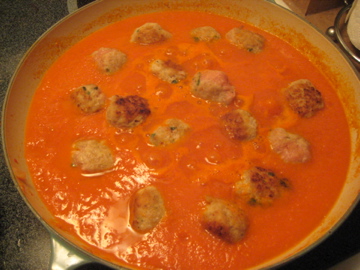
So I took some liberties with that part of the recipe – in keeping with the “healthy” theme, I used ground turkey- I just couldn’t bring myself to use chicken. I used Italian breadcrumbs instead of pesto, and I put an egg and some fresh chopped parsley in the mix. I pan-fried the meatballs in my new Le Creuset braiser (happy birthday to me!), and cooked them the rest of the way in the soup. They were not the best meatballs I’ve ever made, but they were quick and healthier than my normal pork/veal/beef mixture.
I put together the rest of the recipe as follows:
1 carrot, roughly chopped
1 celery rib, roughly chopped
1 small onion, roughly chopped
3 cloves garlic
….were all placed in a pot with a few swishes of olive oil, and sautéed for 8 minutes.
2 1/2 cups chicken broth
1 28oz can diced tomatoes
…were added, brought to a simmer, and cooked for 15 minutes

Then, I pureed the sauce in my food processor. My processor is pretty small so I had to do this in several batches, and frankly a big, powerful blender would have been better and led to a smoother sauce- but I kind of liked the texture mine ended up with.

I adjusted the salt in the sauce at this point, and added the meatballs back in. I simmered the sauce for another 20 minutes, and added some small pasta. The whole thing took about 45 minutes, but it wasn’t complicated cooking and the final soup was rich and comforting. The recipe made quite a bit of food, so you could feed four at once or have plenty of leftovers. I’m definitely making this again.
Food: Nothing Says Love Like Vodka
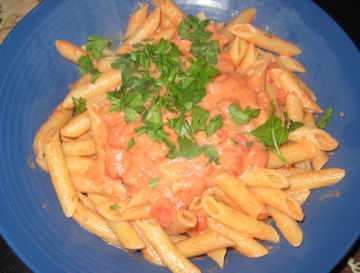
I could have sworn I’d already posted a recipe for vodka sauce, but I guess I only thought I had. But every sauce has its day, and today is the day for my favorite booze-y dressing.
The best part about Penne alla Vodka is that the measurements for most of the ingredients aren’t important -the only ratio you really need to be concerned with is the vodka to tomato. For me, the optimal concentration is 1/2 cup vodka to 3 1/2 cups (one 28 oz can) crushed tomatoes. The rest of the ingredients can be added to your taste, which means you can prepare this on the fly and look very impressive with a glass of wine in your hand, brandishing your spoon as you deftly toss in shallots, garlic, and butter with impunity. For the sake of a written recipe I’ve given quantity suggestions below, but go ahead and alter as you see fit.
Penne alla Vodka
1 lb penne pasta
1/2 cup vodka
3 1/2 cups crushed tomatoes
1 shallot, chopped
2 cloves garlic, chopped
4 tbsp butter
1 cup heavy cream
handful chopped basil
1/4 cup grated parmesan cheese, plus more for topping
salt
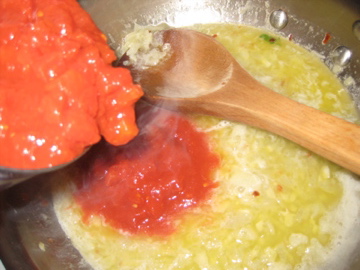
Melt butter in a large saucepan over medium heat, add shallot and garlic, saute until fragrant and tender. Add vodka and cook on medium heat for 3 minutes. Add crushed tomatoes, simmer for 5-10 minutes.
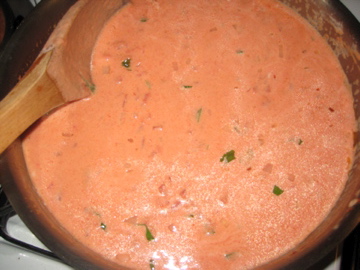
Add basil, cheese, and cream, simmer for at least 10 minutes- you don’t want the sauce to taste like raw cream. After ten minutes, taste. If you want more cream, go ahead and add it. Add salt to your taste, stir in cooked pasta. Voila.
Food: Boston’s Favorite Cake
When I looked at the ingredient list for Fannie M. Farmer’s “Boston Favorite Cake” [sic], it seemed familiar.

When I tasted the batter, it seemed close to home as well- but it didn’t really taste like…cake. It was more flour-y, not very sweet, but still reminiscent of something I’d had before, I just couldn’t quite place it.
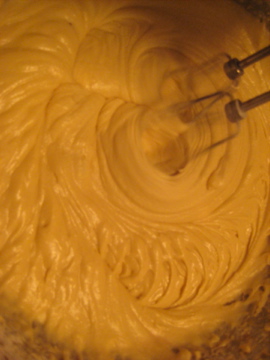
I followed Ms. Farmer’s directions with painstaking precision, which meant determining what 1 and 7/8 cup of sugar looked like, and “boiling sirup until it spun a long thread” for the Maraschino Icing. (How long is long, when you are talking about sirup threads? And what’s a sirup thread?)

And finally, my cake was cooled and iced, and I got to taste my labor of love. And I realized I could have saved myself a lot of time by just buying a box of bisquick. I had made one big, fat, pancake. Topped with annoying icing.

Technically my execution was fine – and thank you to Fannie for writing such precise recipes for both the cake and the icing. I’m just gently amused by the fact that this cake, in any blind taste test, could pass for diner pancakes. And perhaps pancakes are Boston’s favorite cake. But I kind of thought that was Boston Cream Pie. Oh well.
Voila?
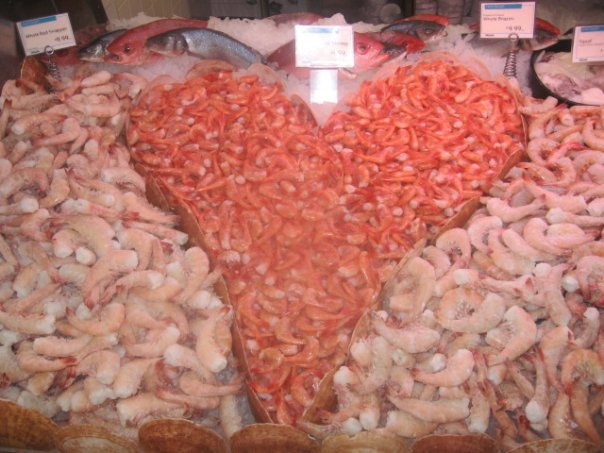
Frame: Happy Valentine’s Day!
Frame: Old School Cooking
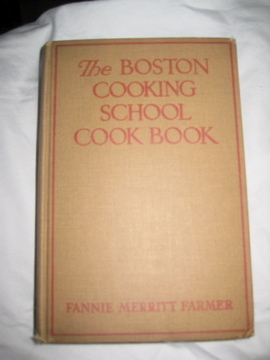
A friend recently gave me her well-worn copy of Fannie Farmer’s Boston Cooking School Cook Book. Fannie was a well-known culinary expert and her cookbook, first published in 1896, was the first to introduce the idea of using standard measurements from measuring cups and spoons. It also introduced such treasures as Fish Balls, Porcupine Tomato Salad, Cornstarch Cake, Beef a la Mode, Tuna Loaf, and Molded Russian Salad (aspic jelly, lettuce, cooked vegetables, and mayonnaise).
She uses ingredients I’ve never heard of, like “thin cream,” “Boston crackers,” “Brown sauce,” and “silverskins” (silverskins are onions, I have learned). These items make me think that Fannie might be a little behind the times.
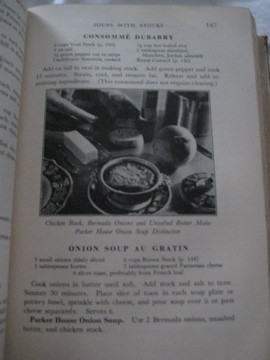
consumme dubarry recipe
But, Fannie also writes wise – and succinct – words on how to prepare basics like stock or consumme, gives her thoughts on how to serve tea and what tea to serve, and provides an extensive listing on how to prepare offal such as kidneys. There is even a recipe for Boiled Macaroni- she actually instructs you on how to boil water, add salt, and cook pasta noodles.
Fannie’s recipes are not fancy, the ingredient list is usually short, the directions are to the point. She was writing before pithy cooking anecdotes were all the rage- hence, there are none. Which is a pity, really, I would have liked to read her thoughts on cooking in 1896, and she actually has a lot of recipes I want to try. Stay tuned, I imagine I’ll be sharing my thoughts on Sunshine Cake, Smith College Caramels (if only so I can rename them Wellesley College Caramels), and Fannie’s take on “India Curry” soon enough.
Food: Fried Polenta
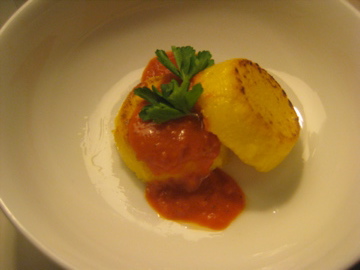
I’m getting into polenta lately- it’s easy to make, easy to experiment with, and a nice change from my somewhat steady diet of pasta. A few things I have learned from my instant polenta adventures:
1) Polenta congeals really quickly. If you aren’t serving it immediately after you make it, it won’t be any good in its most basic form.
2) Polenta should not be made with water, even though many instant polenta boxes recommend this- use chicken broth or milk instead and it will be much creamier.
3) Polenta will quickly take on the flavor of whatever spices or additions you are using, so add them slowly and adjust if necessary.
One instant polenta box makes a fair amount of food, so an easy trick to another meal is spooning half of the polenta into a muffin tin and storing it in the fridge. You can then make Fried Polenta with Vodka Sauce for leftovers night.
Fried Polenta with Vodka Sauce
Prepare one box of instant polenta and season with salt and pepper (or however you would like), spoon into muffin tin (do not use muffin cups or plastic wrap). You can store this over night if you are using this as a leftover polenta meal, or just cool for 30 minutes.

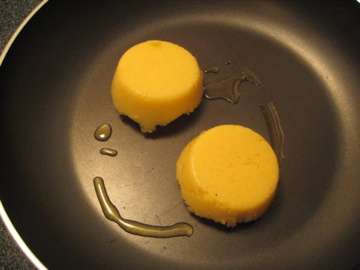
Heat a non stick pan, add several tablespoons of olive oil. Using a fork, gently pry the polenta cakes out and place in pan. Fry for 2-3 minutes per side, or until browned. Top with vodka sauce, or the sauce of your choice. Voila.
Food: Pan-Fried Chicken with Ginger and Grapefruit

Someone recently mentioned to me that they make a chicken dish with grapefruit and ginger, and I was not impressed. I couldn’t really picture how the ginger would work with the fruit and the chicken, but when I tried my own version – recipe below – I was pleasantly surprised. The ginger wakes up pan-fried chicken, the grapefruit tarts up the avocado, and the whole thing just…works. Plus, it’s not time-consuming but is filling enough that you don’t really need any side dishes.
Pan-Fried Chicken with Ginger and Grapefruit
2 chicken cutlets
2 tbsp butter
1 tbsp olive oil
1 cup milk
1 cup breadcrumbs
1 avocado, diced
1 tsp grated fresh ginger
1 grapefruit, cut into supremes, juice reserved (cut grapefruit over a bowl)
salt and pepper, to taste
Melt butter over medium heat. Dredge chicken cutlets in milk and then breadcrumbs, then pan-fry over medium-low heat until cooked through (5-7 minutes).
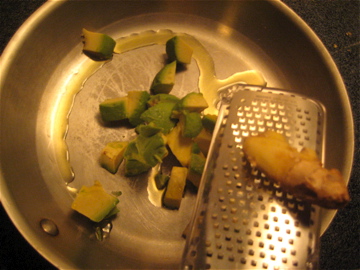
Put avocado, ginger, and reserved grapefruit juice in a pan, bring heat to medium for 1-2 minutes, add a pinch of salt. You don’t really want this to cook, you just want the flavors to meld.
Top chicken with avocado mixture and grapefruit supremes. Voila.
Food: Polenta with Miticrema
One of my favorite Spanish cheeses is Miticrema- a soft cheese packaged in a pretty little jar. The taste is very similar to cream cheese, but it is a bit saltier and has a grassy undertone, since it’s made with sheep’s milk.
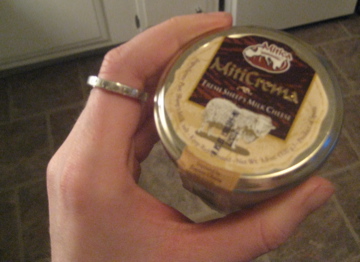
In Spain, Miticrema is typically spread on crackers or bread, or mixed with fig spread or membrillo paste – here in the states you could just use a bit of raspberry jam or pepper jelly if you don’t want to get too fancy. Or, you could try the recipe below. Miticrema makes polenta velvety-creamy, and gives it a subtle, earthy note. The finished polenta is filling enough to eat on its own (perhaps for Meatless Monday), but could be a substitute for potatoes or rice if you want some meat on your plate.
Polenta with Miticrema
1 package instant polenta (9 oz)
4 1/2 cups chicken broth
1 jar Miticrema (available in most specialty cheese departments)
1 tbsp butter
1 cup sharp chedder cheese, finely grated
1 tsp lemon juice
1 pinch cayenne
salt
Bring chicken broth to a rapid boil, remove from heat and slowly stir in polenta. By stirring slowly and continuously you will avoid lumps. Mixture will thicken in about 1 minute.

Add entire jar of Miticrema (with a few dollops reserved to top individual servings), cheddar cheese, lemon juice, butter, and cayenne to polenta, stir to combine. Salt to taste, serve immediately. Voila.

Food: The Calculus of Affogato

Affogato: n. Italian for “drowned.” SlicedBread for “the intersection between a cappuccino and an ice cream sundae.”
There is a short list of things that I could eat every day for the rest of my life, and coffee and ice cream are near the top of that list. When I lived in Florence I learned it is extremely gauche to order cappuccino after dinner- in Italy that coffee drink is for breakfast only – but it is accepted and encouraged to eat gelato all day long. Affogato combines the two foods, multi-tasking at its finest.
The basic recipe is a scoop of vanilla or chocolate gelato (or ice cream) topped with a shot of espresso, finished with whipped cream. Some prefer to include a shot of Amaretto or other liquor, but then you’re getting into Venn diagrams with unions between tiramisu, coffee, and sundaes, and that’s just too complicated for dessert.
Food: Cheddar Soup
M.F.K Fisher once said: “Cheese is a food both sophisticated and simple humans love. ” She’s right – at times I am simple, at times I am (at least attempting to be) sophisticated, but I always love cheese, in any form.
Except soup.
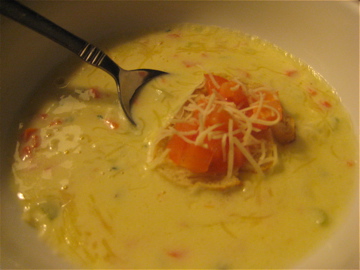
The few times I’ve had cheese soup, I’ve been sorely disappointed. It usually takes the form of slightly thinner cheese whiz, with that unnatural orange hue and sticky consistency. Sometimes the soup has unidentifiable food particles suspended in its gelatinous structure, but usually it seems best not to analyze the bits too closely. To avoid these problems, I consulted several different recipes – and paid special attention to pictures – before attempting to create my own Cheddar Soup. I wanted something lighter in texture, more like a broth and less like traditional cheese glop, so I tossed out any recipe that used heavy cream. I also didn’t want the flavor to be of just cheese, so I paid special attention to formulas that used things like liquor or beer.
The following recipe was exactly what I wanted, except for one thing: I bought an entire bottle of Sherry to use just 3 tablespoons in this soup. Now I fear I’ll be googling “recipes with Sherry” for the next two months to get rid of this stuff. Oh well.
Cheddar Soup
2 tbsp butter
1 medium onion, minced
1 small carrot, minced
1 small celery rib, minced
1 garlic clove, minced
2 tbsp flour
2 cups chicken broth
2 cups half and half
pinch cayenne pepper
3 tbsp Sherry
2 cups sharp cheddar cheese, 1 cup mild cheddar cheese, shredded
1 tbsp finely minced fresh thyme
2 strips bacon, cooked until crispy and crumbled, 1 tsp bacon drippings reserved
1 small tomato, diced
1 baguette, sliced and toasted in a hot oven
1/2 cup shredded Red Dragon cheese, for garnish (optional)
Over medium heat, melt butter in a large pot, add onion, carrot, celery, and garlic, cook until garlic is fragrant. Add flour and stir, coating the vegetables, about 2 minutes. Whisk in chicken broth and half and half. Increase heat and bring mixture to a boil, then reduce heat and let simmer for 10 minutes.

Remove from heat, add cayenne, bacon drippings, and sherry, stir. Whisk in cheese and thyme, season with salt and pepper. Serve in a bowl, topped with bacon, tomato, and toasted baguette slice. Sprinkle with cheese – Red Dragon if you have it, plain cheddar if you don’t.
Voila.
Frame: The Supremes
I always thought it was kind of neat that the dead, cold, snowy suck of winter also happens to be grapefruit season. How odd is it that during a time of year when all I want to eat is gooey comfort food, this sparkling, juicy fruit is at its peak? I really enjoy grapefruit, but trying to eat it always seems like a chore- unless it has already been halved, sugared, and presented to me with a fancy serated grapefruit spoon.
However, I recently learned how to “supreme” a grapefruit, a preparation trick that works for all citrus and makes it much easier to enjoy. Supreming is a technique that removes the membrane from the fruit, allowing you to use the slices in recipes or just eat them whole.
Start by cutting the top and bottom off of your grapefruit.
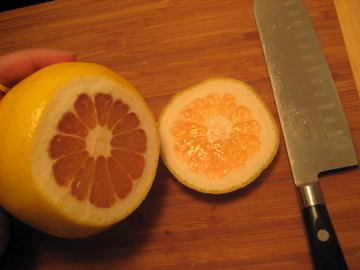
Next, curve your knife around the fruit, cutting the rind off in strips.
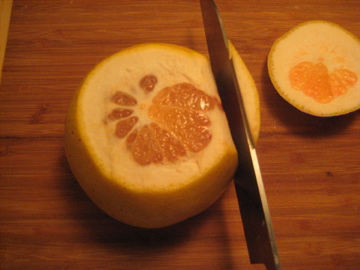
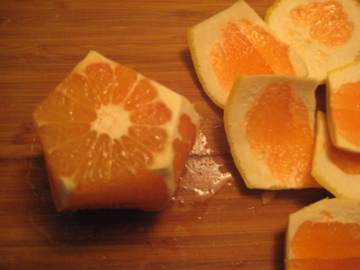
(The above is supposed to look round, mine looks a little too pointy. I’m not a professional, ok?)
Once your grapefruit is peeled, run your knife between the segments of the fruit at an angle.
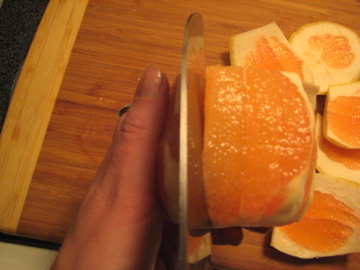
Remove segments – which are now called “supremes” – from fruit and enjoy!
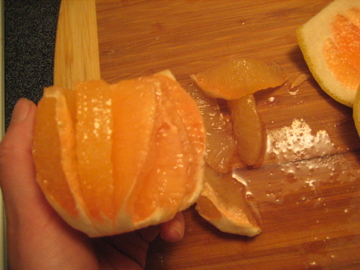 (Voila.)
Feast: Cochon 555
Cochon 555 is best described by this traveling event’s brief tagline:
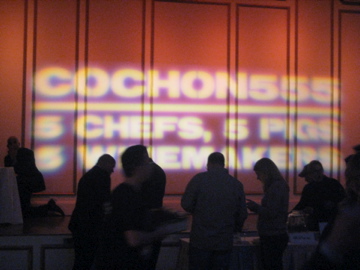
5 Chefs, 5 Pigs, 5 Wine makers
But a quick trip to Cochon 555’s website gives you a lengthier explanation, via their Mission: Cochon 555 is a one-of-a-kind traveling culinary competition and tasting event–five chefs, five pigs, five wine makers–to promote sustainable farming of heritage breed pigs. Each stop along the ten-city tour offers hard-working local farmers the opportunity to connect with like-minded agriculturalists, renowned chefs and the pork-loving public. Our goal is to help family farms sustain and expand their businesses and to encourage breed diversity. Cochon 555 is the only heritage breed pig culinary competition in the country.
Great idea, great cause, and in Boston last night, great chefs at a great venue – The Fairmont Copley Plaza. Two of my favorite chefs – Scampo’s Lydia Shire and Hungry Mother’s Barry Maiden- were competing, so even if bacon wasn’t one of my favorite food groups, I would still have been excited to attend.
The 5 wine makers and 5 chefs were set up at booths along the perimeter of the Fairmont’s ball room, and guests lined up to try the offerings from each. While options like “pig newtons,” “bacon baklava,” and bacon cotton candy were interesting to try, it didn’t take more than a bite of these to fill up on whimsy. While experimentation is great, sometimes it can get a little too haughty.
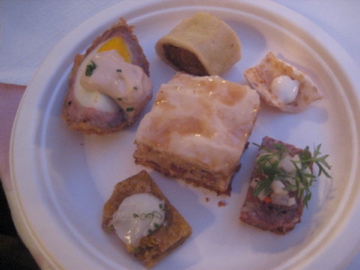
options from Garden at the Cellar
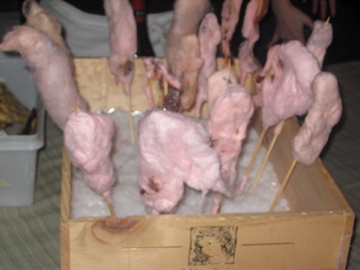
Bacon Cotton Candy from Harvest
My three favorite dishes of the evening were:
1. Lydia Shire’s donut
2. Will Gilson’s chicharrone with aioli
3. Mary Dumont’s pork rillettes with mustard and cornichon
All three were fantastic, simple executions of excellent pork (or lard), sans affect or hubris.
My favorite full tables were Lydia Shire and Barry Maiden (not suprising). Lydia was holding court- and holding up the crowd as her line grew to the full length of the room. But it was a warm and festive atmosphere, and with a glass in your hand and bacon being passed around in mason jars, who really minded a little wait? Once I got to Lydia’s station, she was carving a ham and hand-serving each person. She (accurately) sized me up when she saw me, looked me in the eye and pronounced “You are going to need another plate” as she plopped a piece of lemon tart, a portion of blood sausage with hollandaise, and a donut on my dish. The donut was warm, perfectly glazed, and not too sweet. Forget everything you thought you knew about donuts.
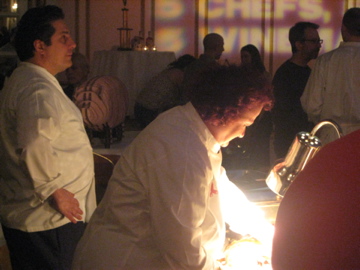
Lydia serves the masses

Chef Maiden was not as talkative at his stand, but I’m so infatuated with Hungry Mother I had to tell him how much I admire his food. Busy as he was, he stopped his furious plating, smiled, and gave me the most humble, genuine “thank you so much” I’ve heard in a long time. No, thank you.

Unfortunately, I felt that many of last night’s featured wines didn’t pair well with the dishes being served, so it was hard to give them a fair shot. But maybe I was just too food-focused at the event. I did find one new favorite that I’m hoping to buy a few bottles of – the Sokol Blosser Pinot Noir.
There were two special bonuses I was not expecting at Cochon 555 – the first, a booth from Clover Food Labs. Clover, started by an MIT grad, is based out of a food truck that serves “a new type of fast food.” Given that the pine nut cauliflower they were serving was literally the best cauliflower I’ve ever eaten, I would completely agree that this is no Burger King.

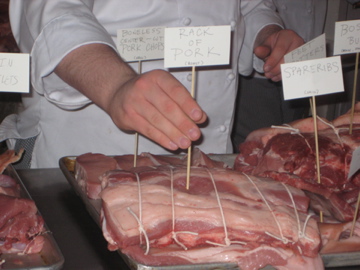
The second bonus was a butchering competition between Tom Daly of Savenors and Rick Lemay of Lemay & Sons. They make offal look like (my version of) a Renaissance painting. The cuts of pork were raffled off to benefit The Food Project.
My one regret of the evening is that the only part of Matt Jenning’s food I got to taste was the chocolate-lard cookie (his lines were too long and they only dissipated once his food had run out). But by then I was way too full of pig to enjoy anything else, so it’s probably just as well.
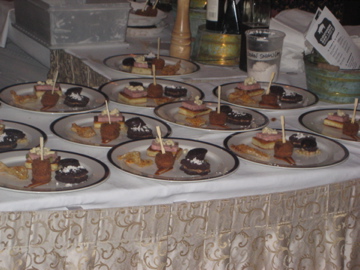
Food from Matt Jennings of the Farmstead
Special thanks to a lovely new friend for facilitating my attendance, I had a fantastic time. And, I particularly liked the lighting when I first got to the event – dimmer lights always make me feel better when I’m consuming massive amounts of pork fat.
 The Best Thing Since Sliced Bread