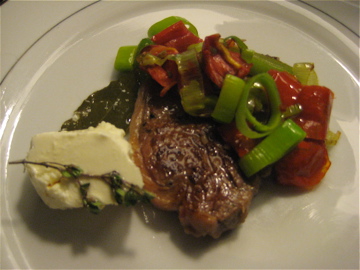
Food: Backwards-Marinated Steak with Leeks and Tomatoes

the backwards marinade
I really felt like steak tonight, and I really needed to use up some stuff in my fridge. Thus, this recipe was born. Quick, easy, and even if you had to buy the ingredients it wouldn’t be hard to assemble.
Ingredients:
2 rib eye steaks
juice from one lemon
olive oil
1/2 cup oven roasted tomatoes in oil, chopped
1 leek, chopped
1 tbsp butter
few chunks marinated feta
few sprigs thyme
Season steaks on both sides with salt and pepper, sear until cooked to your liking. I like medium rare, so for me that was about 3 minutes per side.

While steak is searing, put lemon juice, thyme, and a drizzle of olive oil into a shallow dish. When steak is done, put steak in dish for ten minutes, turning once. You are basically marinating the steak backwards, which makes it extra tender and really flavorful.
While the steak is marinating, saute the leeks and tomatoes in butter (or olive oil if you prefer) until soft. Serve over steak, and with a side of marinated feta. The saltiness in the cheese goes well with the lemony steak, and the bitterness of the leeks is balanced by the sweetness of the tomatoes. Voila!
Food: (Not) Cooking Light
Sometimes I flip through Cooking Light and think, hey, that looks like a really nice healthy recipe. And so I buy some ingredients and set about to cook my dinner. I always start with the very best intentions, as I did again recently with my plans to make a pasta dish with a sauce of corn, leeks, chicken broth, lemon juice, garlic, shallots, and light olive oil. It sounded delicious- a nice respite from the diet of short ribs and stuffing I’ve been indulging in lately.
I began innocently enough, sauteing the garlic and shallots. Except, I don’t have light olive oil, so I used regular (who buys light olive oil?). And I had recently purchased some really amazing butter, so I thought I should probably use just a dab of that. No harm, right?
Then I was in my fridge looking for the tomatoes when I ran across some leftover pancetta. I really hate to waste food, and I couldn’t think of another immediate use for the pancetta, so, for the good of my conscience, I chopped it up and threw it in. There are people starving all over the world, you know.
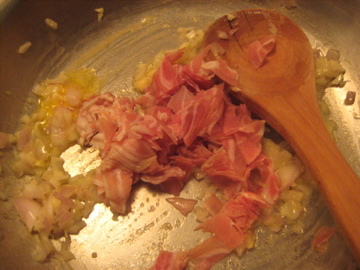
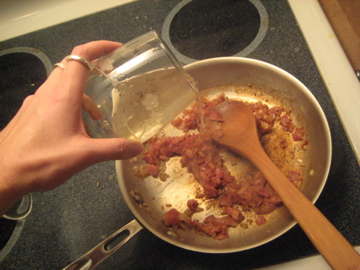
Also, I was cooking while savoring a really nice glass of wine, and I thought, hey, this wine would go really well with this dish. Plus, since I had added the pancetta I now needed wine to deglaze the pan. Right?
Then, I had to go back into the fridge for the leeks, and I spied the leftover half and half I had used for something earlier in the week. I don’t use half and half on a regular basis – I take my coffee black -and again, I really hate to waste food. I just feel that it is socially irresponsible. So in went the half and half.
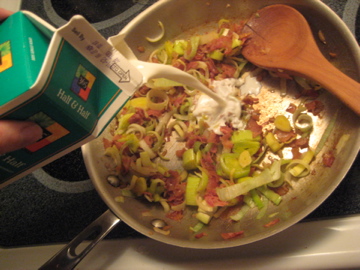
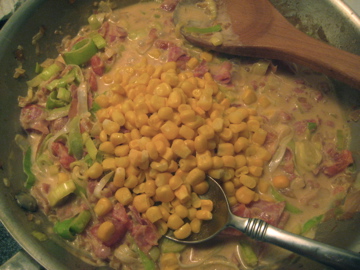
At this point, it was pretty clear that my recipe no longer resembled anything like the Cooking Light meal I had envisioned. But I did add the corn and the lemon juice, and some parmesan cheese – just to round it out. I omitted the chicken broth, however. That just seemed like it would be over the top.
Voila.
Frame: The Anti-Trend
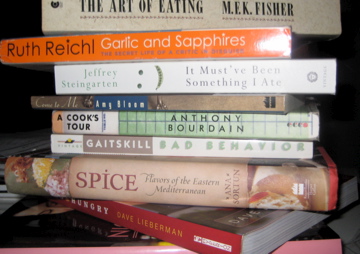
The latest issue of Food and Wine has a section on food trends, and they cite chef memoirs and food writing in general as a major fad. Impossible to argue, the popularity and available quantity of food writing has exploded over the past few years, and with it the arrival of many more “best of food writing” lists – best cookbooks, best essays, etc. Today I’m giving you my own list, a compendium of some of my favorite food-related words. Absolutely none of these books are new, and some are downright old. But they are all good.
Kitchen Confidential, Anthony Bourdain: While currently he is most famous for his show, No Reservations, his first book details his time at Les Halles and his rise to the booze-y, sarcastic Anthony he is today. If you don’t read any of his other books, read this one
The Man Who Ate Everything, Jeffrey Steingarten: The epitome of the food curmudgeon, his written voice is hysterical and salty.
Bad Behavior, Mary Gaitskill: This collection has nothing to do with food, it’s just so chewy and dense that reading it feels like eating an enormous steak.
Garlic and Sapphires, Ruth Reichl: What I love about Ruth’s books is that they aren’t just about food, they are about her life, her family, her neurosis. This book does an excellent job of combining all of these things.
Come to Me, Amy Bloom: This collection is not about food, but Ms. Bloom writes so lusciously it may as well be. She also tends to use food words as descriptors.
“The flowers and the thick lemony air hum in their ears, drowning out the hiss of the espresso machine and the faint clinking of small cups and saucers.” -Faultlines
The Art of Eating, MFK Fisher: Ms. Fisher, the grand dame of food writing, is not nearly as well-known as she should be by the newcomers in today’s food-as-trend culture. Two of my favorites in this collection – “Love Was the Pearl” and “A Lusty Bit of Nourishment” from Consider the Oyster- should be required reading for anyone who wants to have anything to do with food.
American Food Writing, An Anthology: Edited by Molly O’Neill: A hefty tome, filled with essays from the likes of JA Brillat Savarin, Julia Child, Emily Dickinson, and Walt Whitman. One of my favorites is a ridiculously simple recipe for Beef Stroganoff from James Beard.
Nigella Express, Nigella Lawson: No surprise, I love Nigella -I’m sure I’ve mentioned her before. She’s gorgeous, funny, and (seemingly) down to earth. Her recipes in this book are often credited to some of her favorite cookbooks- in this way she makes you feel like you are part of the art and history of cooking, not just listening to her narrow take on cupcakes.
Spice: Flavors of the Eastern Mediterranean, Ana Sortun: I love Oleana, I love Sofra, I love this book. I’m lucky enough to have heard Ana Sortun speak about food – she makes you want to run home and cook. My favorite recipe is something that she makes at Oleana, Deviled Eggs with Tuna and Black Olives. Forget everything you ever knew about deviled eggs.
Now go buy some Christmas presents.
Food: Meatless Monday- Holiday Reprieve

not food, but technically vegetarian.
If you need a little reprieve from all of the holiday eating and cooking (and I know I do), this week’s Meatless Monday recipe should do the trick. It’s quick, healthy (no cream in this one- surprise!), and even though it isn’t much to look at, it’s really delicious. (Seriously, it’s not photogenic. I took a bunch of pictures and I thought all of them would dissuade even the most devoted vegetarian from cooking this, so I’m not posting any. But it really is good, I promise.) I believe I got the basis for this recipe years ago from a Moosewood cookbook – an excellent resource for anyone doing Meatless Monday.
MM Cannellini Beans and Tomatoes
1 28 oz can diced tomatoes
2 15 oz cans cannellini beans – drained, not rinsed
2 tbsp lemon juice
2 cloves garlic, minced
1 shallot, chopped
salt to taste
2 tbsp flat leaf parsley
Saute garlic and shallot in a tbsp of olive oil. Once soft, add cannellini beans and heat through. Add lemon juice, stir. Add tomatoes and parsley, simmer for 10 minutes. Salt to taste. Voila.
This is good as is, but if you want some starch, a good option is quick cook polenta. Pick up a package of “instant” polenta – the directions will say to cook it in boiling water, but I find skim milk gives it a richer flavor while still keeping it low in fat. Of course, adding a few pats of butter never hurt…
Feast: Bondir, Bringing Life to Broadway

You expect to find a lot of things when you walk down Broadway Street in Cambridge – some trash, a Brazilian market, a funeral parlor or two. But you do not expect to run across a small, warm, restaurant with a roaring fire and excellent farm to table food. I made my first trip to Bondir on what was only their 9th day open to the public, but the good-natured crowds mingling in the firelit foyer made it seem like the place had been there for years. Rather than give off the air of a sleek, scene-y new kid, Bondir already feels like a much-loved neighborhood spot.
As soon as you enter, Chef Jason Bond, Manager Patrick Gaggiano, and the entire Bondir staff make you feel like a welcome guest in their home, not just a patron at a restaurant. Many of the decorative touches in the cozy space – their harvest table and mirrors, for example- came from their friends, and details like mismatched – yet beautifully detailed- plates contribute to the friendly atmosphere. Mr. Gaggiano is always present, making use of the skills he honed as a child while performing his favorite chore- clearing and setting the table- while also answering questions from diners and offering suggestions or just friendly conversation. And then, there is the food.
Far from an obligatory sourdough roll, Bondir starts you off with truly inspired bread. Staff baker Lan Lam makes all of their bread in-house daily, and it rises window- side by their fireplace. The assortment we had was Sour Cherry Walnut, Bronze Fennel Seed, and Sepia. They were all flavorful, but the clear star was the Sepia, made with squid ink. Chewy, dense, and rich, it was only due to rapidly waning willpower that I was able to keep from asking for another helping.
One of my favorite features at Bondir is that they offer half portions of their entrees. If you aren’t that hungry, a half portion would suffice for your whole meal, but it’s much more fun to order several half portions and try as many dishes as you can eat. Farmhouse style tapas, if you will.
I started with the Bloody Butcher Heirloom Grits with Vegetable Mignardises. The name Bloody Butcher comes from the ruby red color of the grain used for the grits, which has been harvested on the state line of Georgia since the early 1820’s. The grits themselves were tender but not runny, but the vegetables were my favorite part of the entire night. Black radish, gill feathered turnip, Jerusalem artichoke, pickled mushrooms, kholrabi, and yukina savoy were all cooked and seasoned perfectly. This is the kind of vegetarian dish that you serve to staunch carnivores to shut them up.
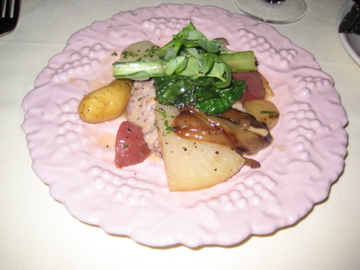
bloody butcher heirloom grits
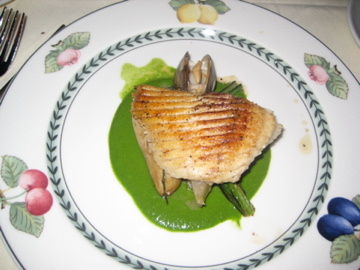
The Tagliatelle alla Macellaria with Black Truffle had subtle layers of flavor in the pork and lamb ragu, and my dining partner’s Scituate Skate Wing and Pea Green Broth was seared and seasoned perfectly.
By the time we were done with dinner, my bulging stomach was ready – almost hoping- to be underwhelmed by dessert, as it is at most restaurants. But the Roxbury Russet Apple and Cranberry Tart with Port Creme Fraiche had us raving – the combination of sweet and tart, not to mention the perfectly flaky pastry crust, will bring me back just for dessert. I’m still talking about the Traquair Jacobite Coriander Beer Float with Futsu Squash Puree and Salted Caramel Ice Cream. Not only do I love a drink that masquerades as a dessert, but the squash puree in the beer epitomizes what Chef Bond is going for – combining the traditional and modern to prepare honest, flavorful food.
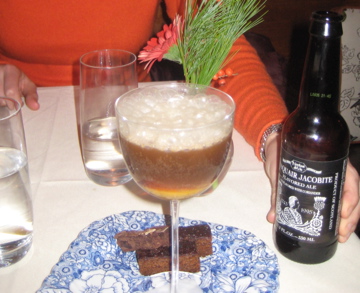
I’m happy to have had the chance to eat at Bondir already, because I have a feeling it’s going to be nearly impossible to get a reservation soon. While Broadway Street isn’t exactly a culinary thoroughfare, there is plenty of competition nearby- Tupelo, Hungry Mother, and Oleana, to name a few – but it seems clear Bondir can hold their own. Run over this weekend, try as many half portions as you can manage, and don’t leave without getting dessert.
Food: Pasta with Apples, Pork, and Creamy Cider Sauce

credit for all photos in this piece: the talented jim morrison
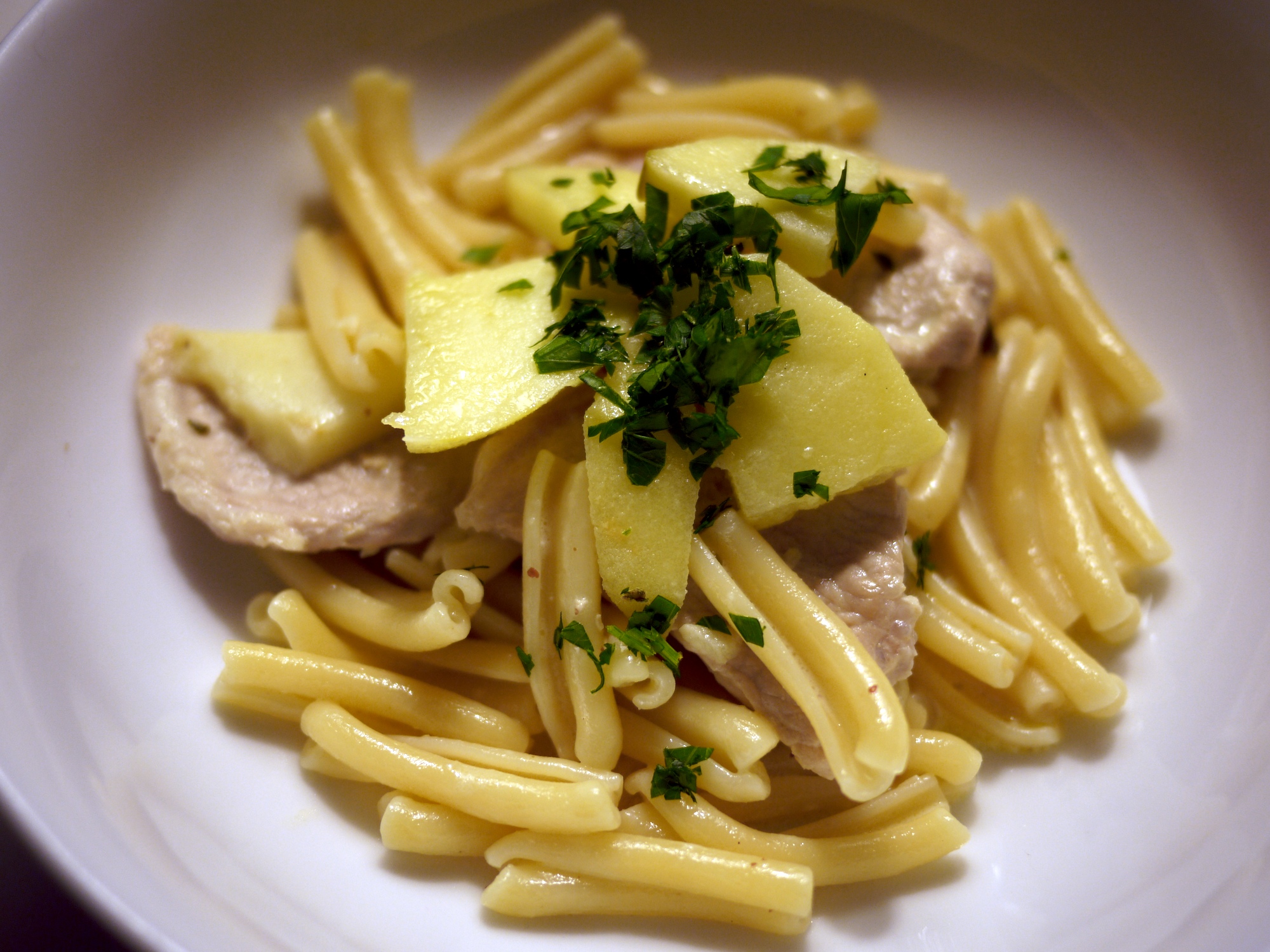
There are some dishes in which you want a particular ingredient to shine, to be the focal point, to stand up and run the meal. And there are some dishes in which you just want all of the ingredients to meld together and make the whole better than the sum of its parts – this is one of those dishes. The creamy cider sauce is rich but not too cloying, and the amount that this recipe makes will just coat your pasta- you won’t be drowning in sauce. The pork and apples are both mild enough that you don’t need too much salt for seasoning, and the sage and mustard add depth without conflicting personality.
Pasta with Apples, Pork, and Creamy Cider Sauce:
3 (1 lb) Roxbury Russet Heirloom apples (substitute Granny Smith if you can’t get heirloom), peeled and sliced
1 lb boneless pork loin, thinly sliced
1 1/2 cup chicken broth
1 cup Hard Cider (I used Harpoon)
1 stick butter, divided in half
2/3 cup heavy cream
3 cloves garlic, minced
1 tbsp stoneground mustard
1 tbsp fresh sage, chopped
salt and pepper
3 tbsp flat leaf parsley, chopped (for garnish)
1 lb short pasta, cooked (I used caserecce)
Start by going to your butcher and requesting thinly sliced pork loin- one of the tricks to this dish is getting pork so thin it doesn’t take long to cook.
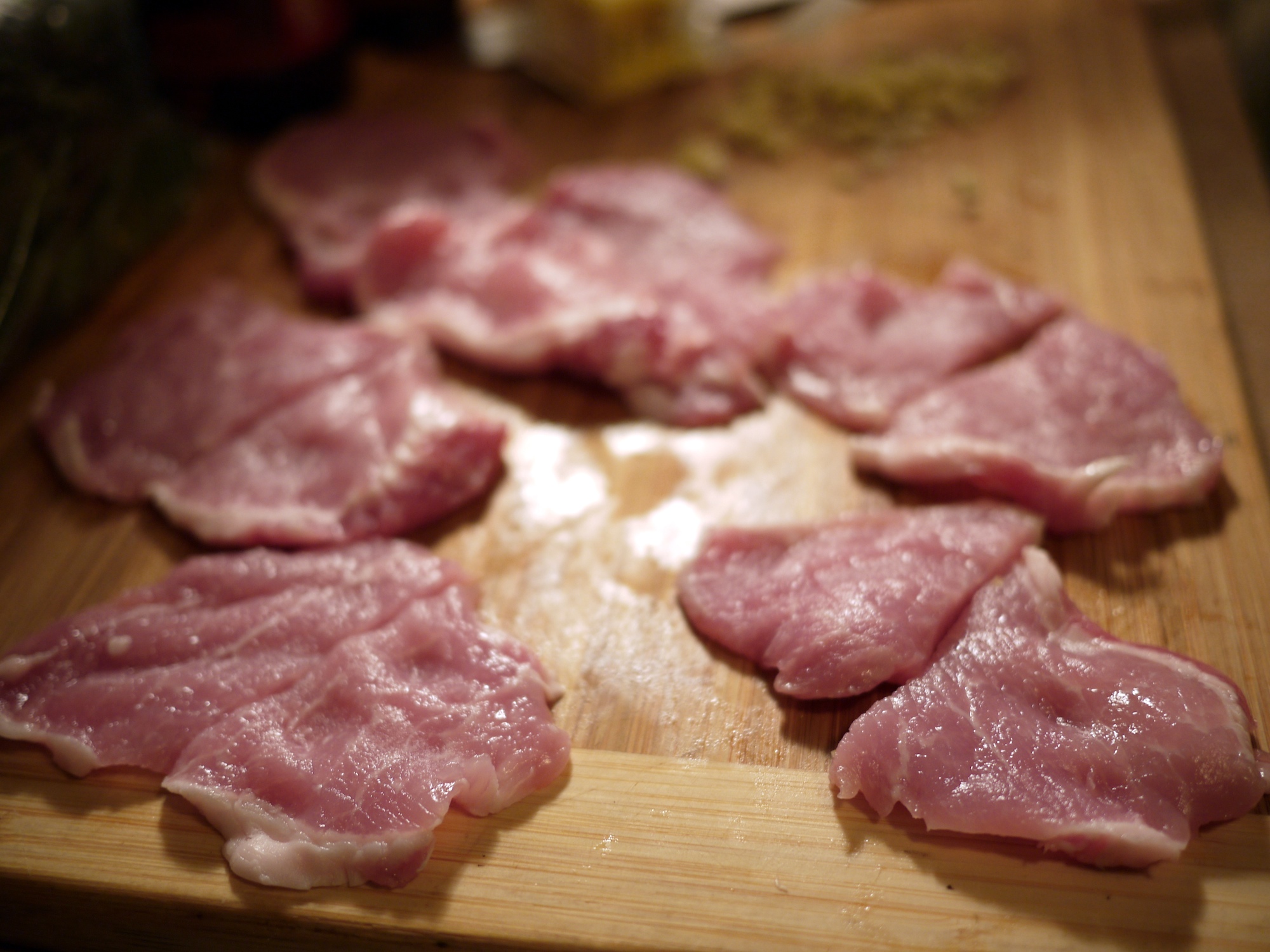
Cook your pasta, then leave it to drain – you’ll add it to the sauce and warm it up later. Peel and core your apples, then slice to a similar thickness as your pork. Melt half of your butter in a large pan and saute the apples over medium-low heat until tender but not mushy- about 8 minutes. Remove apples from pan and put on a plate to rest. Using the same pan, melt the rest of the butter and sear your pork slices, about a minute on each side. Leave butter and pork juices in pan, but remove pork and set on a plate, covered in foil, to rest while you make your sauce.
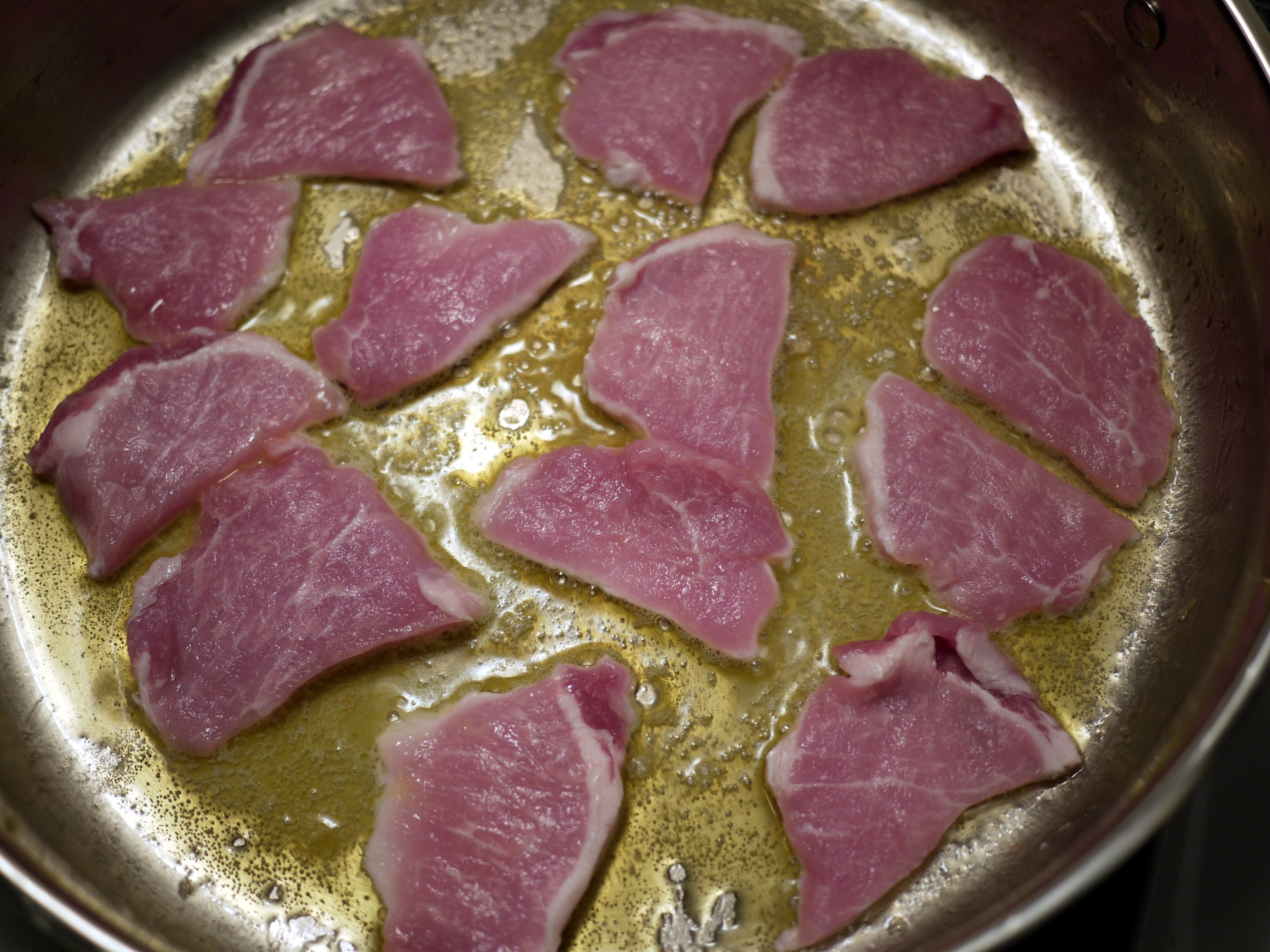
your pork should be so thin that it takes just a minute on each side to cook
Add cider to pan and stir, scraping bottom of pan. Then add minced garlic, sage, salt, pepper, mustard, and chicken broth. Using a whisk, incorporate all ingredients and bring to a boil. Turn down to a simmer for 10-15 minutes and let mixture reduce. Add cream, bring to a boil, then let simmer for 10 minutes. Taste, adjust salt and pepper if needed.
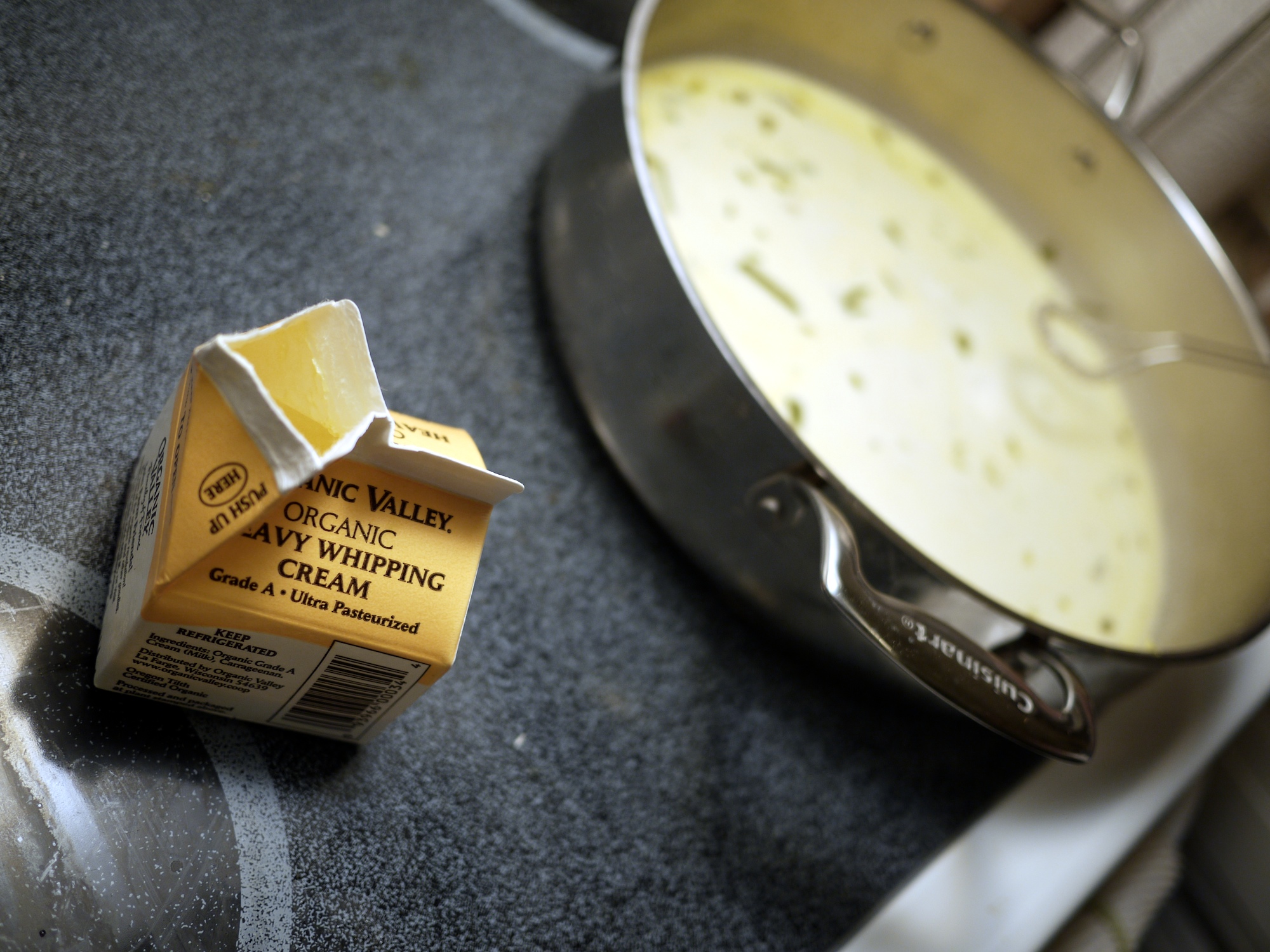
Add back pork and apples to the simmering sauce, stir, and let flavors incorporate for 2-3 minutes – no longer, you don’t want to over-cook your pork.
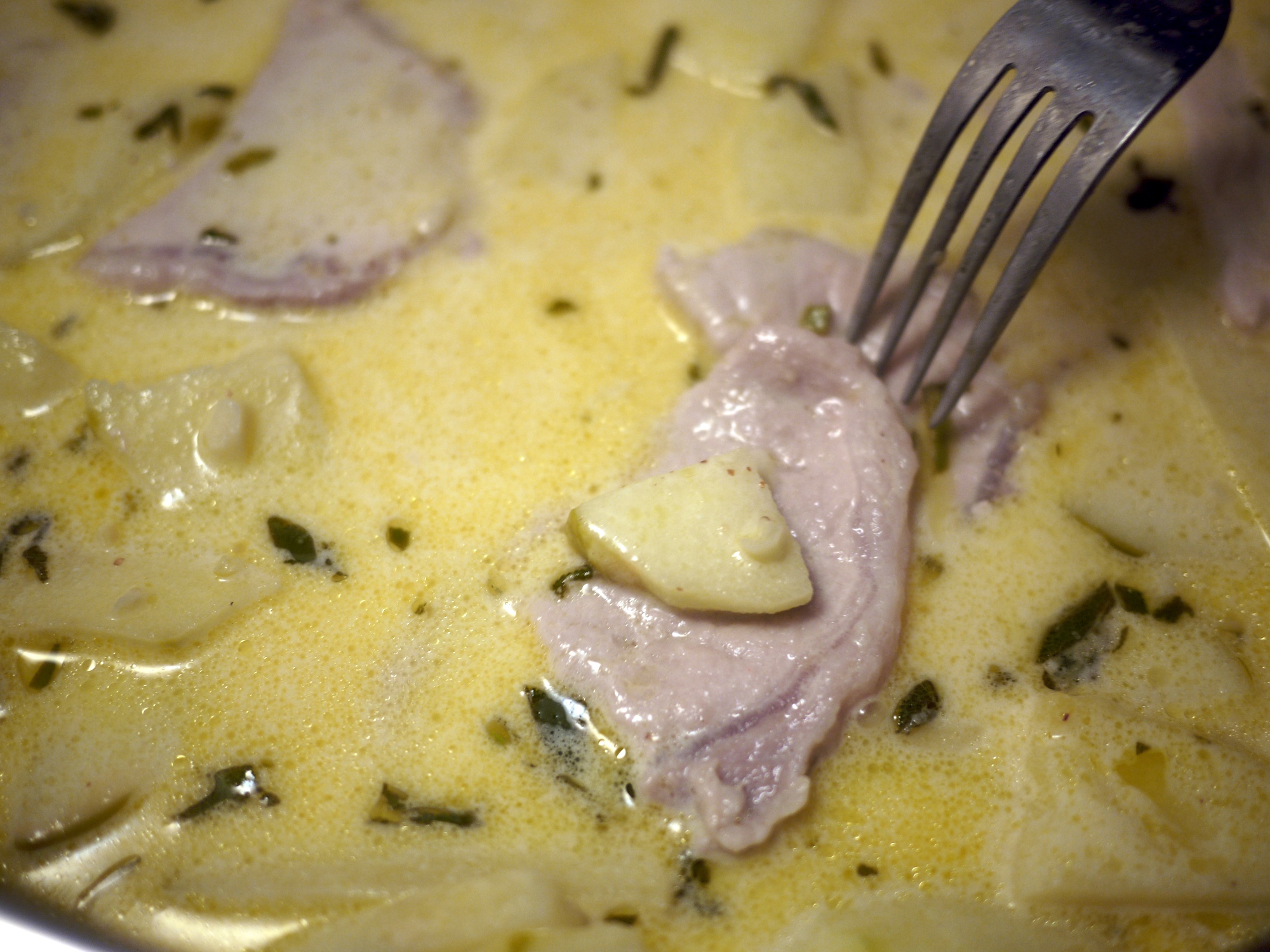
Add pasta to sauce and stir for 1-2 minutes, coating your noodles. Voila.
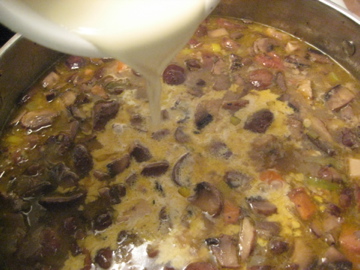
Food: Mushroom Soup with Gruyere and Pancetta
The best mushroom soup I’ve ever eaten lives at The Cafe at the Frick in Pittsburgh, PA, years ago. I remember that it was a stock based soup, with just a tiny bit of cream, and that it had capers. It was amazing, and every time I go back to the Frick I hope they have it on the menu.
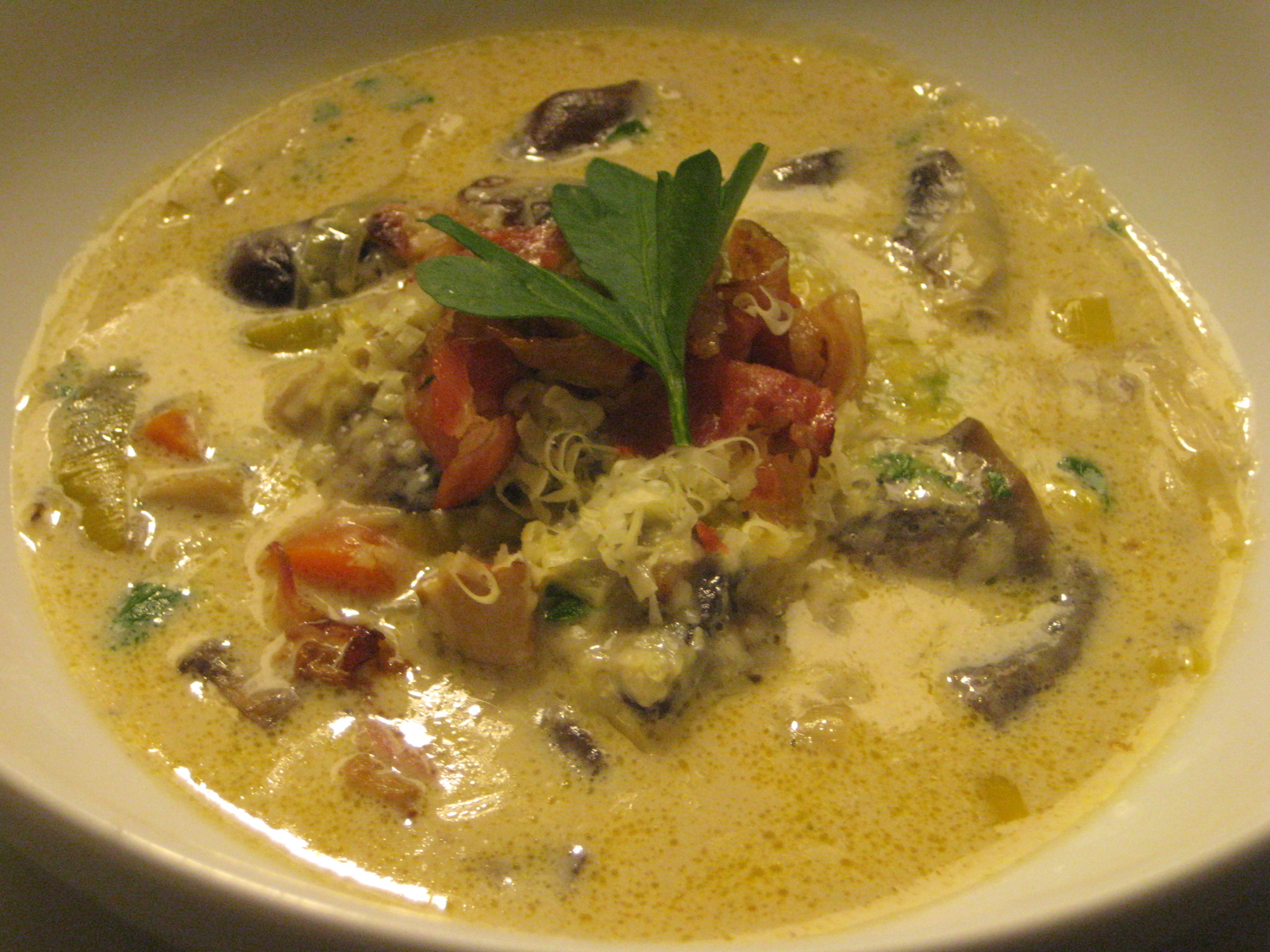
This mushroom soup is not as good as the Frick’s, and I am not so bold as to try capers in a knock-off. But it is hearty and flavorful, the gruyere adds a nutty layer, and the pancetta, well, who really needs an excuse to use pancetta?
Mushroom Soup with Gruyere and Pancetta
1 1/2 lbs mushrooms- a good assortment is chanterelle, shitake, portobello, and cremini
1 tbsp olive oil
1 stick butter
1 cup chopped white onion
1 carrot, chopped
1 tbsp fresh thyme leaves
1 tbsp chopped sage
5 cups chicken or mushroom stock
1 leek, chopped
1/4 cup flour
1 cup white wine
2 tbsp lemon juice
1 1/2 cup heavy cream
1/4 cup chopped flat leaf parsley
8 oz pancetta
3/4 plus 1/4 cup gruyere, grated
salt and pepper
Clean any dirt off of your mushrooms by wiping with a paper towel- do not wash them (don’t want soggy mushrooms). Chop into bite size pieces. In a large pot, add the olive oil, onion, carrot, thyme, and sage into the pan with 1 tsp salt and a few dashes of pepper. Saute over medium heat for 10 minutes. Add chicken or mushroom stock and lemon juice, bring to a boil, then leave simmering.

i love cooking with wine. sometimes i even put it in the food.
In another large pot, melt the butter and add your leeks. Saute until leeks are soft (about 10 minutes) then add mushrooms and cook until tender. Add 1/4 cup of flour and stir just until incorporated – you will have what looks like mushroom goo in your pan.
Add your white wine (I used Chardonnay) and stir, scraping the bottom of the pan. Add your simmering stock mixture as well as another tsp of salt and pepper, bring to a boil and then reduce to a simmer.
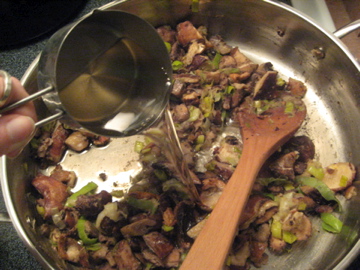
Add cream, parsley, and 3/4 cup of gruyere, stir until incorporated. Leave soup simmering for 30 minutes. In the meantime, cook your pancetta in a pan until crispy, add half to the soup.
Once your 30 minutes has elapsed, taste soup and adjust salt and pepper if needed. Top with remaining gruyere and pancetta. Voila.
Feast: The French Fry Purist and Poutine
When you explain the concept of Poutine – french fries with gravy and cheese curds – to someone who’s never had it, you get mixed reactions. Some people are totally grossed out, others are enthralled. I’ll admit, when I first learned about this dish five years ago, I was skeptical, and the meaning of the word Poutine -“unappetizing mixture of various foods” – didn’t really help. You see, I’m a french fry purist. I’m not into sweet potato fries (not. real. fries.), I don’t like super fancy fries with extra fry coating or intensive seasoning, and steak fries annoy me (too mealy). But when I had my first helping of Poutine, I was immediately hooked.
Really, how can you not love Poutine, especially when it looks like this?

poutine at all star sandwich bar *** photo credit: jim morrison
The above photo was taken recently at All Star Sandwich Bar, a place of many talents, not the least of which has been introducing Poutine to the Cambridge masses for the past few years. Salty, appropriately gooey, and with just the right amount of cheese curds, All Star knows what they are doing.
Poutine is said to have been invented in Quebec, in 1957, when a restaurant owner claims that a take-out customer requested french fries and cheese curds in the same bag, to which the owner responded: “ça va faire une maudite poutine” (That’s going to make a damn mess). The gravy was added later, allegedly to keep the fries warm. By the 70’s, Poutine made it to the underground food scene in New York, but it has only become widely available in the last few years, with the rise in popularity of gourmet foods.
I’ve had Poutine far and wide by now (though I’m still hoping to have it in Montreal one day, where I hear it is phenomenal), but my favorite iteration so far has been at Duck Fat restaurant in Portland, ME. Duck Fat is a tiny little restaurant with a small menu focused on sandwiches and world-class fries, cooked in – of course- duck fat. Their Poutine is made with Pineland Farms cheese curd and rich, dark, duck gravy. The Pineland curd melts more than other varieties, making the experience of eating it a bit more whimsical (more fork twirling and finger grabbing), which is always fun. Pair this with a milkshake, a sandwich with bread from Standard Baking Company, and a trip to Rabelais next door, and you have the makings of a perfect day trip from Boston.
Even the french fry purist in me will try Poutine wherever, whenever, so I urge any skeptic to give it a go. There are a few newer spots in Boston that I hear are doing great things with this dish, The Gallows in particular. Can’t wait to give them a try.

poutine at Duck Fat, Portland ME
Food: Meatless Monday- Mushroom Edition

bluefoot, chanterelle, french horn
In case you don’t know, Meatless Monday is a movement to reduce meat consumption and improve health (of people and the planet) by suggesting that one go meat-less on Monday. I really like the idea of this program, because it doesn’t force one to become vegetarian/vegan, and it focuses on reduction, not elimination. Let’s face it, the country is not going to stop eating meat altogether, and neither am I (yes, I know, I was vegan for a month- but that’s it). Meatless Monday is a really nice way to focus on alternative proteins/vegetable based dishes, at least once a week. And if that spills over into more than once a week, so be it.
This week, I’ve been inspired by one of my favorite foods: mushrooms. I’ve discovered recently that mushrooms often elicit really strong reactions- some people really, really hate them, citing the fact that they don’t want to eat a fungus. To each their own, but I think if you don’t eat mushrooms you are missing out on one of the great umami experiences food has to offer.
The recipe below can be made with cremini, portobello, or a mixture of exotic and ordinary. I used a base of white mushrooms, supplemented with these three treasures (pictured above).
Chanterelle: These have a chewy texture that holds up well, and a peppery undertone.
Bluefoot: These are meaty, tasty, and oddly colorful.
French Horn: These are actually just very large oyster mushrooms. Meatier than chanterelles, they have a mossy, earthy taste.
MM Mushroom Casserole*:
1 1/2 lb sliced assorted mushrooms (your choice)
1 leek, sliced
1 tbsp chopped parsley
1 tbsp chopped sage
6 tbsp butter
3/4 cup heavy cream (you could substitute 1 cup whole milk, but why?)
4 oz goat cheese (1 small goat log)
1 cup yukon gold potatoes, thinly sliced
1 cup butternut squash, thinly sliced
juice from one lemon
1 cup panko breadcrumbs
salt and pepper
* I kind of hate the word casserole, it’s so 1950’s/tv tray. But, oh well.
Preheat oven to 375, then start by chopping your vegetables so they are all of about the same thickness. There will be two layers to this dish, so divide your vegetables in half, one for each layer.
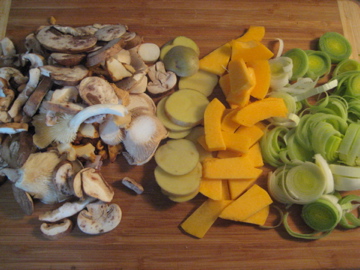
vegetables chopped to about the same thickness
Put a layer of potatoes in the bottom of your baking dish, top this with the squash, then the mushrooms, then the leeks. Sprinkle the parsley and sage over this layer, as well as some salt and pepper. Add half of the butter, separated into slices and placed evenly around your dish. Pour half of the cream evenly over this layer, then squeeze the juice of 1/2 lemon over the top.
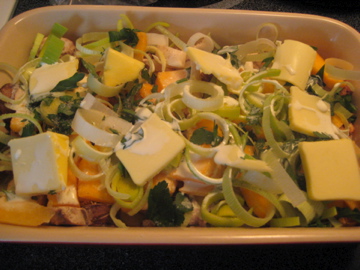
first layer done, topped with butter, cream, and lemon juice
Start your second layer with another row of potatoes, then cut the goat cheese into slices and place evenly around dish. It helps to keep the cheese in the fridge until you are ready to use it- it will cut much more easily when it is still firm.
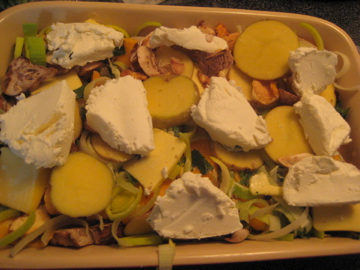
second layer started with potatoes and goat cheese
Finish the second layer off with the rest of your squash, mushrooms, and leeks. Again, add pats of butter, the other half of your lemon, and the rest of your cream. Sprinkle with salt and pepper, then top with bread crumbs. Bake at 375 for 30 minutes*, then let rest for 10 minutes before serving. Voila.
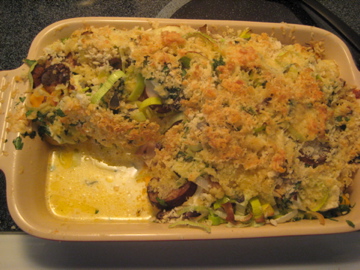
done, with one slice missing
Note: Bake time really depends on the size and depth of your dish. The larger the dish, the less time you will need because more surface area will be exposed. Really, you need enough time for your potatoes to get tender and for the cream and butter to soak into your vegetables (and strip away every ounce of their nutritional value). In my small dish it took 30 minutes for everything to meld properly, but in a larger dish you may only need 20.
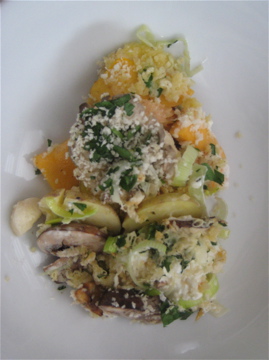
pretty layers
Food: Mushrooms
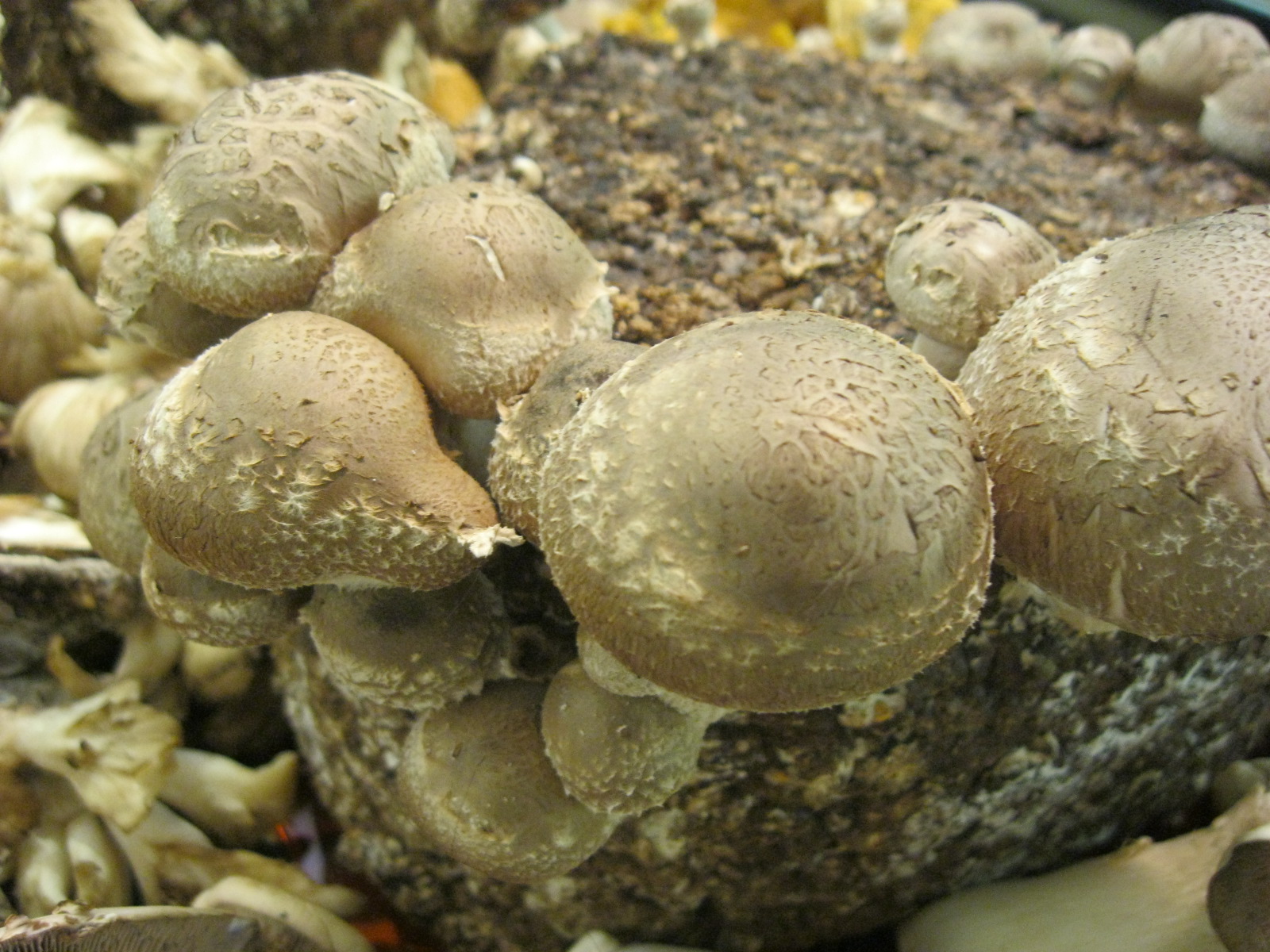
shitake
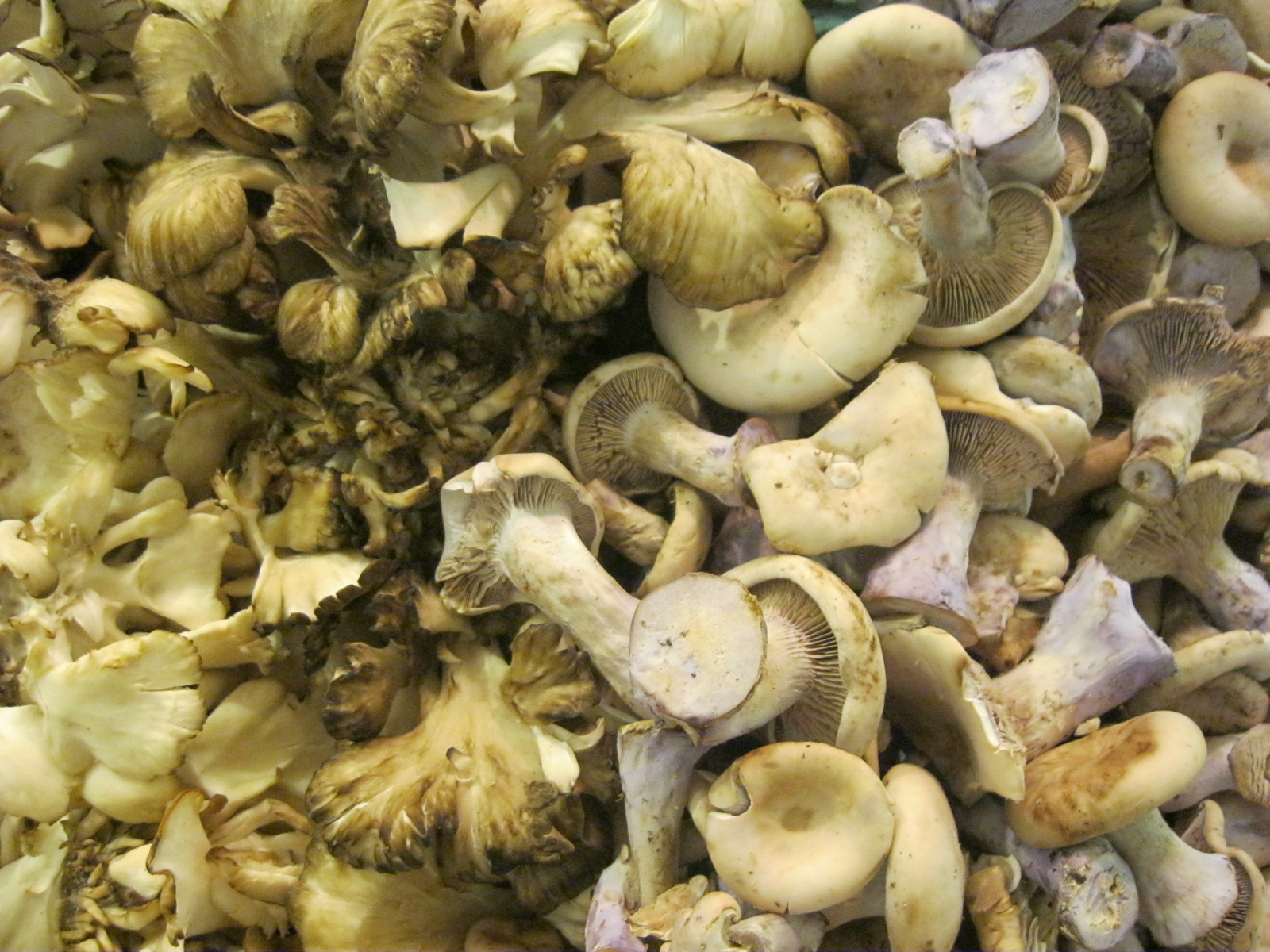
bluefoot
This week’s not so secret ingredient will be mushrooms. If you participate in Meatless Monday, stay tuned for some mushroom-laden options.
Frame: Local In Season
Some of you may remember not voting for me a while back when I was a finalist for the Boston Local Food Festival/Local In Season recipe contest this fall. It’s ok, I can understand choosing Pumpkin Whoopie Pies over vegetables.
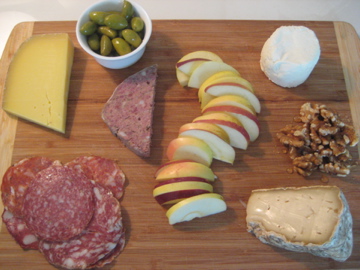
Turns out I’ve gotten an even better prize- the opportunity to write a piece for Local In Season, a fantastic organization focused on local and seasonal food. Check out The Art of the Local Cheese Board – I hope it helps with your holiday entertaining this season.
Food: “Plan B” Beef Stew
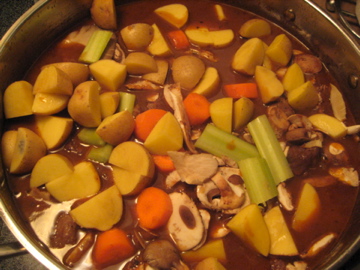
not osso bucco
I really, really wanted to make Osso Bucco last night. I woke up thinking about it, and the cold, windy day that greeted me just reinforced my burning need for veal. I flipped through a few of my cookbooks for some ideas on how to make The Best Osso Bucco Ever and set about to gather my ingredients.
And then I found out that it is literally impossible to get veal shanks in this city without a week’s notice. I’m not kidding- five phone calls and three store visits, and nothing. Even The Meat House told me that veal shanks would have to be special ordered and it could take days to get them in. Really, The Meat House?
However, cooking is about being able to improvise, and the ingredients I had already planned to use for Osso Bucco lent themselves very well to a Plan B: beef stew. All I had to do was grab a different wine and add some thyme and potatoes to my cart – as well as switch from completely unavailable veal shanks to stew beef – and I was set. Even the items I was planning to use for the veal’s gremolata morphed easily into a lemon-garlic marscapone topping for the stew. The recipe below turned out velvety and rich, and while the cook time was lengthy- about 2.5 hours- the prep time was only 30 minutes. In your face, veal shank-less city of Boston – my Plan B Beef Stew was delicious.
Plan B Beef Stew:
2 lbs beef stew meat in 2 inch pieces (ask for boneless beef chuck stew meat)
1/4 cup extra virgin olive oil plus 4 tbsp butter
1 1/2 cups flour (enough to dredge the meat in)
1/2 bottle red wine (I used Nero D’Avola, because it was already open… because I was drinking it)
4 cups beef broth
8-10 sprigs fresh thyme
5 garlic cloves
4 bay leaves
zest from one orange, peeled into large slices
salt and pepper
4 tbsp tomato paste
1 lb small yukon gold potatoes, quartered
1 lb mushrooms (whatever assortment you like)
2 large carrots, peeled and sliced
1 stalk celery, roughly chopped
1 lb egg noodles, cooked (if you want them)
Season the beef with salt and pepper- I’m partial to Borsari seasoning salt. It’s easiest to put all of your beef pieces in a plastic bag, add seasoning, and shake to coat. Then dredge beef pieces in flour.
Heat a large, deep saucepan with the olive oil and butter (medium heat), then add beef and brown on all sides (takes just 1-2 minutes a side). Remove beef from pan, cover with tin foil.

browning the meat
Add wine to the pan and deglaze for several minutes, until wine is simmering. Then add beef broth, thyme, bay leaves, garlic (smash the cloves with the back of your knife and add whole, they will fall apart as they cook), orange zest, and tomato paste. Stir, then add beef back to pan. Simmer uncovered for 15 minutes, then cover and simmer for 2 hours.
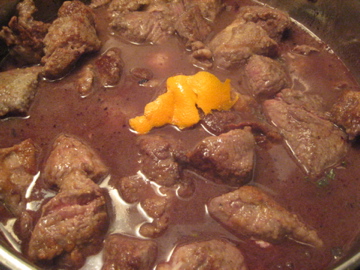
don't worry if your stew first appears purple from the wine
At an hour and 45 minutes, add the celery, carrots, mushrooms, and potatoes. Season with salt and pepper. Remove thyme stems, bay leaves, and any visible chunks of orange rind. Serve stew over egg noodles and top with Lemon-Garlic Marscapone (recipe below).

2 hours later, velvety and rich
Lemon – Garlic Marscapone with Tomatoes and Parsley
8 oz marscapone
juice from one lemon
1 tbsp minced garlic
1 tsp salt
two roma tomatoes, diced
flat leaf parsley, for garnish

not gremolata, but easily made into stew topping
Mix together garlic, lemon juice, marscapone, and salt, let sit for 20 minutes. Add a dollop to your stew bowl, then top with tomatoes and parsley. Voila.
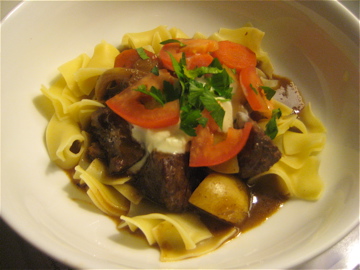
plan b!
Fluid: Good to the Last Drop
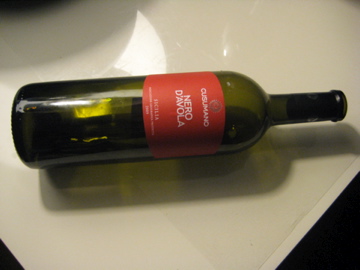
Someone once taught me the following useful wine trick:
When you reach the very end of a bottle – nothing left to pour- turn it on its side for a few minutes. You will find that a tiny bit of wine will collect inside, and you’ll be rewarded with a few more drops to finish off your evening.
Note: If you put this trick into practice at a restaurant, the wait staff will most likely scurry to your table with alarmed looks on their faces. What are those people doing? Are they making a mess? Is that some kind of signal I don’t know about that means they want the check?
Reassure them that no, you aren’t spilling things on their tablecloth or sending them a cryptic message. You just really like wine.
Feast: Bianchi’s Pizza, a Slice of Revere

I’ve been a bit obsessed with public art/signage lately, so when I saw this sign on the drink machine at Bianchi’s Pizza, I had to take a picture. The two phrases totally sum up the personality of this Revere institution:
“Cash Only. We apologize, no public restroom.”
Read:
“We are old school. Order, pay, and leave. Thanks!”
This brief yet polite missive gives you an indication that Bianchi’s doesn’t need niceties to keep its business running, and indeed it does not. Located just a few blocks from Kelly’s Roast Beef, another landmark on Revere Beach Boulevard, Bianchi’s strips away all of the extras that you might find at Reggina’s or Santarpio’s and focuses on the basics. Case in point – there is only one size of pizza at Bianchi’s, and if you order a whole pizza it will be cut in just four pieces (thus, if you order a slice, you are getting 1/4 of a pizza).

2 slices = 1/2 pizza
During the summer, Bianchi’s has an order window, so you can stroll up from Revere beach, grab your slice, and enjoy it on the sea wall until the seagulls chase you away. In the winter, you’ll need to eat the pizza in your car – there are no seats in Bianchi’s. That’s ok, sometimes car pizza is the best kind.
Bianchi’s is not the type of place that has a website, or t-shirts for sale emblazoned with a big “BIANCHI’S IS THE BEST.” This joint (and it is a joint) has been around for over 50 years, and it hasn’t changed a bit.
No, that’s not true. According to my mom, a slice used to cost 20 cents. Now, it costs $2.50.
Inflation aside, the pizza is great. Never greasy, always flavorful. Crust thin but not too thin. Staff friendly but not too friendly. No pretense, nothing fancy- don’t try to get rosemary chicken or goat cheese on your pizza here, unless you want to be mocked mercilessly and driven out of Revere for life. Get cheese, or pepperoni.
Once you eat Bianchi’s, you’ll never even look at Pizzeria Reggina or Santarpio’s. Just remember: cash only, and no public restrooms. We apologize.

Food: Ravioli with Brown Butter and Sage Sauce
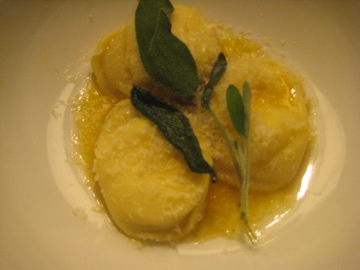
After all of the intuitive cooking and holiday eating I’ve done lately, I just wanted something simple to eat for dinner last night. And what could be more simple than butter?
Although, if you’ve noticed, there are a lot of butter options out there now. Salted, unsalted, truffled, herbed, sea salt crystaled, local, imported, made with sheep’s milk, made with goat’s milk, etc. Most of us always have a stick or two of plain, made-for-toast butter in our fridge, but with a sauce for which it is the primary ingredient, splurge and get something nice.
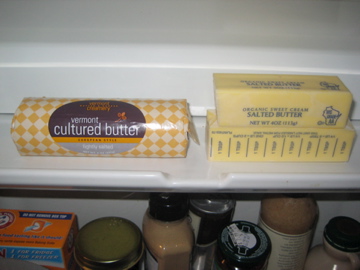
for sauce/for toast
Making a brown butter and sage sauce takes just a few minutes, but timing is everything – especially if you want to include some vegetables with your meal. Most people serve this kind of sauce over a squash ravioli at this time of year, but I don’t like squash ravioli. In fact, I’m picky about rav’s in general – I prefer to use my stockpile of plain ricotta Sabella’s and add some butternut squash and rapini (also known as broccoli rabe), right as my sauce finishes. Below are some tips on making this simple sauce with the added vegetables, which, if you notice, is also a great addition to any “meatless monday” list you may have going.
Ravioli with Brown Butter and Sage Sauce, Rapini, and Butternut Squash
4 tablespoons good butter
5 sage leaves
1 tbsp lemon juice
1 cup chopped butternut squash
several stalks rapini, ends trimmed
grated Parmesan Reggiano, to taste
Put a pot of water on the stove to boil- you will add your ravioli (or gnocchi, which also pairs well with this sauce) to this later. At the same time, boil rapini and squash in a pot of salted water for 5 minutes. Drain and hit them with a shot of cold water to stop them from cooking into mush while you make your sauce. Drop your ravioli in your now boiling water- they should only take 5-6 minutes to cook.
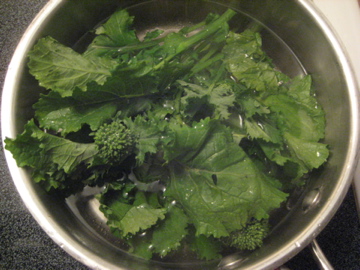
cooking rapini
Melt butter over medium-low heat, then continue cooking until it becomes golden brown. Even under med-low heat, this will only take a few minutes, so be careful to keep a close watch. You want browned butter, not burned butter. Remove the pan from heat and add the sage leaves (whole), then add your lemon juice. The lemon is really just to brighten the sauce a bit- too much and it becomes bitter, so if you are worried, add the juice a little at the time and taste as you go.
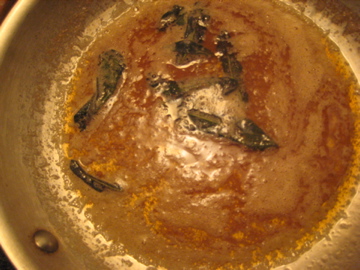
browned butter with sage
Put drained rapini and squash into sauce and toss, then pour over your ravioli. Arrange into a heart shape, if you are so inclined. Top with parmesan cheese.
Voila.
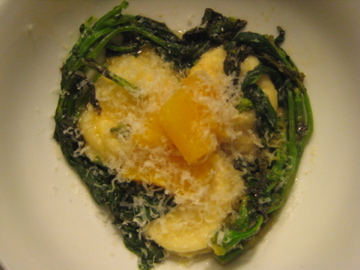
with rapini and squash
 The Best Thing Since Sliced Bread