Feast: Toro – Good Food, Too Fast
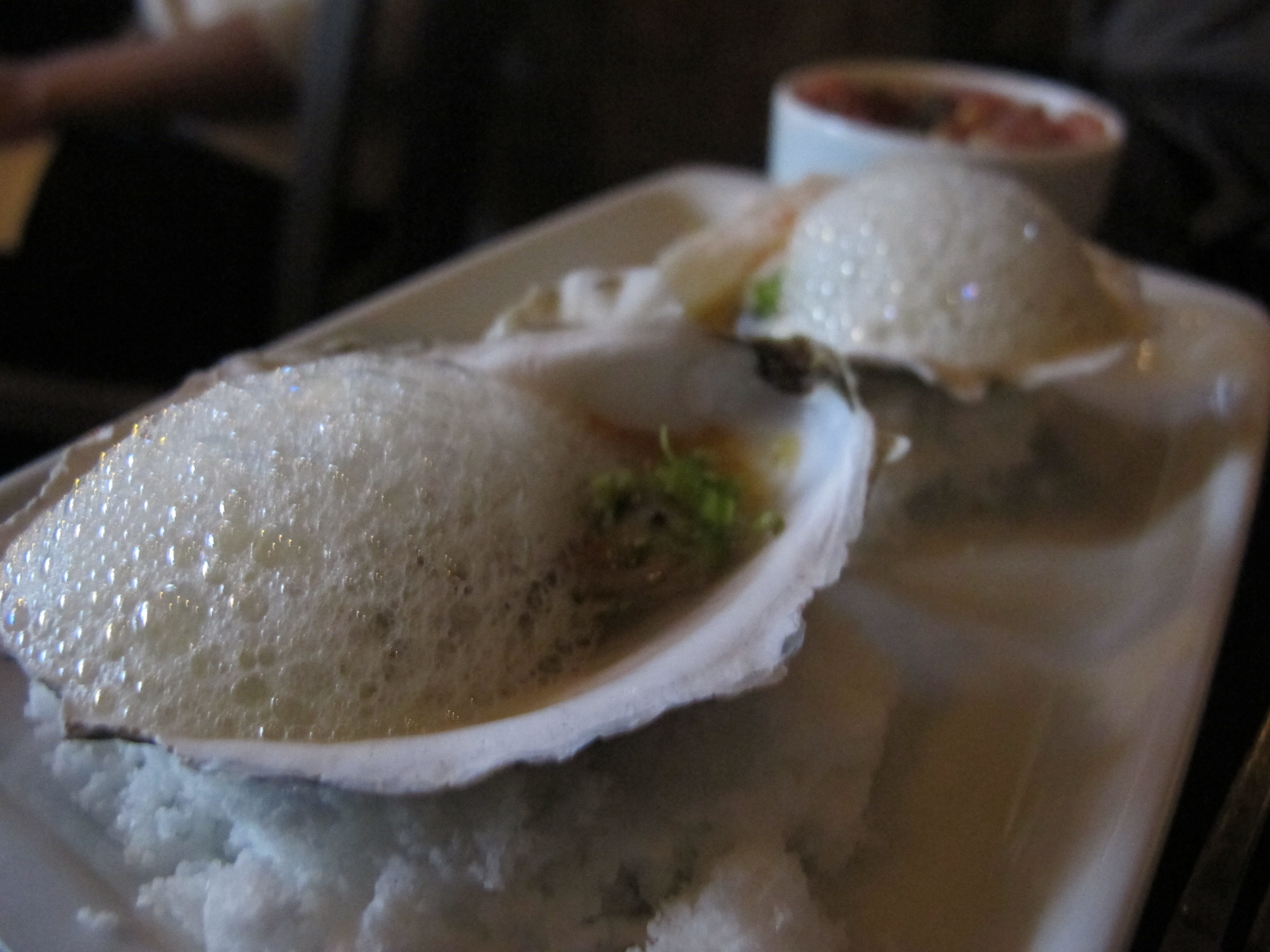
oysters
Food: Parmesan Tuiles
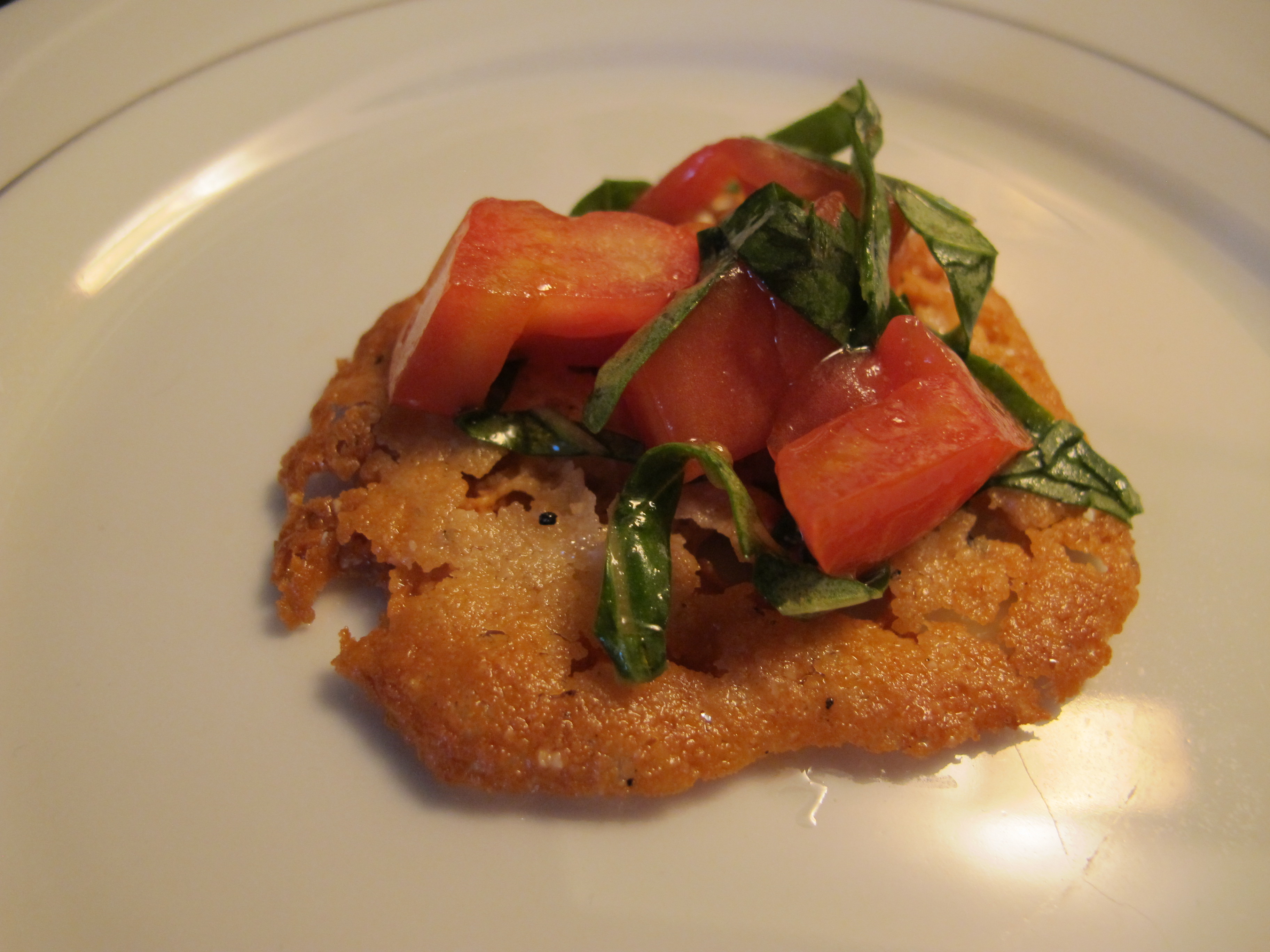
This month’s issue of Food and Wine has a recipe for Parmesan Tuiles – oven baked discs of parmesan cheese. I’ve wanted to make these for some time, and the recipe consisted of things I always have in the house – parm, butter, flour, pepper, tomatoes. Food and Wine uses chives and tarragon, but I just went with basil and shallots for my topping. The whole thing takes only minutes to cook, though you do have to allow time for cooling the tuiles before serving. They seem too insubstantial to serve as an appetizer, but if I was making an amuse bouche, this would be mine. Voila.
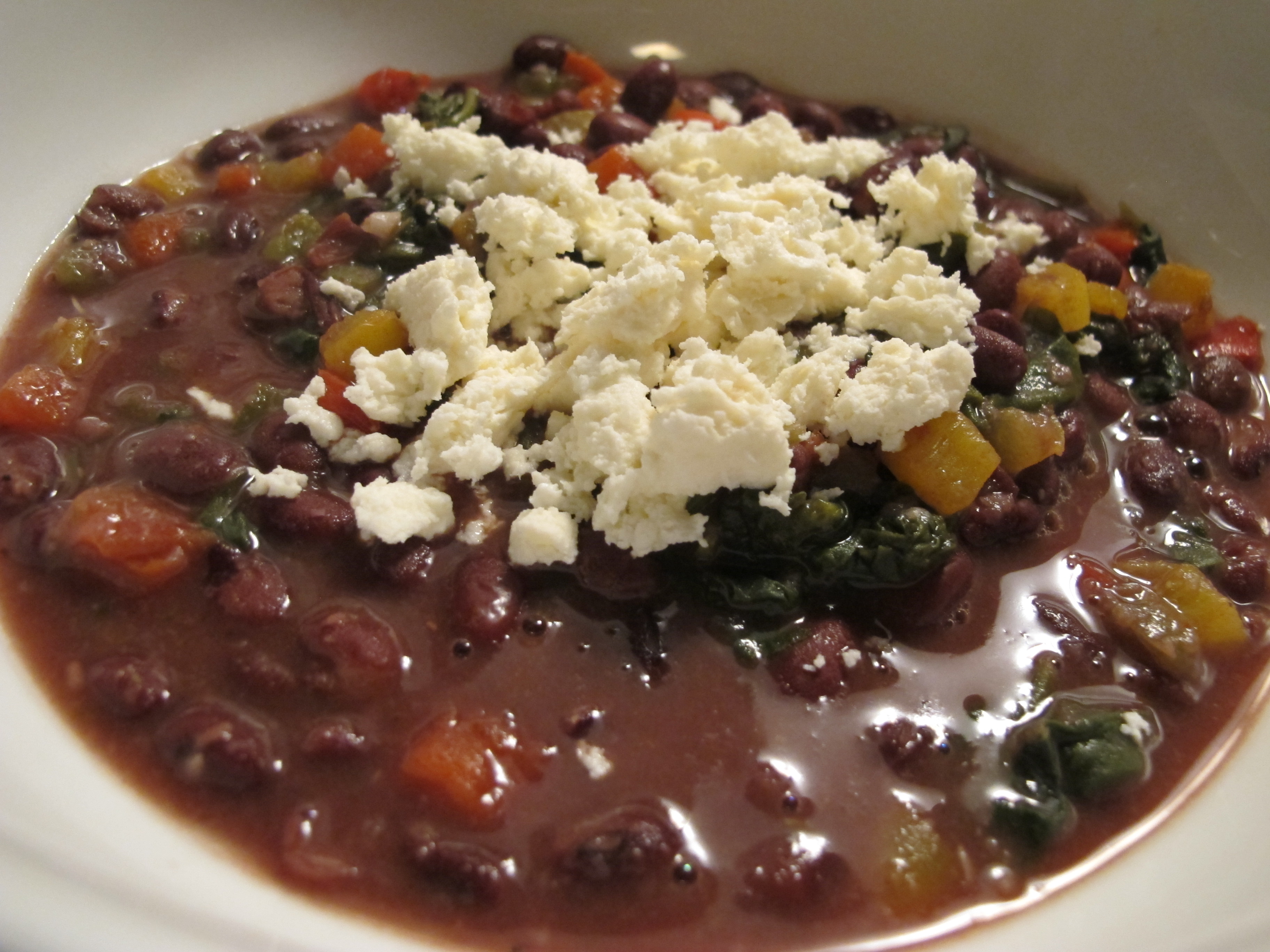
After my meal at The Friendly Toast last weekend, I wanted to recreate the black beans and spinach for my new Feasts Under $5 feature. Having no idea what was in the Toast recipe, I used the bean/spinach/feta base and played around, creating a cheap and Meatless Monday friendly option. I added peppers and lime juice and made up a mix of spices, and the result was hearty and flavorful. The best part, however, is that this meal is healthy. I’m not a nutritionist, but I can add – the total calories (from all 4 servings) are 1100, total fat is 30 grams. So one serving (of 4) is only 275 calories and 7.5 grams of fat.
Nutritional and financial aspects aside, this is really delicious. It’s vegetarian, but you could easily grill some chicken with salt and pepper if you wanted to add meat, or you could go the other direction and make it vegan, if you forgo the cheese. Which I won’t, but you know, to each her own.
Black Beans with Lime and Feta – serves 2 to 4
1 shallot, minced
2 cloves garlic, minced
1 cup chopped green pepper (or yellow or red or combination)
1 9oz bag spinach
2 x 15oz cans black beans (OR substitute “spicy” canned black beans and ditch the spices in the recipe)
juice of 2 limes plus zest of 1 lime
6 oz feta, crumbled
1/2 tsp salt
2 dashes cayenne pepper
1/4 tsp cumin
1/2 tsp oregano (dried)
Saute peppers, spinach, shallot and garlic over medium heat, stirring frequently. The moisture in the spinach allows you to saute without oil, butter or extra fat. Once the spinach is wilted and the moisture has evaporated, add black beans, spices (if using them), salt, and lime juice. Simmer for 15-20 minutes, until liquid has reduced by half and flavor has intensified. Top with feta cheese. Serve plain, over rice, or with tortillas. Voila!
Financial Analysis:
Shallot: $.50
Peppers: $3.49
Organic Spinach: $3.99
2 Limes: $1
Feta: $3.49
2 cans Black Beans: $1.29 x 2 = $2.58 (price used below) or 2 cans Spicy Black Beans: $1.49 x 2 = $2.98
Total: 15.55 for 4 servings, or $3.88 per person.
If you want a bag of rice or tortillas, you increase your total meal cost by about $3.00, so your per person cost with “spicy” black beans and rice would be $4.61, total meal cost $18.45. If, instead of rice, you want to add 2 chicken breasts (1 lb of chicken, 1/4lb per person), you increase your cost by $5.00, so your new total would be $20.05, or $5.01. Remember, pantry staples are included in this meal cost already.
I haven’t been to McDonald’s in a while, but I can’t imagine you can Super Size it for much less than that, and I KNOW this meal has better protein, flavor, and overall nutritional value. Voila.
Food: Feasts Under $5 – Setting Up the Pantry

I’m getting really interested in the intersection between healthy eating and the cost of food in America. Too often the excuse in our country is that people can’t afford to eat healthfully, that a value meal at McDonald’s (which hovers around $5.00) is much cheaper than fresh vegetables. I could go on and on about food subsidies and education, but I won’t – not yet. For now, I’m going to start a feature called Feasts Under $5 – proving that healthy, quick, and filling meals can be made for under $5.00 per serving. Each meal in this feature will serve up to 4 people, and I will include a financial analysis to show just how cost-effective healthy eating can be. I’ll start with my Meatless Monday meals, which are usually cheaper and healthier, but always include protein. However, as soon at the cold weather hits, I promise meat will be present in these Feasts Under $5.
But first, we need to set up pantry expectations. Below are the items that I will not include in the meal cost each week. These are items that anyone with a kitchen should have – you can make hundreds of recipes using these items. These staples also have a long shelf life, so while the complete pantry start-up cost of $74.46 ($96.90 if you want to bake, too) is not inconsequential, it is just that – a one time initial investment, with small cost replacements from time to time.
The prices listed below are in the middle of the price spectrum- almost all of the items I buy are all natural or organic, so you could get these products for less money if you bought, for example, irradiated spices, sold in most grocery stores. However, that’s the point of this feature – to prove that you can eat all natural, high quality food on the cheap. If you’re missing some of the items below, go grab them so you can follow along in the coming weeks with my Feasts Under $5.
Pantry Staples:
Fats – bulk size Extra Virgin Olive oil: 100 oz for $22.99 and Butter: 16oz (4 sticks) for 3.69
Salt: 26 oz (2 lbs) for $1.69 and Pepper: (spice jar size) $2.99
Flour: $4.99 for large bag and Sugar: $3.99 for large bag
Bottled Lemon Juice: 10 oz for $2.99. I prefer fresh lemon juice, but this is a pretty good substitute, lasts a long time, and is less expensive than fresh lemons. Just don’t buy the juice that comes in a container that looks like a lemon.
Garlic: 1 large bulb (15-20 cloves) for $.84, or 8 oz jarred for $1.79, or a jar of garlic powder for $2.99. I prefer the fresh bulb, and its a good value.
Spices: This list of spices opens the door to many different recipes. Try to stay away from spice “mixes” and packets, which usually contain tons of chemicals and salt.
Cumin, Curry Powder: $3.49 each
Oregano, Thyme, Rosemary, Cayenne Pepper, Red Pepper Flakes, Chili Powder: $2.39 each
Herbs de provence, Tarragon, Paprika: $2.99 each
Cooking total: 74.46
And in case we bake at some point:
Cinnamon: $3.49
Nutmeg: $2.39
Vanilla extract: 4 oz for $8.99
Canola oil: $3.99
Baking powder: $1.79
Baking soda: $1.79
Baking Total: $22.44
Total Cost with Baking Items: $96.90
Some other notes:
Parsley and Basil – I use both herbs frequently, and I think they should always be fresh. A big bunch of parsley is usually around $1.00, and a big container of basil is usually around $2.99 – so these are cheap to buy fresh. (Or if you’re motivated, become self-sustaining and grow these yourself). If you store them properly they keep for a week or more – I put mine in a plastic bag in the fridge and squeeze out all of the air, or you can stand parsley up like flowers in a glass with a bit of water. However, since I am not requiring that these go in your “pantry,” I will include their cost in my financial analysis of the meals, $.25 for parsley and $.75 for basil.
Shallots: Another item I use frequently, a typical shallot costs $.50, so that’s the price I’ll use.
Lemons and Limes: Sometimes you *must* use fresh lemons or limes (for zest etc.). When I use these I will charge $1 per lemon, $.50 per lime.
Dairy: Butter, milk, cream, and eggs will likely feature in many of these dishes, but butter is the only dairy product I’m including in the pantry staples due to its long shelf life. The rest will be charged market price in each recipe.
Pasta: Maybe it’s just because I’m a staunch Italian, but I think everyone should have at least 4 lbs of dried pasta in their possession at all times. Since I know not everyone does this, I’m not including pasta in the pantry staples. I will charge $1.99 for each lb, unless it’s a particularly fancy or fresh pasta.
Wine: Maybe it’s just because I’m a staunch oenophile, but I think everyone should have at least one bottle of red wine and one bottle of white wine in their possession (for cooking) at all times. The general rule is that you should never cook with something you wouldn’t drink, but there are plenty of good wines under $7.99 that can fill this role. There are about 25oz in each bottle of wine, and most recipes that use wine call for 1/2 cup, or 4oz, which equals 6.25 servings/bottle. So for my meals I’ll charge $7.99/6.25 = $1.27 for each 1/2 cup of wine used. I will assume you happily drink any wine that does not go in the pot.
*Note: I am not a nutritionist, but I do have a background in food, and I can read labels. When I use the term “healthy” I don’t mean “diet” food – some meals will have plenty of butter, cheese, and oil, some meals won’t. All meals will be balanced with all natural or organic vegetables, protein, and starch.
Feast: The Friendly Toast
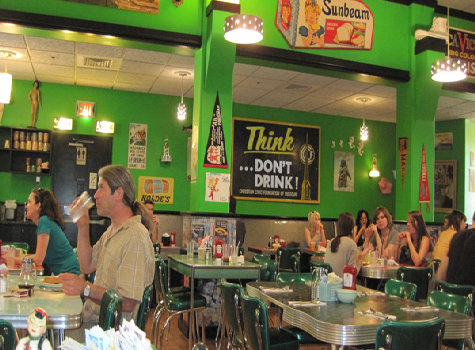
picture taken from Friendly Toast website
The Friendly Toast in Cambridge is, to put it nicely, hit or miss with its food and service. Arrive before 9:30am and sit right down, but show up after 10 and you’ll wait an hour. Order a waffle and receive a tiny Eggo for $10, but get pancakes and you’ll eat for a month. Eggs in a nest? Too dry to be edible. A side of sausage? Delicious and perfectly cooked. Coffee is so so, but the almond tea is worth the visit in and of itself.
Given the roulette wheel you spin every time you order at Toast, I wasn’t overly optimistic when I tried something called “The Peasant” last weekend. It is described as “two low-fat piles: egg whites scrambled with dirty rice, carrots, and corn, and black beans mixed with fresh spinach and feta.” Surprisingly, it turned out to be the best thing I have ever ordered from Toast. Note, it was not the best thing I have ever eaten at Toast- that award goes to the pumpkin pancakes with chocolate chips and sweet cream that Dave ordered.
Toast is one of those places with retro diner tables and tons of crap on the walls, so if you have ADD, claustrophobia, or bad memories of your grandmother, you might want to take a pass. The wait staff is primarily hipsters with ripped tights and dyed hair. Which is fine unless they’re having a particularly emo day and leave your sweet potato fries sitting at the pick up window while they write a haiku about their pet rat. But the bartenders are reliably fantastic, and they make a mean dirty martini. If you go, enjoy. Or not.
Food: Strawberry Balsamic Ice Cream

There’s something really satisfying about making good ice cream, a feat I had yet to master before last weekend. When I attempted Chocolate Ice Cream from Cook’s Illustrated I didn’t use a churn – just another tool nobody really needs, I thought. But after seeing my poorly incorporated and weirdly frozen results, it seemed like I’d be living off of Batch and Ben and Jerry’s for the rest of my days. Fortunately for me, Dave bought an ice cream maker.
When researching recipes, I came across many that used both milk and cream, and a few that used half and half. While it seems like the combined effect should be the same, after trial and error it is clear that half and half is the way to go. In addition, recipes that call for more than 6 egg yolks are excessive. The recipe below is based on Emeril’s notes for Strawberry ice cream, but I reduced the number of eggs, added balsamic vinegar, and did a lot more whisking than the recipe called for. The result had a rich berry flavor with a little tang – the vinegar wasn’t overly apparent, but you could tell something was in there. Voila.
Strawberry Balsamic Ice Cream
1 quart fresh strawberries, stemmed and halved
1/2 cup sugar plus 2 cups sugar
4 cups half and half
1/2 vanilla bean, scraped
5 egg yolks
3 tbsp balsamic vinegar
1 ice cream maker
Combine strawberries and 1/2 cup sugar into a blender, blend until smooth. Add vinegar and pulse until incorporated. Combine half and half, vanilla bean innards, and 2 cups sugar in a large saucepan, bring to a simmer over medium heat, whisking periodically. Meanwhile, whisk egg yolks in a small bowl. Add 1 cup of the simmering liquid mixture to the yolks and whisk until smooth, then add yolk mixture to saucepan and whisk until incorporated. Bring liquid back to a simmer (whisking periodically) and cook for 4-5 minutes, until mixture coats the back of a spoon. Remove from heat and stir in strawberry mixture. Whisk until smooth. Pour the mixture into a large bowl and put a piece of plastic wrap directly on top (to prevent a skin from forming). Let the mixture cool completely – this will take at least a few hours. Pour mixture into ice cream maker and process according to your machine’s instructions. Voila!
Food: Chicken Paillard
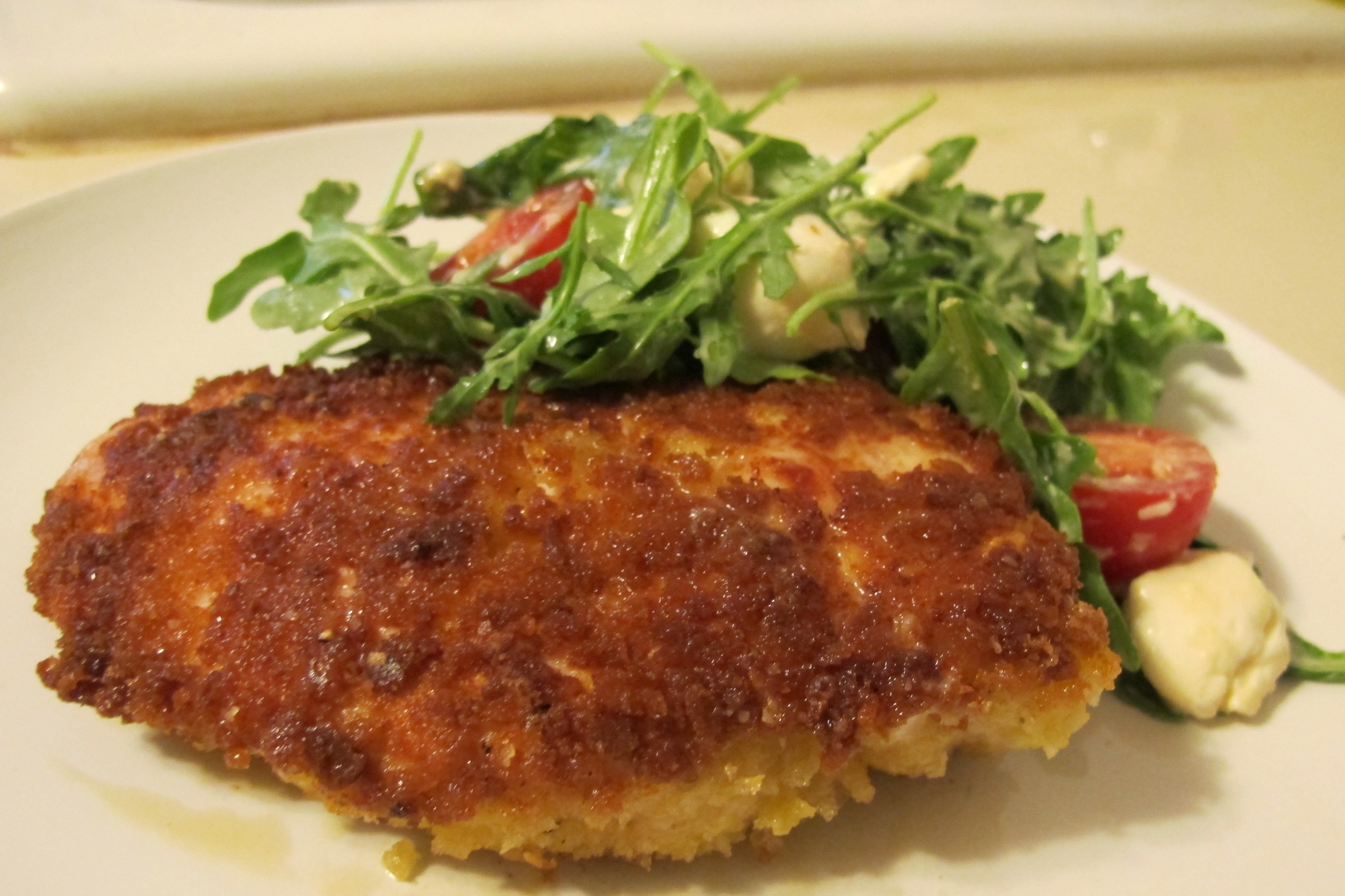
This weekend I made Tyler Florence’s Chicken Paillard with Creamy Parmesan Salad, and I would highly endorse it, with just a few notes:
1. “Paillard” is a French term that refers to quick cooking a thin piece of meat. Tyler’s recipe calls for chicken breast to be pounded between two sheets of plastic wrap. In lieu of this, I used chicken fillets, already a thinner cut, and did not pound them. They turned out well, but took a bit longer to cook- 6-7 minute on each side – and any longer would have meant burnt breading. Even if you use fillets, remember to pound them.
2. “Creamy Parmesan” Dressing is actually a short form of Caesar dressing. I thought that the juice of two whole lemons made the dressing too watery, so stick with 1 and 1/2.
3. Using only two anchovy slices was a waste- use at least four. And two really big cloves of garlic, or three normal sized cloves.
4. You don’t really need 4 whole eggs to coat your chicken. Three eggs is plenty. This is nitpicky, but why waste an egg?
Voila!
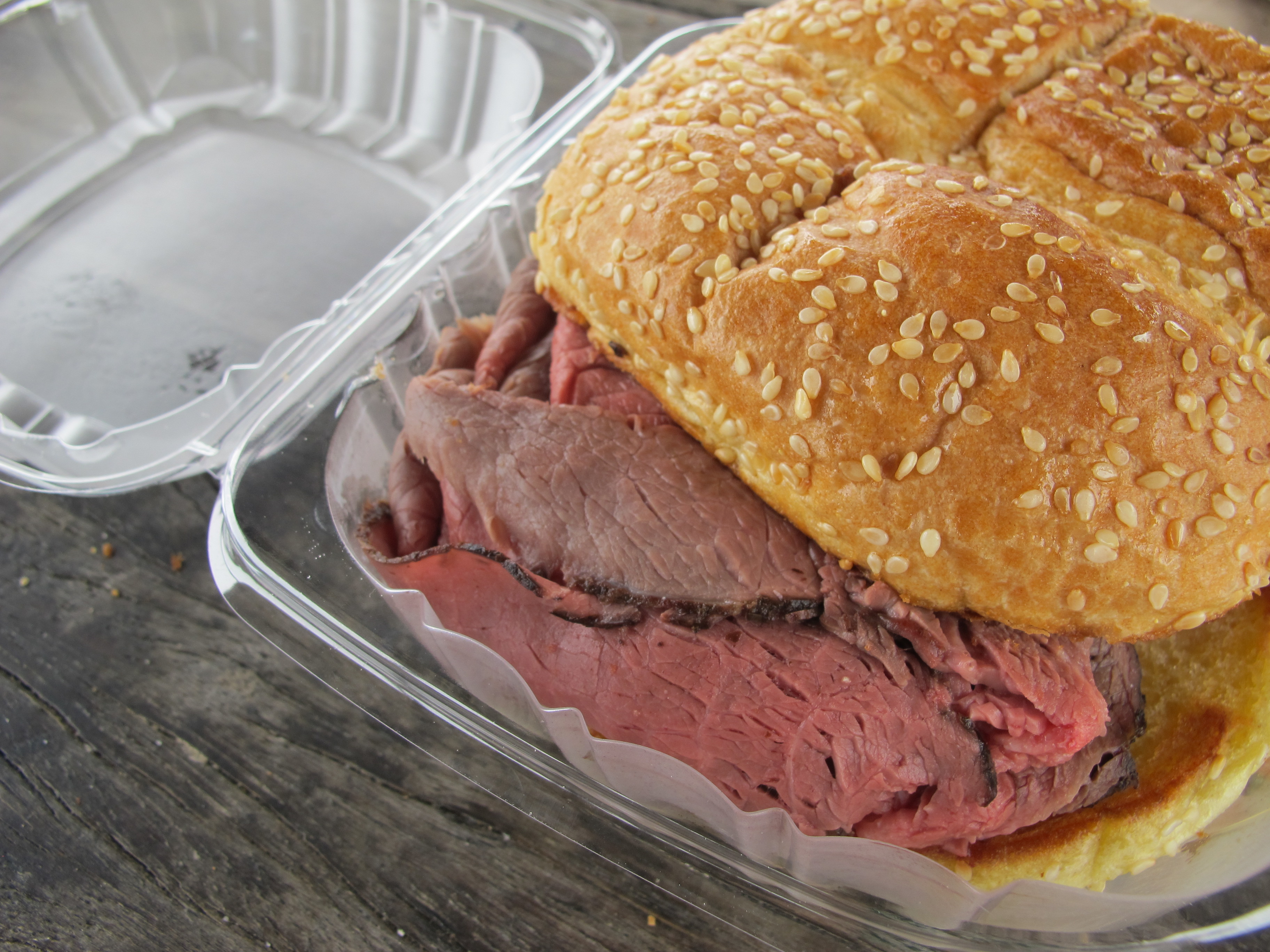
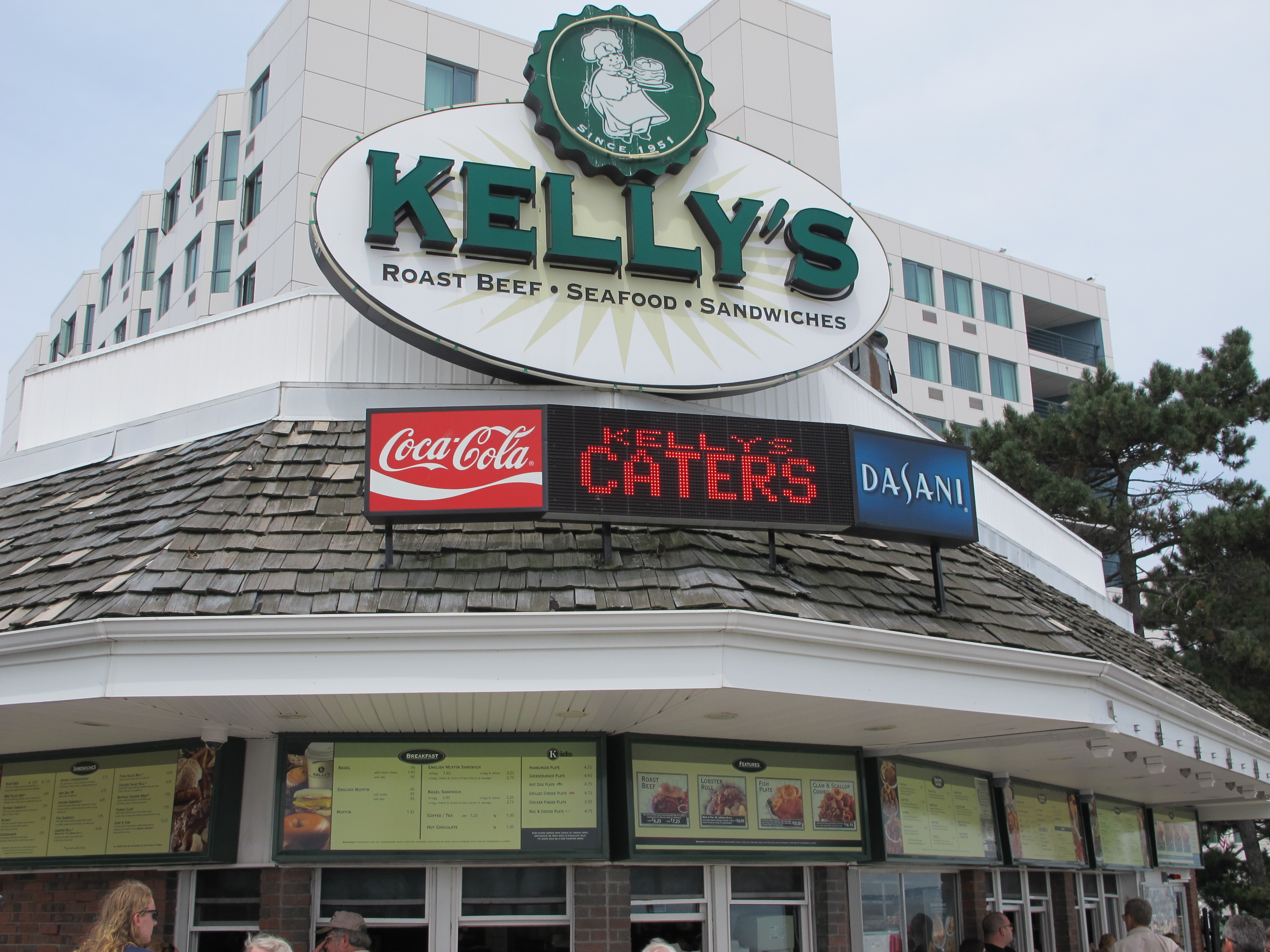
Feast: Kelly’s Roast Beef

- small roast beef, plain
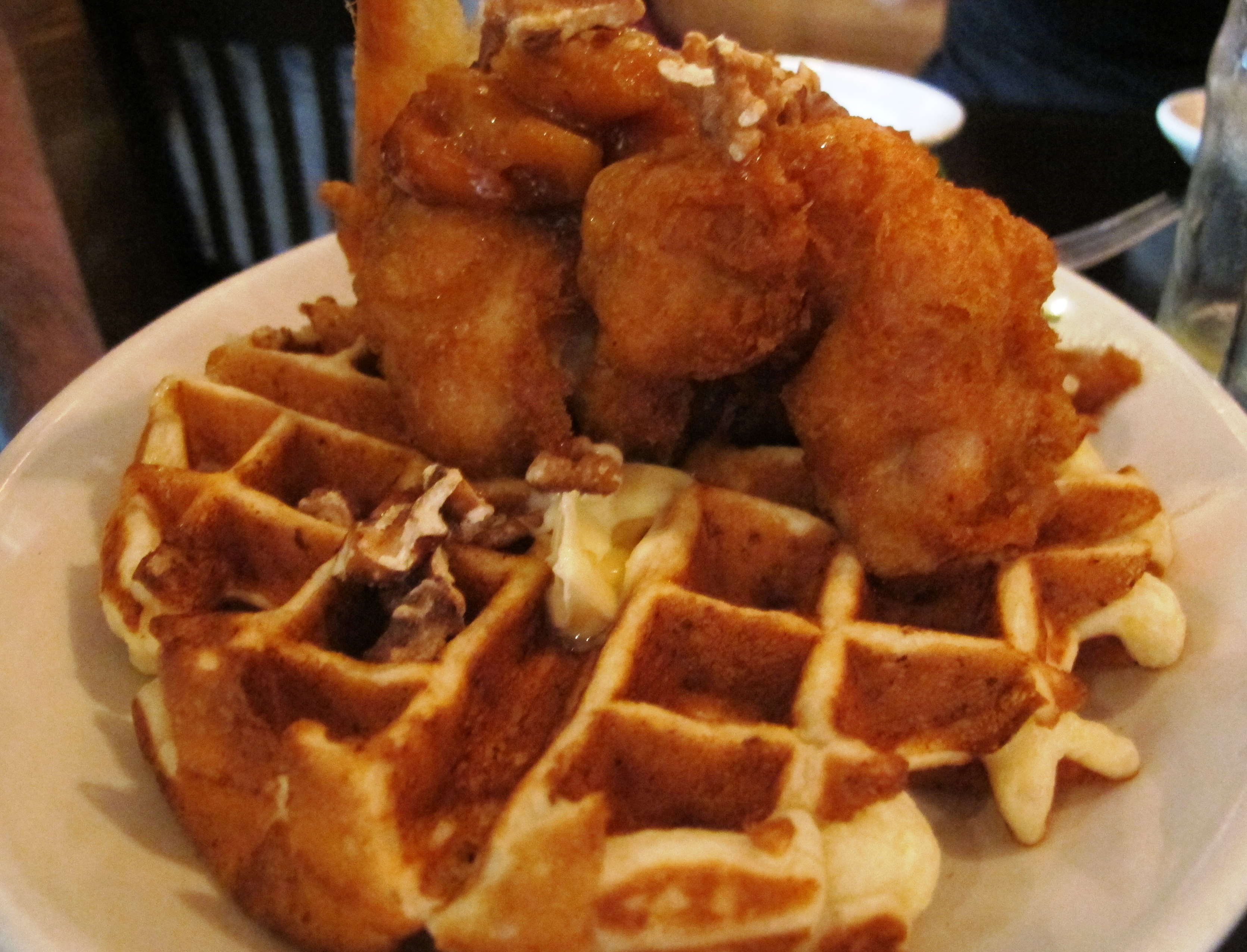
Feast: Chicken and Waffles at The Gallows
Chicken and waffle purists may think that an upscale waffle topped with fruit and perfectly beer battered chicken isn’t an acceptable iteration of this dish. But I think it’s just fine.
Yet another reason to hit up The Gallows for brunch.
Feast: The Diner at Bagels By Us

Ever since low carb diet gurus made sure we all know that one bagel equals five pieces of bread, I’ve been opting for toast. It’s hard to get a good bagel in Boston anyway, so why waste the calories, especially when you can get an English Muffin on the griddle? But The Diner at Bagels By Us actually brings good bagels to Boston, even though rumor has it that they truck them in from H&H in New York. This leads some purists to complain, but frankly, they still taste fresh to me. If I have to mail-order a bagel from another state to get a good one, so be it.
Online reviews are mixed for The Diner, which is a surprise to me. My bagel sandwich last weekend was just this side of great – the egg was a little overcooked, but the generous amount of bacon made up for it. The burgers we saw go by (at 10am, by the way), looked and smelled fantastic, and the atmosphere was more artsy cafe than greasy spoon diner. Consider me a fan, but I’ll report back if something goes awry at my next visit.
Food: Spaghetti Carbonara Redux
It’s been a year since I last made Spaghetti alla Carbonara. And after a year of honing my culinary skills, I can say with confidence that I am now a much better chef. While last year I used a recipe, this year I went with my instinct. I substituted bacon for pancetta, cooking it ahead of time and letting it cool, which really aided the timing, texture, and flavor of the dish. I used shallots instead of onions, giving more of a sweetness. I added a garlic clove, for more depth. I forgot, again, to take a picture. Maybe next year. Below, my recipe for Spaghetti Carbonara.
Spaghetti Carbonara – serves 2
6 oz heavy cream (most of the small carton)
2 medium shallots, minced
1 garlic clove, minced
1 package bacon, cooked until crispy, drained, cooled, roughly chopped*
1/4 cup parsley, chopped
2 eggs, each yolk placed in a separate bowl, both whites placed in the same bowl
1 cup grated parmesan cheese, divided in two
salt and pepper
olive oil
1/2 lb spaghetti
Boil water, put pasta in water, set time for 7 minutes. Over medium heat, saute shallots and garlic in a few tablespoons of olive oil until translucent. Add bacon (and more olive oil, if necessary), stir until warmed and releasing more fat. Add cream, stirring gently. Add 1/2 cup cheese, salt and pepper to taste. Remove from heat, add eggs white and stir until incorporated. Drain cooked pasta, add to cream mixture. Put pasta in bowls and top each serving with an egg yolk, parsley, and more cheese. Voila.
*Note, you could also reserve the bacon fat and use this instead of olive oil. Your choice.
Frame: Next Food Network Iron Chef
Food bloggers everywhere are observing a moment of silence tonight, as Mary Beth takes her final bow on Food Network Star.

Let this be a lesson to us all: writing about food is not the same as being a chef, no matter how highly we think of ourselves.
Fluid: Iced Coffee
I’m not exactly a morning person. I need coffee please, early and often. And in the summer, ice down my macchiato and throw it in a plastic cup – I still have work to do while all you mad-cap kids and retirees are enjoying your days at the beach.
It took me years to appreciate iced coffee, but age and experience – as well as a more enlightened palate – have converted me. It also helps to know that iced coffee is not just hot coffee poured over ice – there’s actually a technique. You shouldn’t have to add a shot of espresso to your iced coffee, and you shouldn’t have to buy a special “iced coffee” blend. (*cough* marketing ploy *cough*)
If you want to make a good iced coffee, all you need to do is this:
1) Brew your preferred coffee twice as strong as you normally prepare it.
2) Refrigerate overnight.
3) Pour over ice.
4) Enjoy.
Voila.
Frame: Next Food Network Star, Final Five
Don’t cry for me Whitney…

…cause you’re the one going home tonight.
Seriously, did you learn nothing from Alicia?
Food: Cooking Light – Snickerdoodles

I’m not a huge fan of “light” recipes – those that use reduced fat, sugar-free, or otherwise chemically dimmed ingredients to simulate a luscious dish. “Light” mac and cheese should not exist. “Reduced fat” nachos? Why? A cake made entirely of Splenda? Shoot me. And have you ever tried non-fat cheese? It’s not quite as good as tasting your toothbrush after you accidentally get soap on it. I believe that if you want to eat “light” – and many times, I do – you should stick to foods that are naturally healthy – vegetables, fruits, whole grains, etc. But if you want to eat pizza, eat pizza, not a cardboard imitation.
However, I recently purchased (yet another) cookbook, Cooking Light Comfort Food. I like Cooking Light Magazine- rather than using chemical substitutes, they (usually) opt for using less of certain ingredients -butter, sugar, bacon- or making creative substitutions, like honey instead of sugar, fresh fruit instead of jelly, pork tenderloin instead of ground pork. The cookbook is the same, and tonight I made their Snickerdoodles, my favorite of all cookies.
The recipe uses only 4 tbsp of butter and 1 cup of sugar, adding a tbsp of light corn syrup to help with flavoring. The dough was delicious, and the finished cookies were moist and sweet – some of the best I’ve ever made. I was really patting myself on the back until I realized that the dough was supposed to yield 42 cookies. I made 16.
It seems I’ve uncovered another trick of Cooking Light- make the portion sizes tiny. My 16 cookies were by no means huge – 8 of them fit in a single layer on a dinner plate. I guess I could have halved them and gotten 32 very small cookies, but 42 cookies from that dough would have been miniscule.
Oh well, they were still delicious, and even though the size of my cookies meant they had about 115 calories instead of 50, and about 3 grams of fat instead of 1, they were still technically “light” and actually delicious. Voila.
 The Best Thing Since Sliced Bread