A New England Thanksgiving – Short Cut Clam Chowder
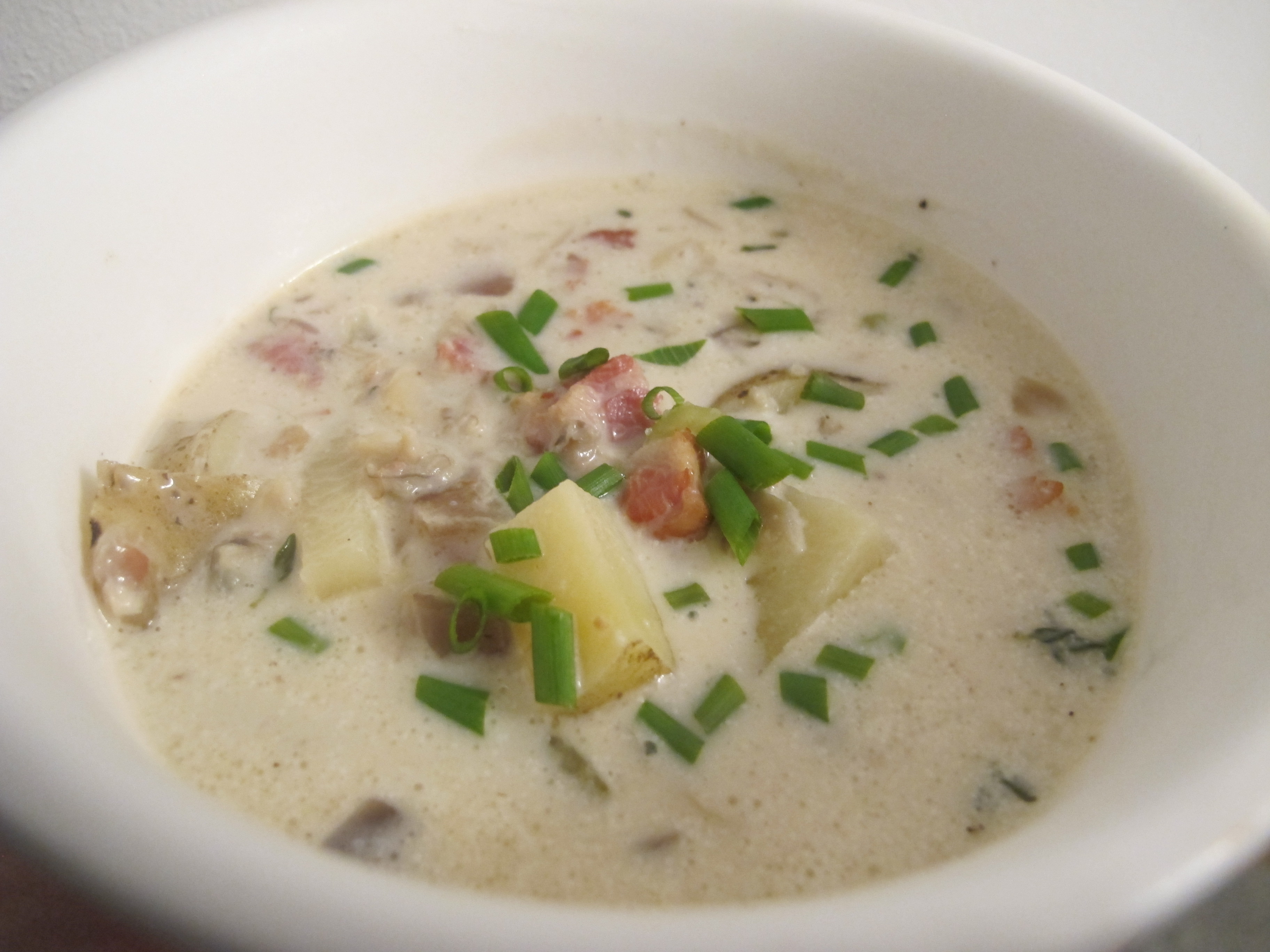
I totally think canned clams are gross. But I totally used them in this recipe. And it totally didn’t matter, it was still delicious. I’d been wanting to try clam chowder for a while, and Bon Appetit’s recipe looked simple enough. The recipe gives the option of cooking your own clams (which really isn’t complicated, I just didn’t feel like dealing with it), or using canned clams and clam juice. There is surprisingly little cream in the recipe, plus you can use far less than is called for and still have a really rich tasting chowder. I also used Vermont Smoke and Cure pre-chopped bacon, another short cut that proved to be easy and delicious. This would be a great starter for a New England Thanksgiving dinner.
New England Clam Chowder. Yum.
A French Thanksgiving: Pommes Anna
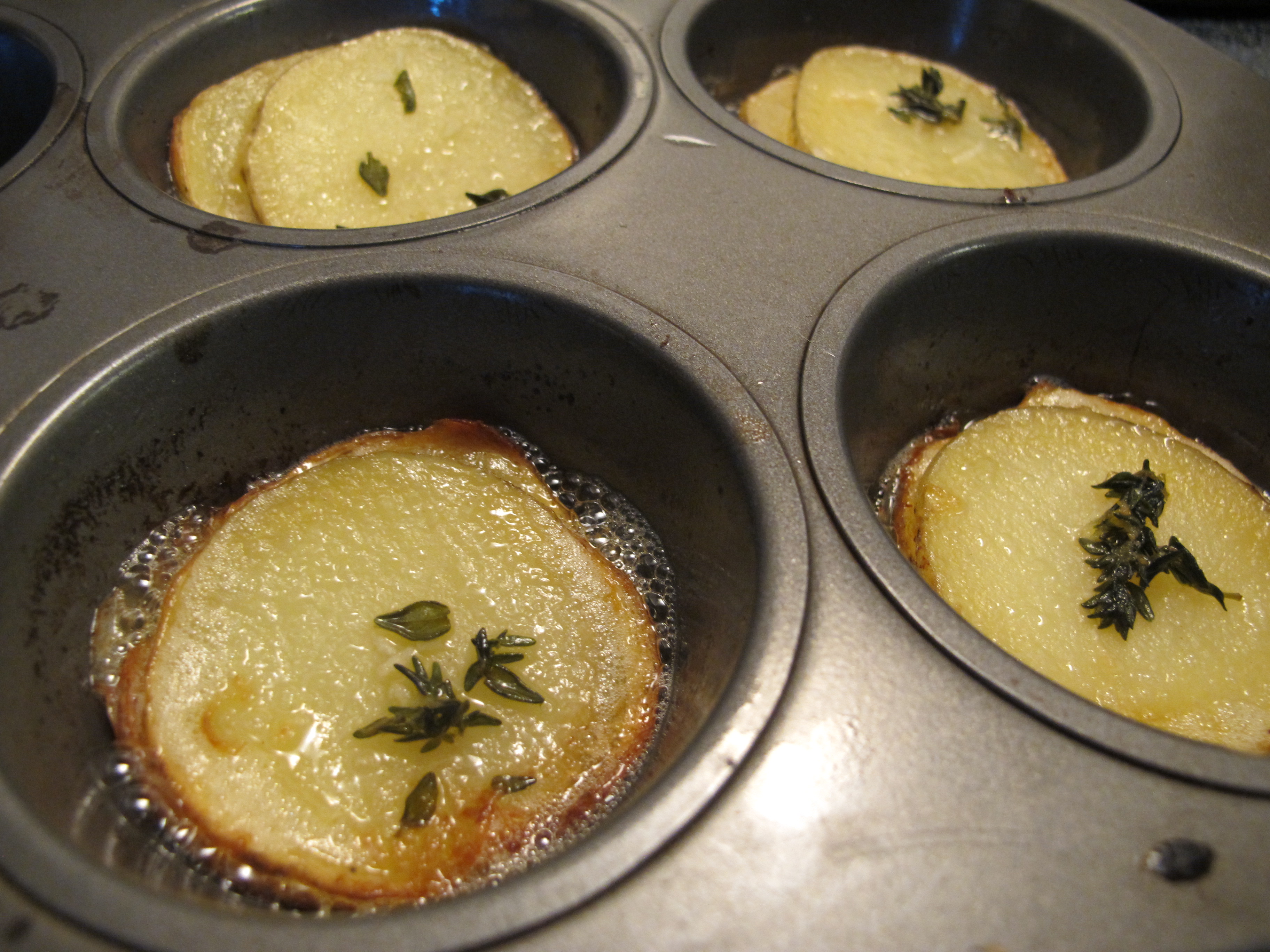
I love mashed potatoes, and I love potatoes au gratin, but Pommes Anna are my new favorite. Check out the description of these on wikipedia: “a classic French dish of sliced, layered potatoes cooked in a very large amount of melted butter.” Exactly.
This recipe comes from Bon Appetit, and makes individual portions using a muffin tin. Very simple – and you really do not need the mandolin they require (unless you were making say, more than 6. In which case it could get tedious to slice all of those potatoes).
Mini Herbed Pommes Anna. Enjoy.

A Mini Thanksgiving- Personal Pies
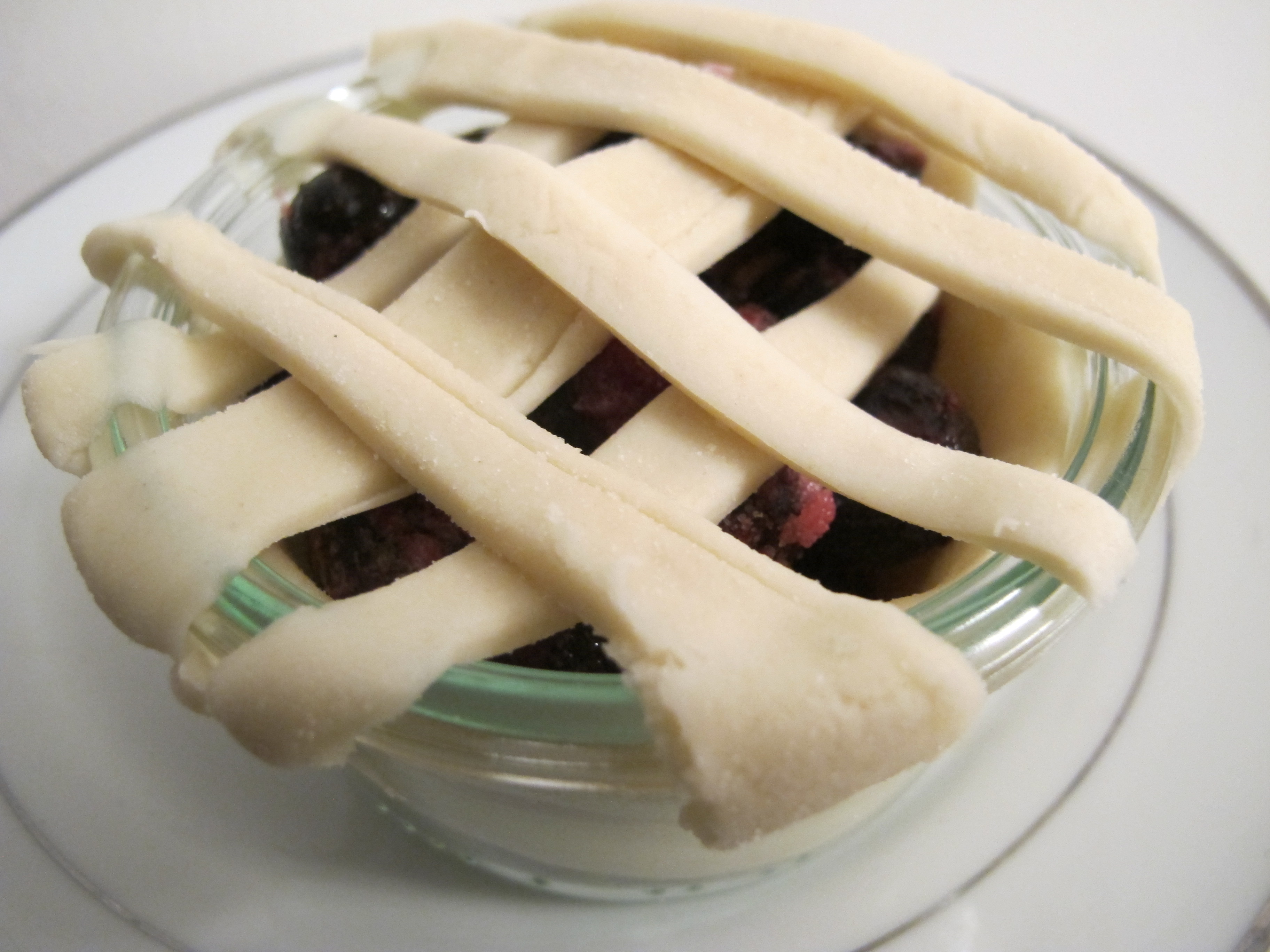
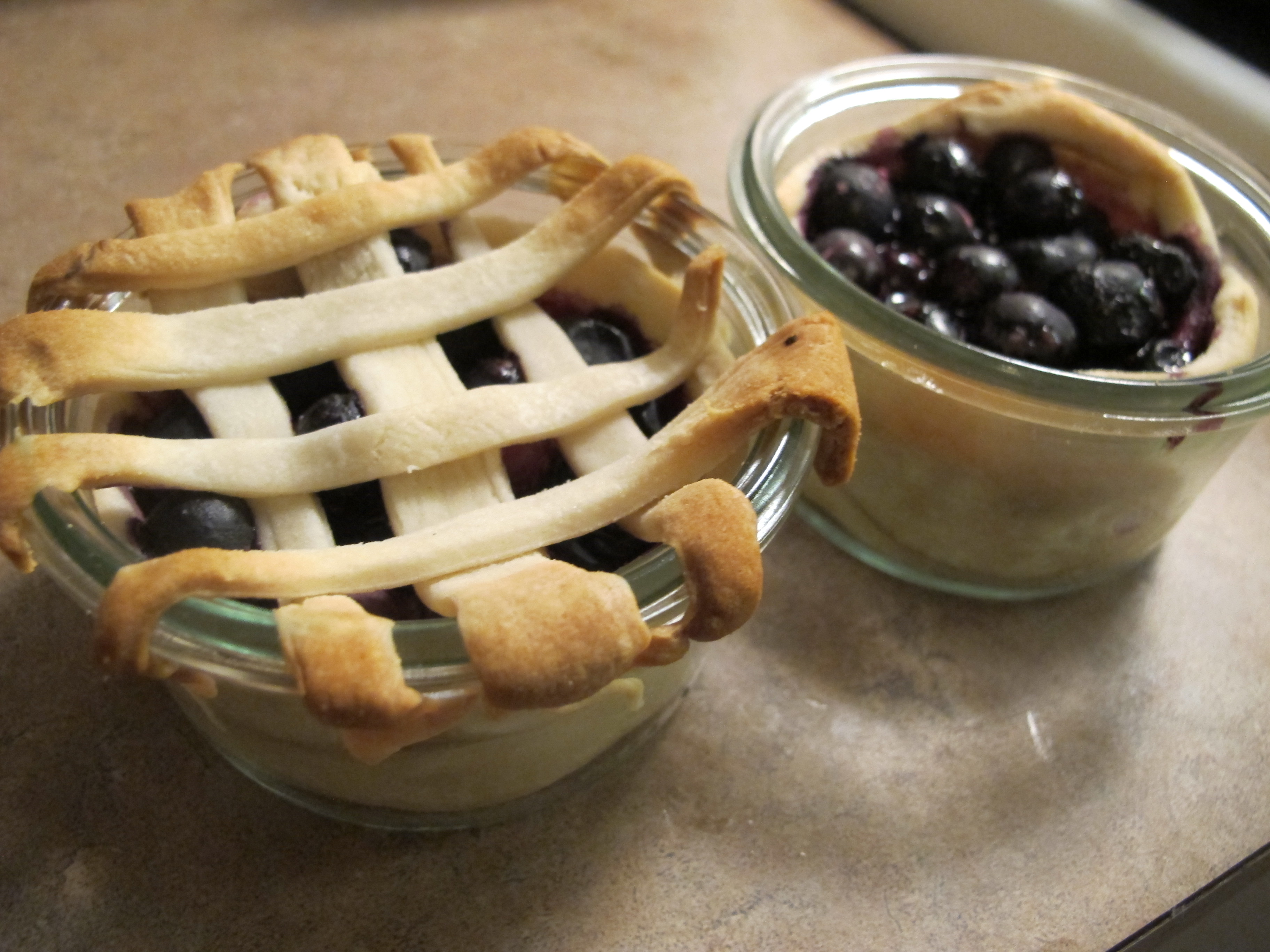
A few months ago, my mom got me the book “Cutie Pies,” featuring all types of mini pies, some hand held, some made in short little mason jars. I finally got around to buying some little jars last week, and I’m proud to say that the results of my efforts were NOT a baking fail. I will admit that I bought ready made pie crust, which a) cut down on time and b) meant it tasted good. These pies were really easy – they’d be fun for someone who was throwing Thanksgiving for the first time, or for just a weekday dessert. The recipe below is adapted from the book, with my shortcuts. The book does give a great recipe for crust, as well as a crumb topping.
Blueberry Lemon Mini-Pie
2 short mason jars
1 ready made pie crust, unrolled
1 bag frozen blueberries
1 lemon, juiced
zest of one lemon
1/2 cup granulated sugar
1/4 cup cornstarch
pinch of salt
whipped cream (optional, for topping)
Preheat oven to 375. Toss blueberries with lemon juice. In large bowl, mix zest, sugar, cornstarch, and salt. Add blueberries and toss to combine. Press the mason jar onto the pie crust to cut out a circle, put circle of crust on bottom of jar. Then line the jar with one strip of dough, pressing into place. Spoon filling into jars, but do not overfill. You can leave the top of the pie open, make a crumb topping, or cut smaller strips to make a lattice crust topping. Bake for 25-28 minutes, until golden brown.
Recipe Fail: Cranberry Shortbread
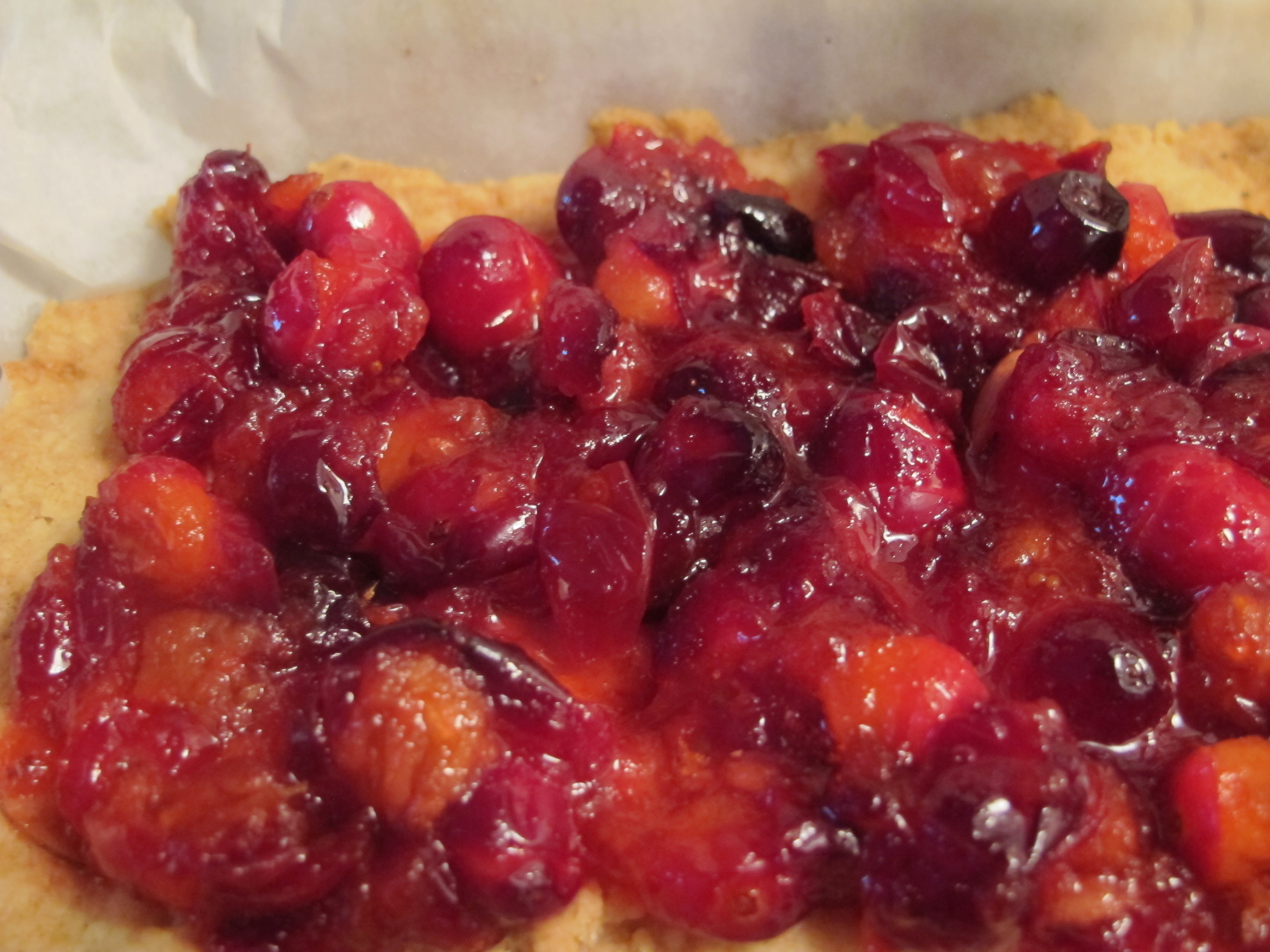
Doesn’t that picture of Cranberry Shortbread look delicious? It does, only because I’ve become really good at taking flattering pictures of my baking fails. But I don’t think this one is on me- I’m blaming this on Bon Appetit. I swear I followed this thing to the letter – and it was touted as “super simple.”
Let’s start with the parchment paper. I put together the shortbread, incorporating the butter into the flour and sugar with my hands and then spreading onto the pan over the parchment paper. I put it in the oven. I went about my business. I thought, it smells like a fireplace in here. Why is that? I opened the oven. The parchment paper had caught fire. I blame the mandatory “two inch parchment paper overhang” from the recipe. (Ok, maybe that part is on me.)
It was all downhill from there. The shortbread didn’t taste like a fireplace, but it was a crumbly mess. The cranberries, a basic “boil cranberries until they burst” step, were good. But homeless, as the shortbread was a bust.
Another failure, but at least it was festive.
My Oven is an Asshole

You may remember when I bought an oven thermometer. I, however, did not.
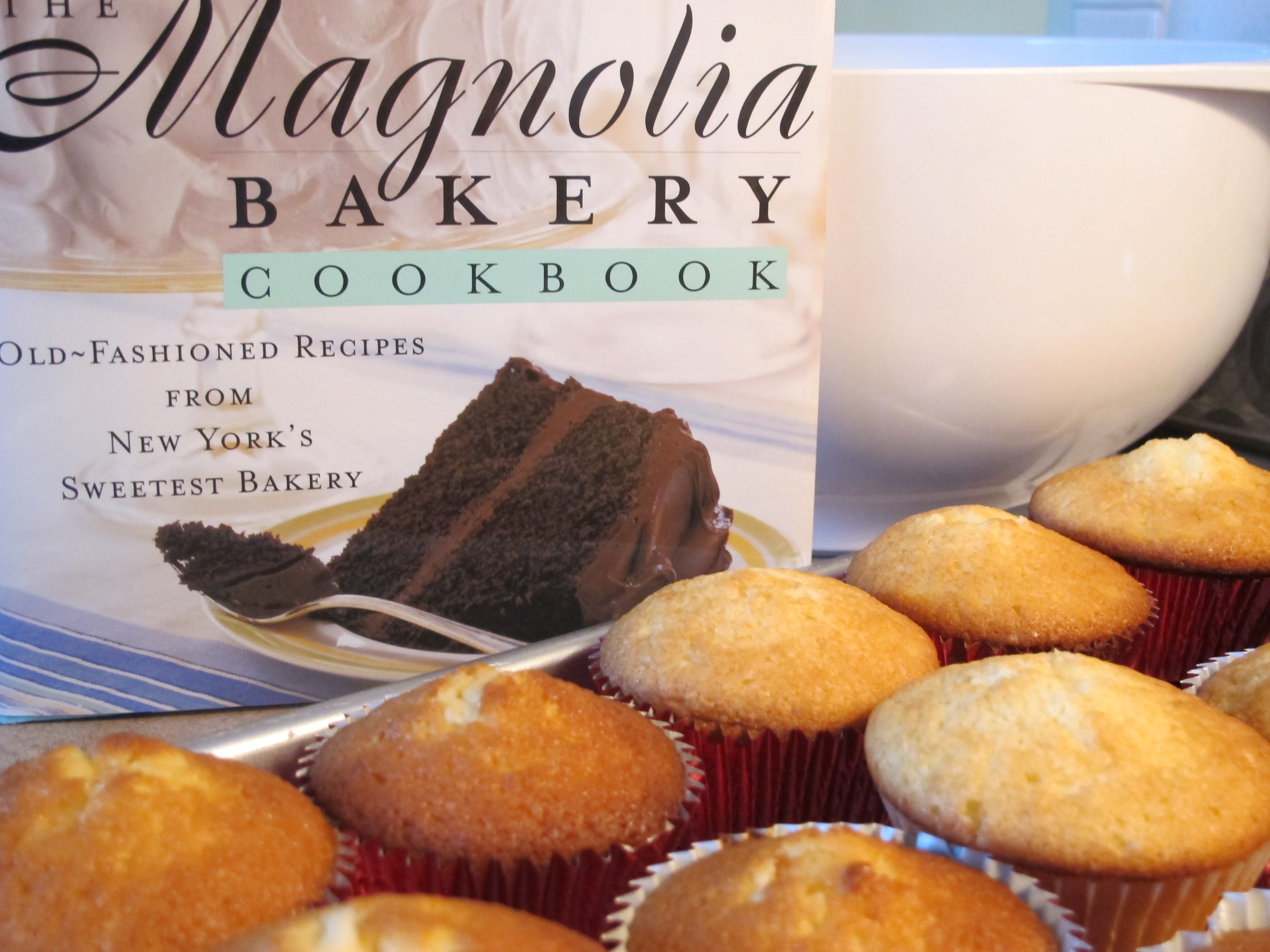
I learned that my oven was way off and then promptly forgot about it for the next few months, during which time I wasn’t really using my oven. But with a gift of the Magnolia Bakery Cookbook, I pulled out my unsalted butter with every intention of making perfect cupcake knock-offs.
I started assembling ingredients, sifting flour, adding eggs one at a time while my oven pre-heated. When it beeped ready, I checked the thermometer- 325, not 350. I set it to 400, continued mixing dry ingredients into wet. Beeped again – 350. I set the timer for 20 of the recommended 20-25 minutes and checked at 15.
The oven thermometer read 400, and the cupcakes were definitely (over)done.
F.
No problem, plenty of batter (minus the small bowl-ful I’d eaten) for a second batch. Readjusted the oven temp – down to 375 – and left the oven door open until the thermometer read 350. Waited a few minutes to double check. Slid in batch #2, set the timer for 20 minutes again. Got too focused on work, didn’t look up until the timer dinged at 20.
Cupcakes brown and dry. Oven temp: 400.
My oven is an asshole.
Frame: Are You a Sellout If You Cook For Your Man?
This story details feminist writer Shayla Pierce’s journey from refusing to cook for a man, to learning to cook for a man.
In short, Shayla comes across as a bit of an idiot. She contradicts herself over and over, and the piece gets to a point where I’m concerned that she might be bipolar. Here is a rundown:
1. Boyfriends that Shayla dated in the past have demanded that she cook, just because she was a woman. (Shayla, I’m sorry you dated some jerks, but that’s no reason to tell women that they shouldn’t cook.)
2. Shayla found a good guy that she wanted to cook for! (It’s like a modern Cinderella story, really.)
3. Shayla feels that cooking is a life skill and that as long as no one is being MADE to cook, everyone should cook. (Wait for it….)
4. HOWEVER, Shayla thinks that if a woman works at home and a man works in an office and is presumably the breadwinner, then of course the woman should cook. (I think that if Shayla makes this point again I will revoke her self-imposed “feminist” title.)
5. When asked if Shayla’s boyfriend likes her cooking, her response is: “He said it was good. But he has no choice to say anything else.” (Who else feels sorry for Shayla’s boyfriend? I’m picturing him strapped to a chair, being forced to read “Our Bodies, Ourselves.”)
The only point that I can get behind is made in this quote: “At the end of the day, I cooked because I wanted to. I didn’t cook because someone made me feel like it was what I was supposed to do because I was a woman.”
I wish that was all Shayla said.
Feast: Wedding Planning
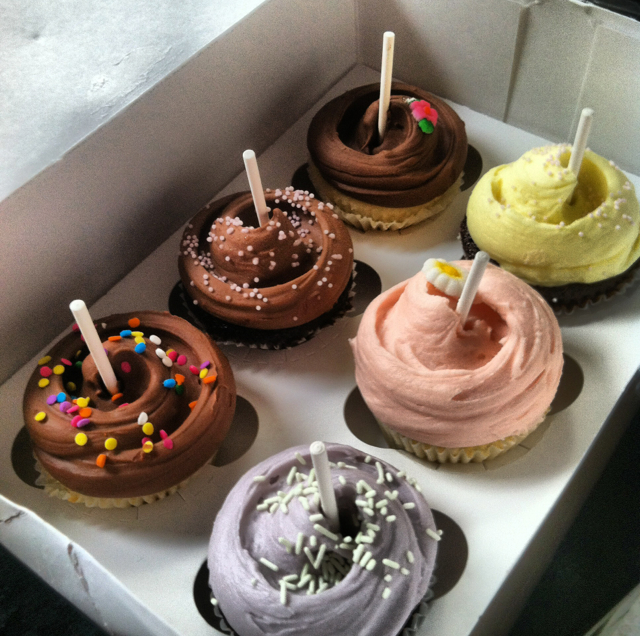
magnolia cupcakes
Someone recently told me that I should look at my wedding as “the best party you’ll ever throw.” I absolutely hate this person, because now I feel enormous pressure to make sure everything is perfect and everyone has an amazing time. Thanks anyway, but next time just smile and tell me I’ll be a beautiful bride.
I don’t know how to throw the best party ever. I don’t know make the tables look perfect, or how to make sure everyone dances. I don’t know anything about uplighting or floral arrangements or decorative draping. Picking out napkins and chairs and crowd-pleasing music makes me break out into a cold sweat. But I do know about food.
Wedding Planning Step 1: Order Magnolia cupcakes from New York City, see if they arrive intact and delicious enough to be served at a wedding. (See above, they do.)
Feast: La Cuisine Paris
While planning for Paris, one of my “must do” items was to take a cooking class. I researched several different options before settling on La Cuisine Paris, primarily because they offered a combination market tour/cooking class. We also signed up for their “Bellies on Foot” tour, which promised (and delivered) a fantastic cultural and culinary tour of the historic Les Halles area.
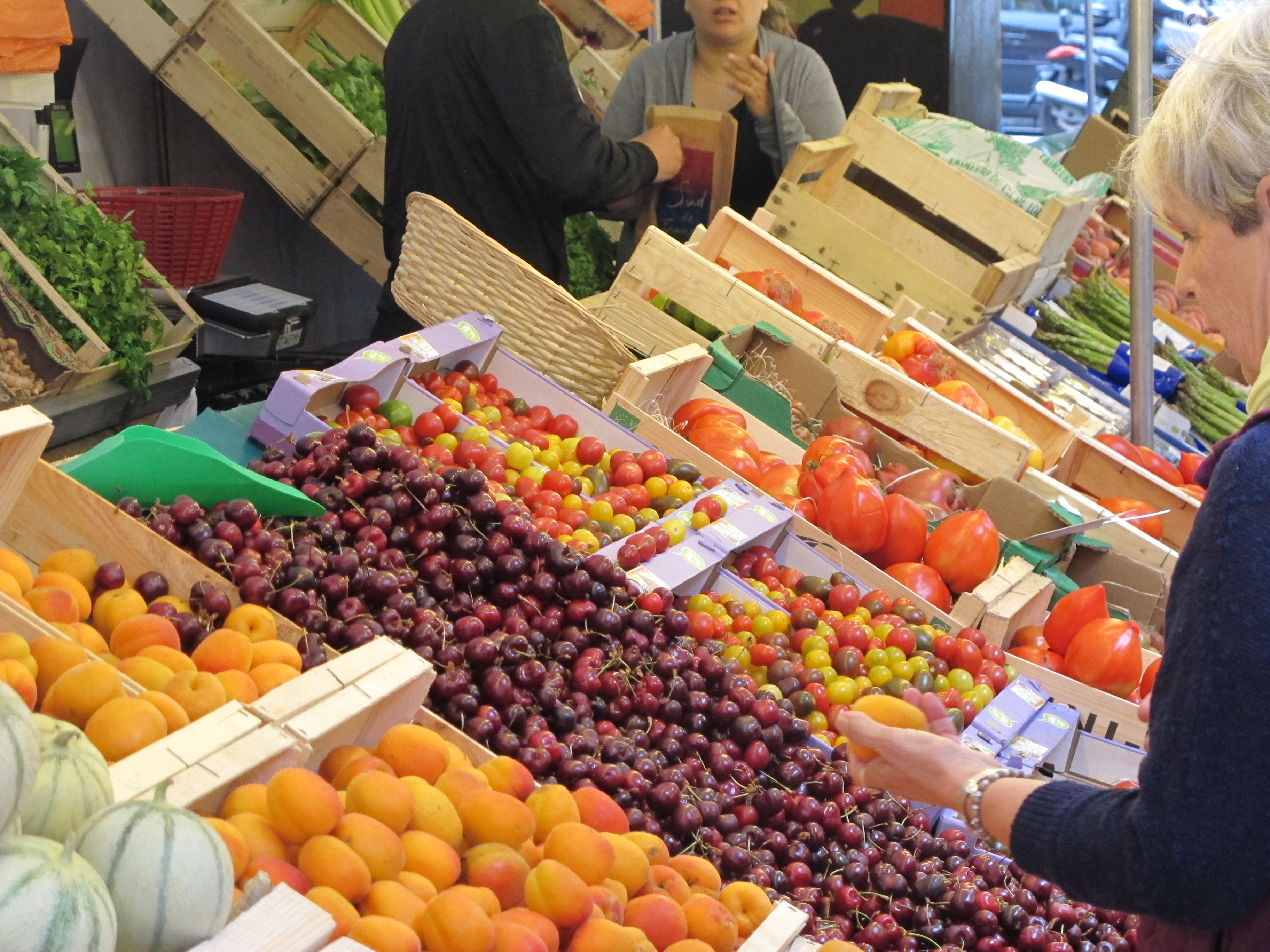
We started with the Market Tour, and were met at the Place of Maubert-Mutualité (famous for their outdoor market – Fromagerie Laurent Dubois is right there) by Chef Julie, Emmet (the “Walking Wallet”), and eight more classmates. Chef Julie took us around to most of the different vendors, and it was clear that she already had a personal connection with many of them. (We found this was also the case with our “Bellies” tour guide, and this connection was the unexpected prize of the trips – the vendors were especially helpful and gracious to us, which led us to return to them several times later in the week. ) We learned how to pick out saucisson, seasonal melons, and cheese. Julie’s original plan was to buy fish, but after examining all of the seafood, and pointing out to us why it was sub-par, she chose duck instead, then led us to Blvd St Michel and the La Cuisine Paris headquarters.
We were welcomed by Jane Bertch, co-owner of LCP, who had coffee and tea set out on little tables to warm us up before we began cooking – it was unseasonably cold that morning. Jane was a gracious host, keeping us occupied for a short break in action while Chef Julie took a few minutes to plan our menu. Then, we marched upstairs and donned our aprons – it was time to cook.
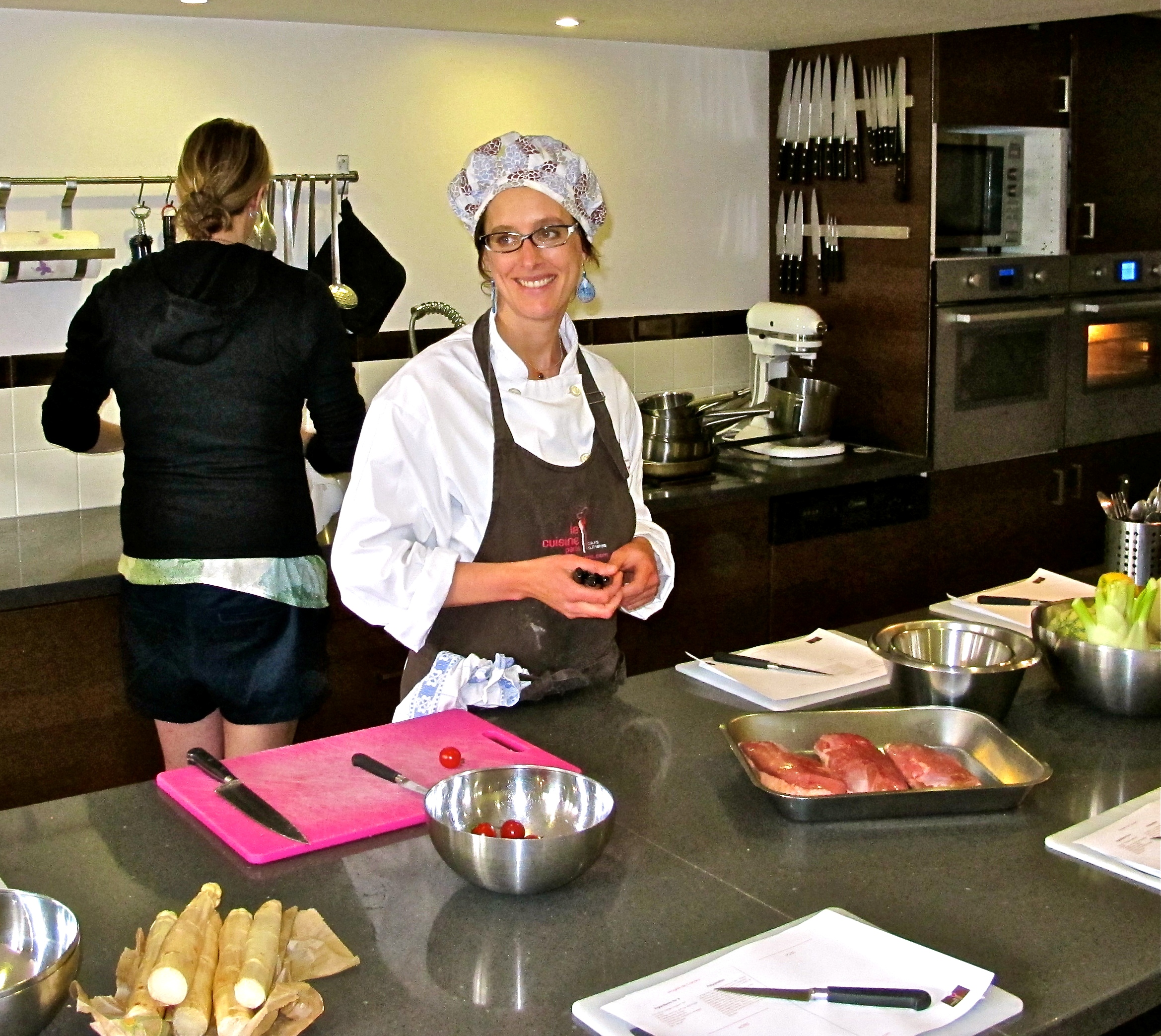
Chef Julie
The kitchen at La Cuisine Paris was impeccable – clean, bright, spacious. All participants had a station at a large work counter, and Chef Julie demonstrated some techniques and then divided up the work – one person peeled and blanched tomatoes, another minced garlic, another scored and seared duck breast. We learned how to prepare white asparagus and how to make simple, delicious potatoes. (Boil potatoes. Toss in butter and salt. Eat.) While Julie oversaw the whole operation, it was the participants that really did the cooking. In our class, we had a precocious 12 year old girl who seared the duck breast, and I admit, I thought she was going to ruin our lunch. But Julie’s patience and teaching skill ensured that every piece was done perfectly.
Before we convened for the main event, Julie gave us a lesson on what Meilleur Ouvrier de France (MOF) means, and we relaxed with some well-chosen wine. Julie also taught us how to properly cut and serve fine cheese, a serious education for many in the room. Finally, we settled in to one of the best meals of our entire trip : melon soup with candied fennel, seared duck breast with apricot fig sauce, roasted tomatoes with garlic, buttered potatoes, and marinated asparagus and zucchini.
I highly recommend La Cuisine Paris for anyone looking for a unique, non-museum related Paris experience. The staff was wonderful, the location was great, and the food was delicious. Thank you to everyone involved.
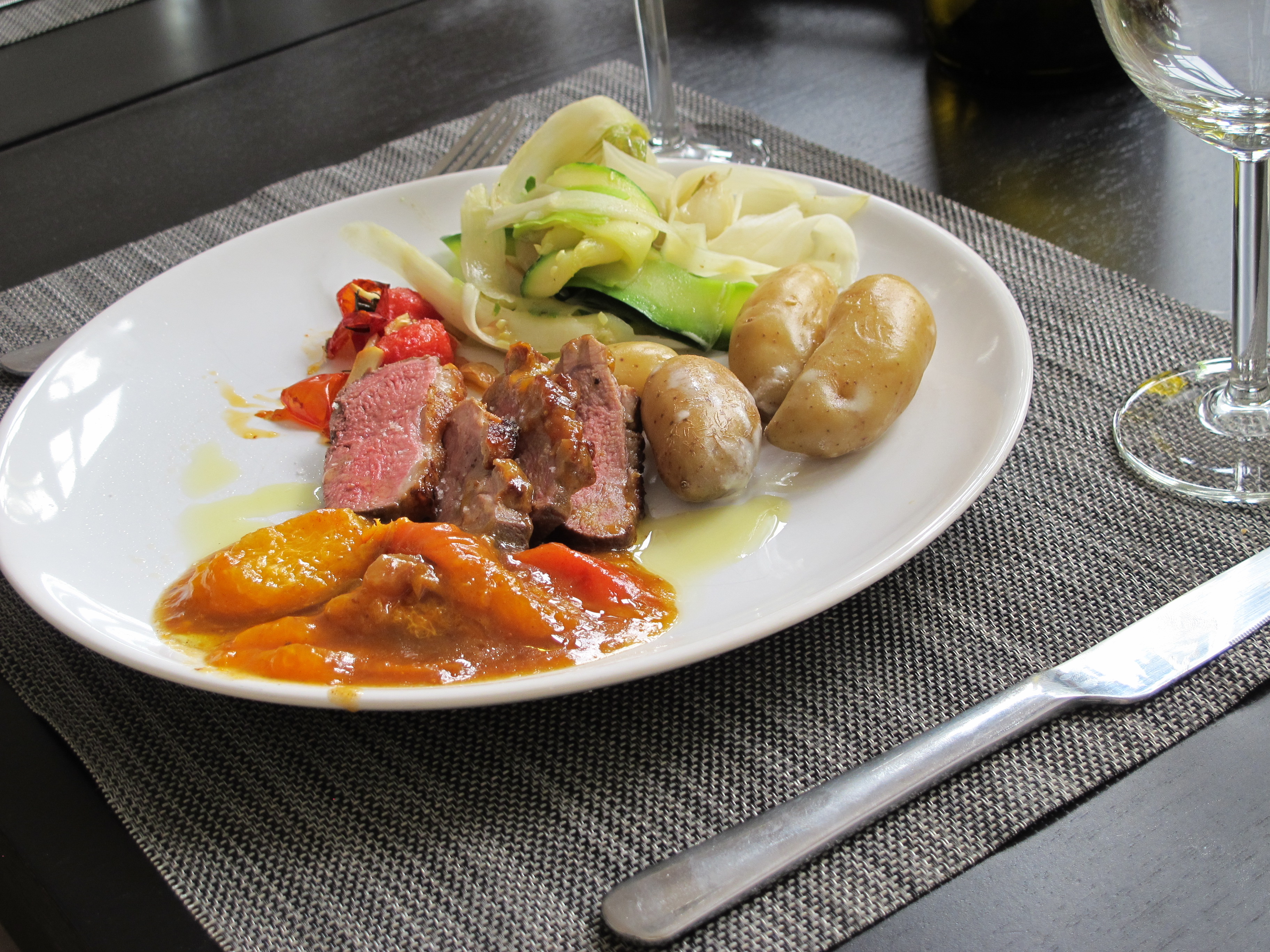
(PS. We stopped back at the market for a visit to the MOF cheesemonger Laurent Dubois – see below. Cheese for dinner is never a bad idea.)
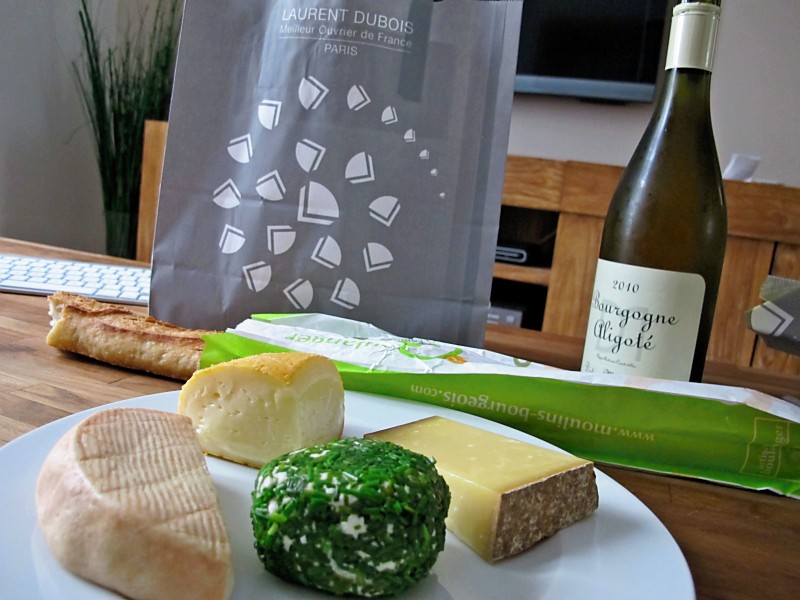
Feast: Semilla

modern blanquette de veau
During our Bellies on Foot Tour with La Cuisine Paris, I asked our guide for a dinner recommendation. Something special for our last night, I said, and then quickly added “something very French that won’t make me feel like I’m going to die.” (Refer to my previous posts about how a steady diet of traditional French Food is hell on an American stomach.)
And so we made one more trip to St. Germain des Pres and dined at Semilla, the embodiment of modern French cuisine. While it was the perfect last night meal, I wished we’d found it sooner. Every dish was worth trying, and none of them made me feel like a duck being fattened for foie gras.
Much of the menu is small plates, and quite a few are vegetarian (definitely NOT traditional French). The roasted mushrooms were earthy and salty, not the standard limp Portobello you can see as a veggie option in the states. The pork ribs with sweet potatoes were exceptional. The ribs were cut to order, roasted, and served in a cast iron skillet with simple sweet potatoes and parsley. No heavy sauces, no frying, nothing was topped with an egg or showered with bacon.
I was surprised but excited to see blanquette de veau on the menu – it was the one French specialty that I really wanted to try, but hadn’t seen on any menus. Semilla’s modern interpretation has a light cream sauce, fresh, firm peas, and fork tender veal. It was one of those bowls of food that you want to pick up and hold against your chest as you eat it, hugging it close and savoring each spoonful, even while mourning its inevitable emptiness.
If you can only eat at one restaurant in France, go to Semilla. The food is great (and very affordable), the crowd is lively, and the neighborhood lends itself to a stroll before or after dinner. Go, go, go.


Frame: Otherwise Engaged
I’ve been too busy this summer to give the blog the attention it deserves- I still have several posts in the works from our fantastic trip to Paris. I’ll get to them, I promise. But so far, I’ve been otherwise engaged.
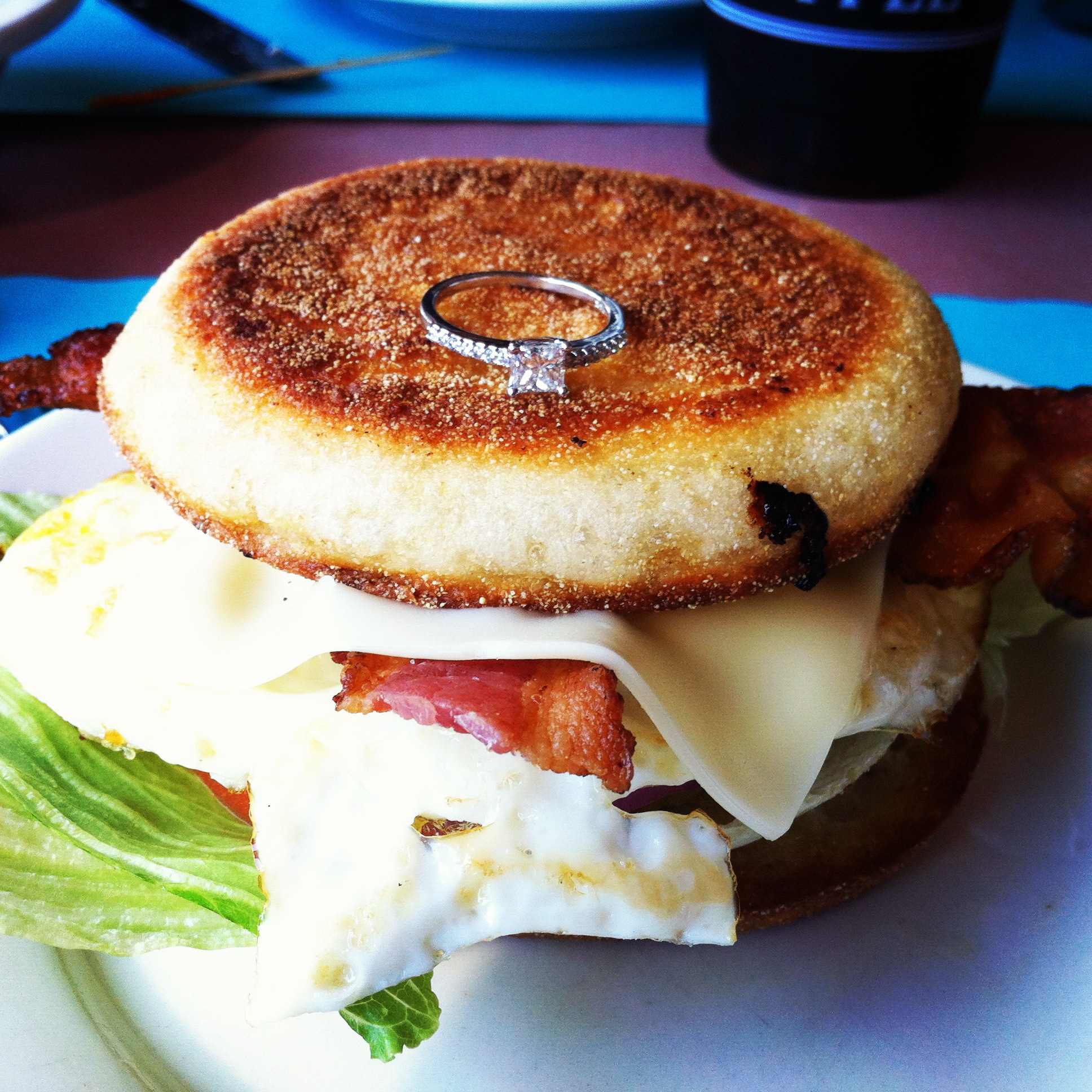
breakfast at Kelly’s Diner, and my engagement ring.
Feast: Le Troquet
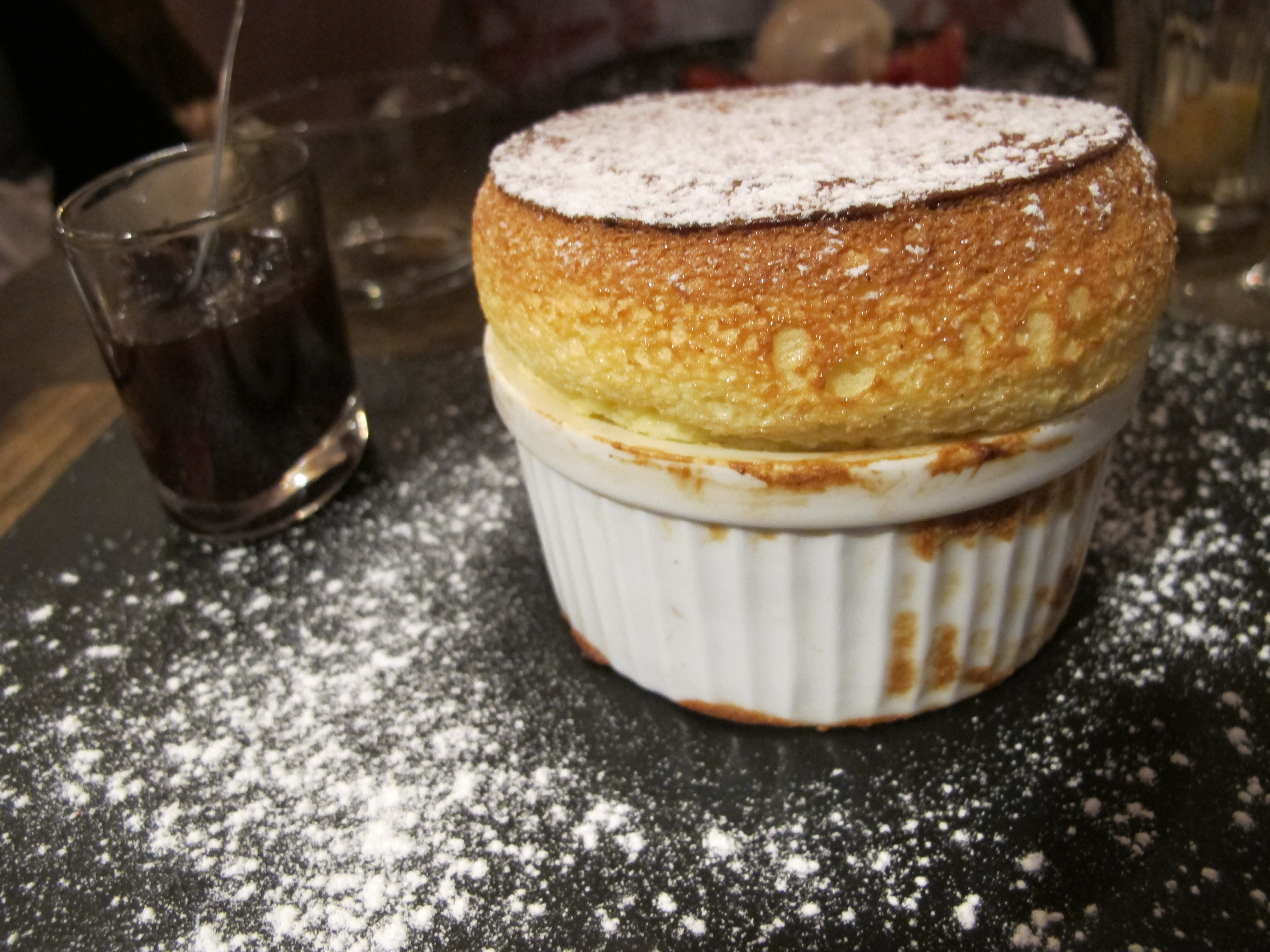
vanilla souffle at Le Troquet
Le Troquet is a friendly neighborhood bistro in the 15th arr. Don’t bother calling for a reservation – you don’t need one, and whoever picks up the phone will not speak a word of English. The language barrier continues as you glance over the menu board, so just point (nicely) to whatever looks good on a nearby table. If you need extra help, the lovely British woman to your left, or the pink tie wearing Frenchman to your right will save the day.
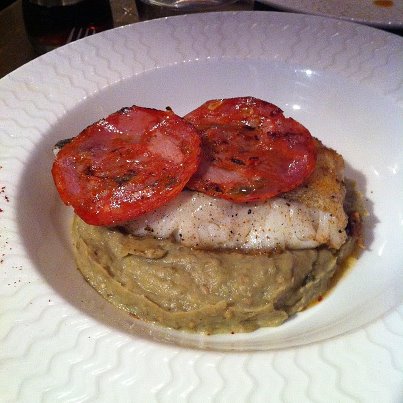
The pea soup with bacon bits and almond slivers is served cold, in an enormous tureen. Get it, just so you can be the person with the tureen. If they have the cod with eggplant puree and chorizo (below), don’t hesitate. The French are quite adept at making what could have been a healthy meal into an artery clogging feast, so while it is fish, it’s not exactly light. And when it comes to dessert, the vanilla souffle with cherries was one of the best desserts of the entire trip. The 15th arr. is a bit off the beaten path, but for a true Paris experience, it’s worth the trek.
Feast: Swann et Vincent
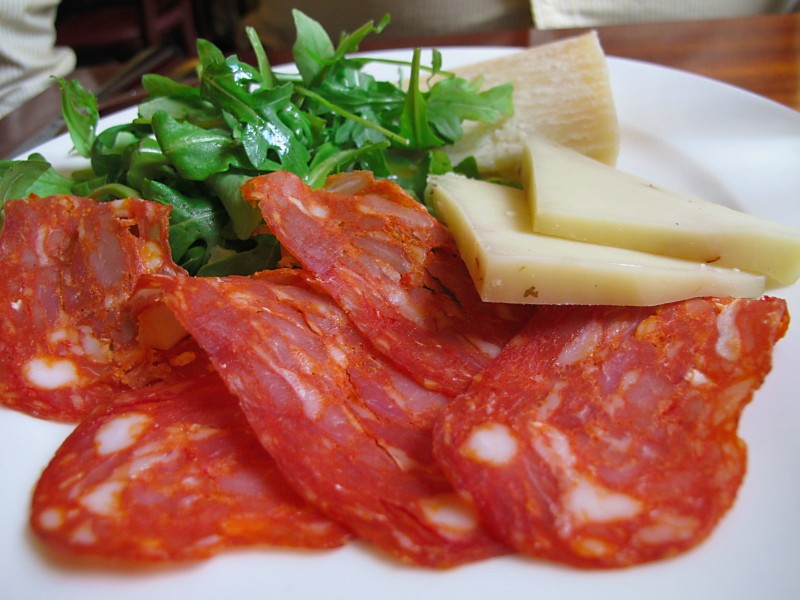
Maybe this is blasphemous, but one of our best meals in Paris was at an Italian restaurant, Swann et Vincent. A short walk from our apartment in the 15th, Swann was a welcome respite from cassoulet and steak with béarnaise – truthfully, the American stomach is just not built for a week of uninterrupted French food.
Swann is tiny, at most ten tables, with only two filled when we showed up for an early French/normal American dinner. The waitress/hostess/bartender was very friendly, worked on our French with us, and offered to explain any dish in English. The restaurant itself is cozy and sweet, with a large menu board and a spread of cicchetti on the back bar. We ordered the antipasti (pictured), a simple plate of freshly cut meat and cheese. The Pasta with Sauce Arrabiata was spicy but not overpowering, and the Veal Escalopes with Lemon sauce had a refreshing element to it – hearty without being at all heavy.
We didn’t have dessert at Swann, and on the whole we ate lightly, but if we’d had our normal appetites I’m sure the rest of the menu would have been worth trying as well. If you need a change of pace in Paris, this lovely place definitely fits the bill.
Feast: Le Select, Le Dome, Les Deux Magots
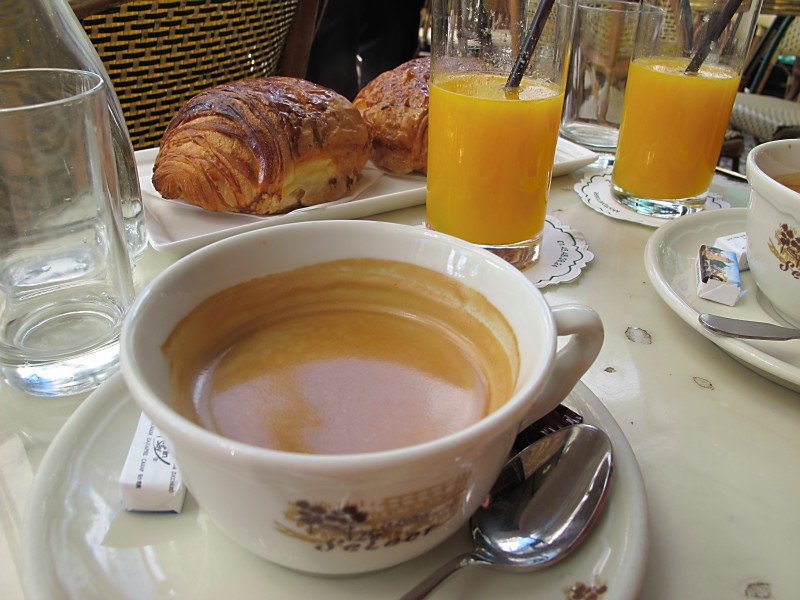
Set Breakfast at Le Select
One of the things I was most excited about in Paris was the expat cafes. I wanted to drink coffee where Hemingway sat, write postcards with the ghosts of Henry Miller, Sinclair Lewis, Ezra Pound. We started our tour of literary landmarks with breakfast at Le Select.
Most cafes in Paris offer a standard breakfast, which we ordered at Le Select: coffee, croissant, orange juice, water. Coffee is not standard American drip – most Parisians drink espresso, but you can also get “cafe creme,” a lighter brew doused with cream. Normally I take my coffee “cowboy style” (black) but I lapped up every bit of cream on our trip, and it was delicious. Le Select has a large open porch (as do most cafes in Paris), which led into a covered sun room. Our moderately grumpy waiter placed all of our items on the table with a clank, and then left us alone. The decor, with intricately caned chairs and worn marble table tops, seemed like it would have been perfect for a starving artist to spend his days ruminating about a new project or paramour. I could imagine Hemingway ambling to one of the American bookstores Dave found after breakfast, getting lost in their tiny passageways stuffed with novels.
For our next stop, we chose Le Dome’s seafood and Michelin star for lunch. Once burned, we did not order oysters, but we did get some luscious prawns and a simple mozzarella sandwich, both excellent. We also had a salad of haricot vert and mixed greens, one of the only salads in Paris that did not come with eggs, lardons, butter poached mushrooms, etc.
While all of the expat cafes had a boy’s club air to them, Le Dome was the stuffiest. This is not a slight – I still wish I could be considered a “Domier,” the term coined to refer to the international group of artists who used to eat here. But our tuxedo-ed waiter clearly thought drinking Coke Light with lunch was an abomination, and we were the youngest diners in the place by at least 30 years. Fortunately, our dessert at Les Deux Magots was a little more lively.
Across from the Saint Germain des Pres metro stop, the area around Les Deux Magots is rich with shopping and nightlife, so the people-watching after dinner was fantastic. We had more coffee and Berthillon ice cream for dessert, and if oysters were the biggest disappointment of our trip, this ice cream was the best surprise. Who knew Paris had such creamy, indulgent ice cream? More refined than gelato, less grainy than American-style, this stuff was fantastic. Les Deux was the most touristy of the cafes we visited – selling expensive plates, creamers, and matches emblazoned with its name – but it was still a charming reminder of the way 1920’s expats lived in Paris.
Today, back to work and real life in Boston on July 4th, I wish I was an expat myself, celebrating with cafe creme and croissants.
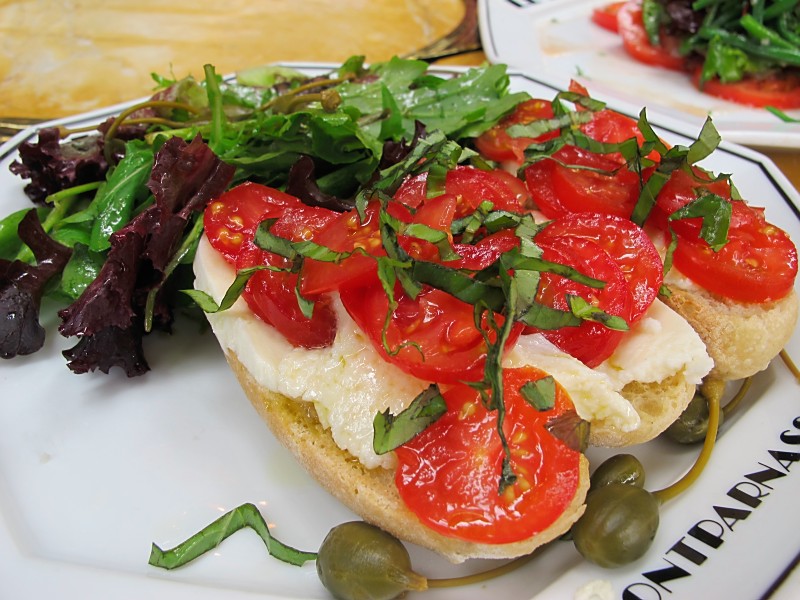
Lunch at Le Dome
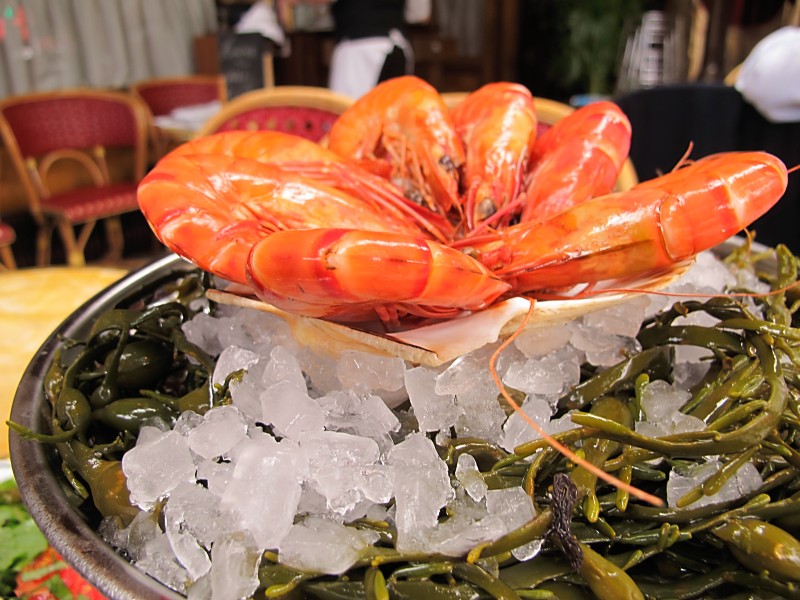
Lunch at Le Dome
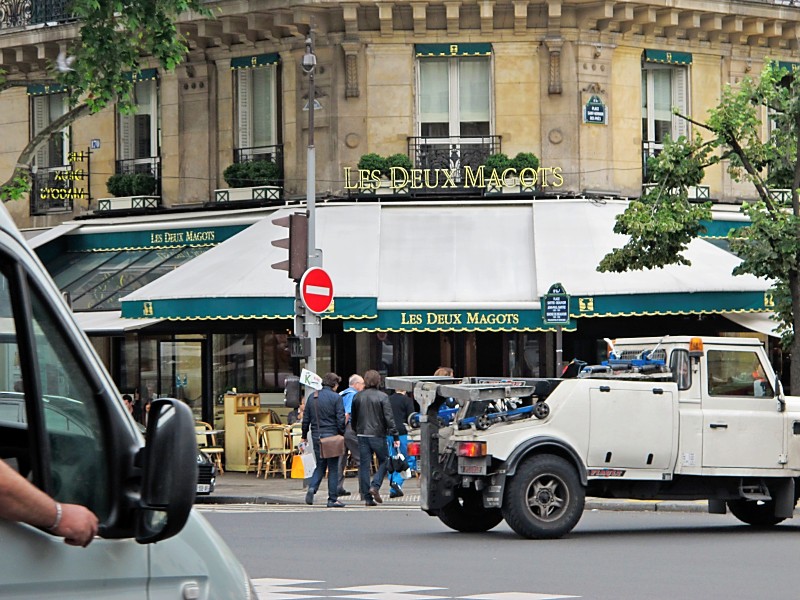
Feast: Dogs and Disappointing Oysters
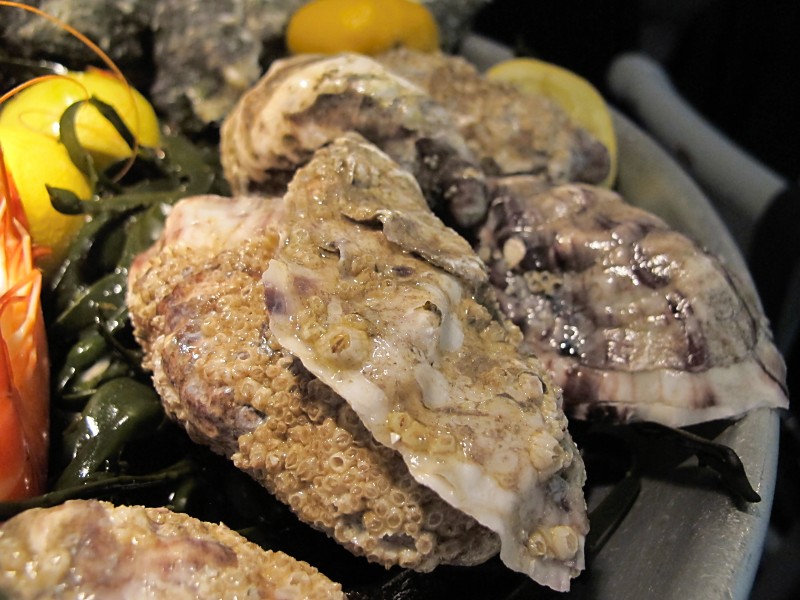
Now that I’ve gushed about fashion, croissants, and macarons, I need to share a Paris disappointment: oysters. It’s not that the Huitrerie Regis wasn’t a lovely restaurant- it was. And it’s not that their food was badly kept or prepared- it was fresh and beautiful. A tiny, friendly, sparkly (both lights and bubbles) oyster bar in Saint Germain des Pres, HR’s menu was just wine, oysters, prawns, and clams, so they knew what they were doing. The problem was, as it turns out, I don’t like French oysters. Like, at all.
We had 4 different types, as well as some big, fat, delicious prawns (the meal’s saving grace):
FINES: an official designation that means small to medium-sized.
SPECIALES: larger and more fleshy than fines.
FINES DE CLAIRE: large oysters that mature for two months in salty claires, or marshes.
SPECIALES DE CLAIRE: even larger than fines de claire, these mature for at least two months or more.
All of these oysters came in deep, thick shells. The meat was greener, and tougher than New England oysters. And even though I ate 12 of them, desperately straining to find subtle nuances with each bite, all I tasted was salt. Bitter, excessive, off-putting salt.
How could these be the inspiring oysters Hemingway wrote about?
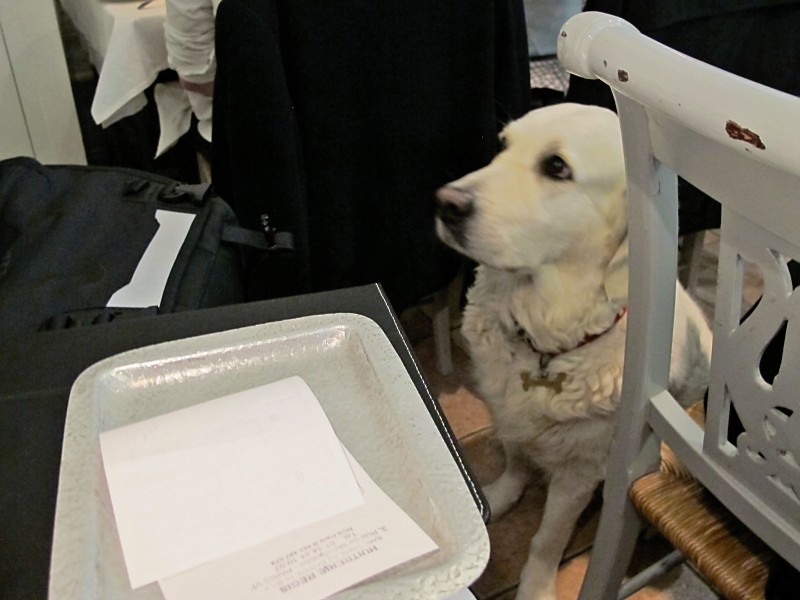
We consoled ourselves with a large white dog that came in with his owners and then padded over to the kitchen to be plied with prawns. Before settling down under his master’s chair he visited every table, just to say hi. Only in Paris.
The salty oysters were a crushing blow, and both Dave and I tried not to admit how disappointed we were. But now that we’re back, it is comforting to know that even if I can’t get a decent almond croissant, I can eat Island Creeks any time I want.
Food: Macarons

Macarons are to Paris what cupcakes are to New York – available anywhere, in any flavor combination. You can get them in any patisserie, but it is the Houses of Macaron that you really want to look for. Think Dior and Chanel for cookies.
[Quick lesson: MacaROONS are made of coconut folded into meringue. MacaRONS are two meringue and ground almond cookies with various fillings in between.)
I tried three big names, in the following order: Dalloyau, Laduree, and Pierre Herme. Dalloyau is a French “house of gastronomy” with roots in the court of Versailles. While more famous for Opera cake (their invention) they’re no slouch with macaroons. My favorite was the The Bergamote flavor, which tasted like sweet Earl Grey tea. These macarons are on the small side, almost bite size.
Laduree is the Grand Dame, founded in 1862, the inventor of the “double-decker” macaron. Their shops have highly regarded tea salons and their calling card is an ornate green box. I visited two locations: an outpost at Versailles which seemed to be more of a front for their growing merchandise (hello kitty/Laduree stickers, candles, bath lotions, etc.) and a salon on Rue Bonaparte. However good I thought the Dalloyau macarons were, Laduree was on a different plane. The salted caramel filling oozed from between the cookies. The strawberry was held together with a circle of jam. The pistachio had a nutty, smooth, butter cream.
The last was Pierre Herme, Laduree’s rival. Every food blogger’s favorite Paris showdown is between these two, a match created when Herme himself left Laduree to start his own shop in 1998. Urban legend says he was annoyed by the shift in focus from pastry to merchandise, and wanted to work solely on the food. Considering he was named France’s Pastry Chef of the Year, I’d say he’s done quite well. His macarons have more filling and flair than those at Laduree, robust teenage boys to the old guard’s ladies who lunch.
Whose were the best? Let’s just say my heart belongs to Laduree, despite their slightly stuffy reputation. Their perfect, petite cookies were delicious, and the silver swirls on the box that now holds my ticket stubs and wine corks just says Paris to me.

Dalloyau macarons
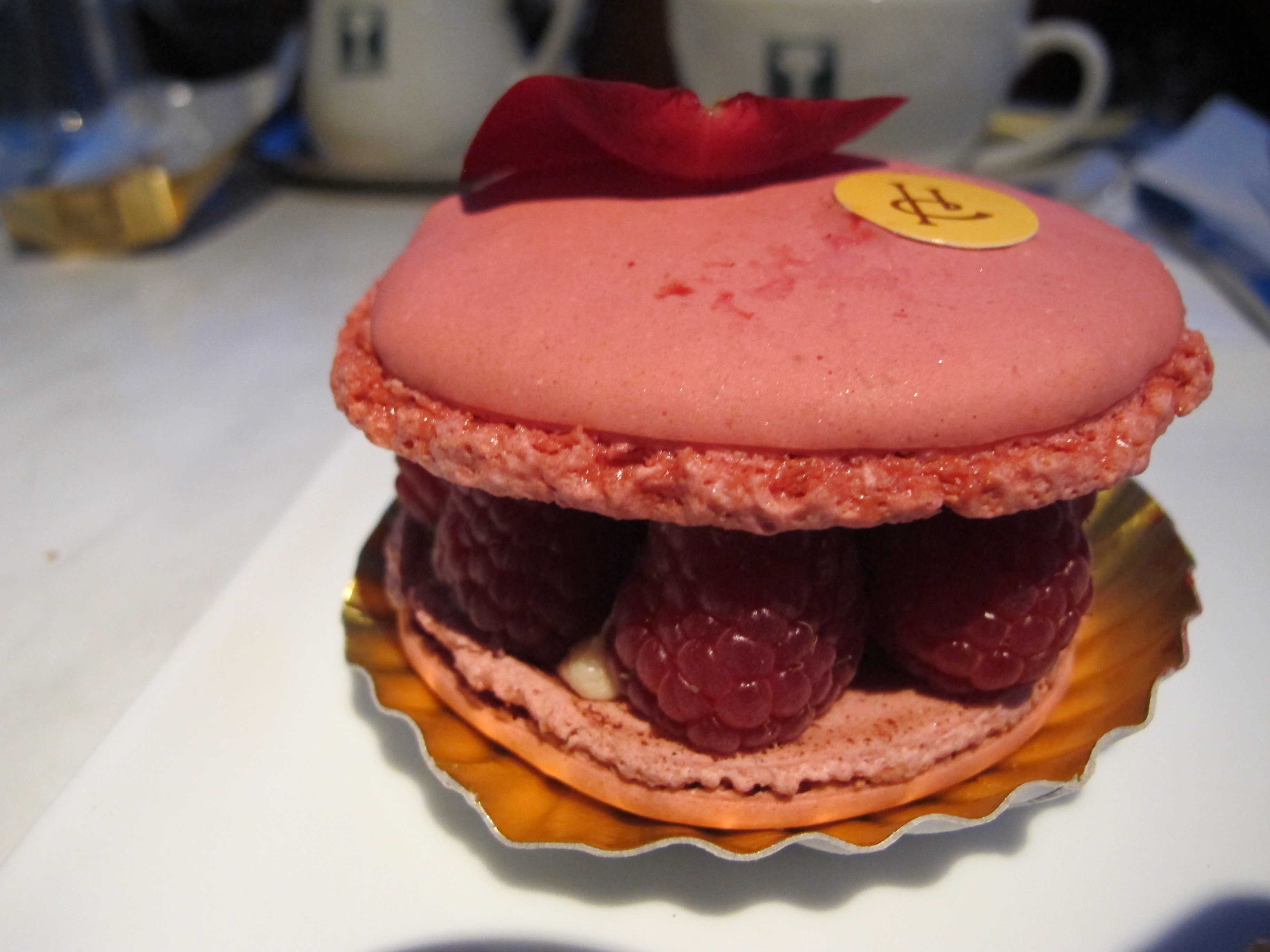
Pierre Herme macaron
 The Best Thing Since Sliced Bread